
How To
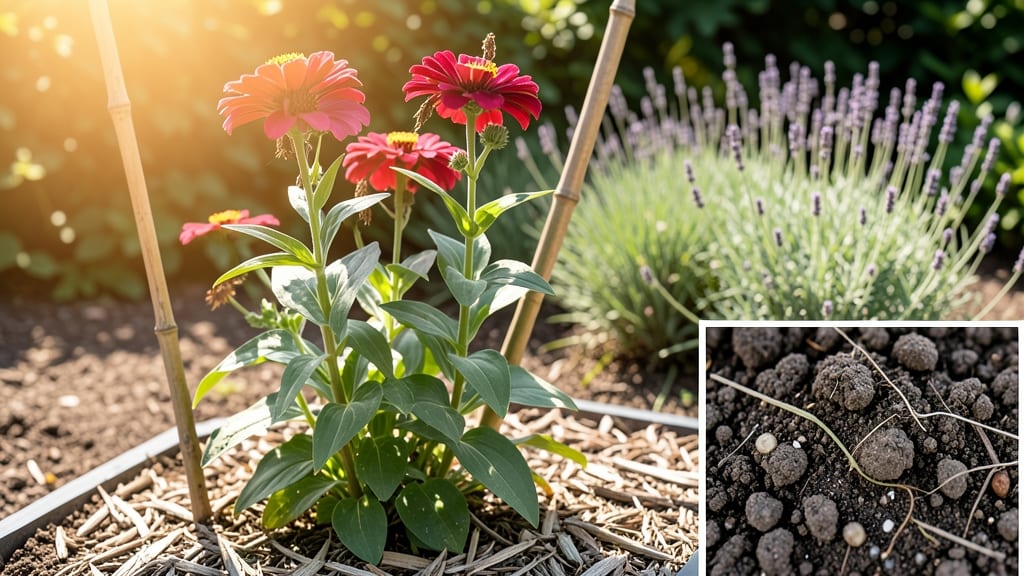
How to get zinnias to grow tall—it’s all about sunlight and support. 🌻 I’ve grown zinnias for years, and the difference between short, leggy stems and 6-foot giants comes down to a few key moves. Most gardeners miss the staking step, but that’s where the magic happens.
Start with 6+ hours of direct sun daily—zinnias crave it—and plant in well-draining soil rich in compost. Varieties like ‘Benary’s Giant’ or ‘State Fair’ are bred for height, but they need strong stakes or cages from the start.
Prune spent blooms regularly to redirect energy upward, and water at the base—not overhead—to keep stems sturdy.
📚 In This Guide
- What you need
- Instructions
- Tips and common mistakes
- Wrapping up and next steps
What you need
- ● Zinnia seeds: Choose tall varieties like ‘Benary’s Giant Mixed,’ ‘State Fair Mixed,’ or ‘Profusion Series’ (1–2 seed packets for a full garden bed).
- ○ Well-draining potting mix or garden soil: 1–2 cubic yards (for in-ground planting) or 10–15 gallons (for containers). Optional: Amend with compost (5–10 lbs per 10 sq ft) for extra nutrients.
- ● Containers (if not planting in-ground): 5–7 gallon pots (1–2 per plant) with drainage holes.
- ● Stakes or supports: Bamboo stakes: 4–6 ft tall, ½-inch diameter (1–2 stakes per plant).
- ● Floral wire or twine: 1–2 rolls (for securing stems).
- ○ Tomato cages (optional): 5–6 ft tall (1 per 2–3 plants for bulk support).
- ● Slow-release fertilizer: 10–20 lbs (15–20–15 NPK ratio) or organic options like fish emulsion (follow package rates).
- ● Watering can or hose with a gentle spray nozzle: For consistent moisture without damaging stems.
- ● Pruning shears: Sharp, clean pair for deadheading and trimming.
- ● Full sun location: At least 6–8 hours of direct sunlight daily (zinnias are sun-hungry!).
- ● Warm soil: Wait until after the last frost (soil temp should be 55°F+) to plant seeds.
- ● Spacious planting area: Space seeds 12–18 inches apart (or 6–12 inches for dwarf varieties) to allow airflow and reduce disease risk.
- ● Consistent watering routine: Keep soil evenly moist (not soggy) until plants are established (about 3–4 weeks).
Step-by-step instructions for growing tall zinnias
Here’s how I coax zinnias to reach their full potential—tall, sturdy, and packed with blooms.
🌱 Step 1: Choose the Right Variety and Plant in Full Sun
Start with tall zinnia varieties like 'Benary’s Giant', 'Profusion', or 'State Fair', which naturally grow 3-5 feet tall. Plant them in full sun—at least 6-8 hours of direct sunlight daily—or they’ll stretch weakly toward any available light. I always plant mine in early spring, 4-6 weeks before the last frost, for a strong start.
Zinnias love well-draining soil with a pH between 6.0 and 7.0. Amend heavy clay with compost or sand to prevent root rot, which can stunt growth. Space plants 12-18 inches apart—crowding leads to weak stems and fewer blooms. If planting in containers, use at least 1-gallon pots per plant to support their height.
☀️ Step 2: Provide Consistent Water and Fertilizer
Water deeply once a week, aiming for 1-1.5 inches of water per session. Let the top inch of soil dry out between waterings—zinnias hate soggy roots, which cause stems to weaken and snap. I water in the early morning to reduce evaporation and fungal risks. Mulch around the base with 2-3 inches of organic mulch to retain moisture and keep roots cool.
Feed zinnias with a balanced, water-soluble fertilizer (10-10-10 or 20-20-20) every 2-3 weeks once they’re established. Too much nitrogen makes them bushy but leggy—focus on phosphorus and potassium for strong stems. I switch to a low-nitrogen, high-phosphorus formula (like 5-10-10) when buds form to encourage blooming.
✂️ Step 3: Prune and Deadhead Regularly
Pinch back the top set of leaves when seedlings are 4-6 inches tall to encourage bushier growth. This redirects energy from vertical stretching to stronger stems. I use clean, sharp scissors to snip just above a leaf node—never tear the stem, or you risk disease entry.
Deadhead spent blooms weekly by cutting the stem back to the next set of leaves. This prevents the plant from wasting energy on seed production and redirects it to new flower growth. I also remove any yellow or diseased leaves immediately to keep the plant healthy. Prune in the morning when stems are firm and cuts heal faster.
🪴 Step 4: Stake or Cage for Support
Install stakes, cages, or tomato cages at planting time—not after the plant is already top-heavy. Zinnias grow fast, and waiting too long means the stems can’t support their own weight. I use 5-6 foot bamboo stakes for single stems or wire cages for bushier varieties. Secure the plant with soft ties (like old T-shirts or garden twine) to avoid damaging the stems.
Check stakes weekly and adjust ties as the plant grows. If a stem bends under its own weight, gently straighten it and retie. Avoid tying too tightly—zinnias need room to sway slightly in the wind, which strengthens their stems naturally. If a stem snaps, prune it back to a healthy node to encourage new growth.
Tips & tricks for perfect towering zinnias
These simple yet game-changing strategies will turn your zinnias from scraggly stems into sturdy, sky-reaching giants.
Sunlight Strategy: The 6-8 hours of direct sunlight requirement isn't negotiable—these plants are sun worshippers. If your garden gets less, consider reflective surfaces like white walls or mirrors to bounce light onto your zinnias. I've seen dramatic differences when plants get morning sun plus reflected afternoon light, especially in shadier climates. Morning watering helps too—wet leaves burn in intense afternoon sun, weakening stems.
Soil Science: That 6.0-7.0 pH range is crucial for nutrient uptake, but don't stress over perfect measurements. A simple soil test kit costs pennies and saves you from guessing. For heavy clay soil, I mix in equal parts compost and coarse sand—this creates pockets for root expansion while preventing compaction. The goal is soil that crumbles easily when squeezed, not sticks together like wet clay.
Pruning Precision: When pinching back those 4-6 inch seedlings, look for the first set of true leaves (not the tiny seed leaves) and cut just above the node where new growth emerges. This might seem fussy, but it's what transforms leggy seedlings into bushy plants. I use sterilized scissors and dip them in rubbing alcohol between cuts to prevent disease spread—this small step keeps your entire garden healthy.
Support System: Installing 5-6 foot stakes at planting time might seem premature, but trust me—you'll thank yourself later. The key is driving stakes deep enough they don't wobble (at least half their length below soil). For bushier varieties, I use wire tomato cages instead—they're more flexible and let plants sway naturally, which actually strengthens stems through gentle stress.
Pro Tips for Get Zinnias To Grow Tall
- These simple yet game-changing strategies will turn your zinnias from scraggly stems into sturdy, sky-reaching giants.
- Sunlight Strategy: The 6-8 hours of direct sunlight requirement isn't negotiable—these plants are sun worshippers.
- Soil Science: That 6.0-7.0 pH range is crucial for nutrient uptake, but don't stress over perfect measurements.
Frequently asked questions
Got questions about growing tall zinnias?
You’re not alone! Here are answers to the most common concerns—from timing to troubleshooting—so you can enjoy those towering blooms without the guesswork.
How long does it take for zinnias to reach their full height?
Most zinnia varieties reach their mature height (typically 12–48 inches) in 6–10 weeks after planting, depending on the cultivar and growing conditions. Dwarf zinnias may mature faster (4–6 weeks), while tall varieties like 'Benary’s Giant' can take up to 3 months. Patience pays off—consistent sunlight and proper care speed up growth!
Can zinnias grow tall in partial shade?
Zinnias prefer full sun (6+ hours daily) to grow tall and sturdy, but they can tolerate partial shade (4–6 hours of sun). In shadier spots, expect shorter stems and fewer blooms. If you’re in a low-light area, choose compact varieties like 'Thumbelina' or supplement with grow lights. Your zinnias will thank you with happier (if slightly shorter) blooms!
What should I do if my zinnias are flopping over?
Floppy zinnias usually need support or pruning. Install stakes, cages, or tomato cages early (at planting) to prevent bending. If stems are already weak, trim leggy growth to encourage bushier, stronger stems. For extra stability, tie stems loosely to supports with soft ties—never too tight! Deadheading spent blooms also redirects energy to upright growth.
Are there zinnia varieties that grow tall without staking?
While most zinnias benefit from support, a few self-supporting varieties stay upright with minimal help:
- 'Profusion Series' (24–36" tall): Bushy and sturdy.
- 'Crystal Series' (24–30" tall): Compact yet strong.
- 'Zahara Series' (18–24" tall): Heat-tolerant and upright.
Can I plant zinnias in late summer for fall blooms?
Zinnias thrive in cool fall weather and can be planted 8–10 weeks before your first frost (usually late July–early August in most zones). Late-summer plantings often bloom faster because they avoid summer heat stress. Choose heat-tolerant varieties like 'Benary’s Giant' or 'Magellan' for best results. Just keep an eye on frost dates—zinnias won’t survive freezing temps!
Why are my zinnias growing tall but not flowering?
Tall stems with no blooms often mean your zinnias are putting energy into foliage instead of flowers. Check for these fixes:
- Enough sunlight (6+ hours daily).
- Balanced fertilizer (low nitrogen, high phosphorus).
- Deadhead spent blooms to encourage new flowers.
- Prune leggy growth to promote bushiness.
Wrapping up and next steps
Growing tall, vibrant zinnias is all about the right balance of sunlight, support, and care—and you’ve got the tools to make it happen! 🌻 With proper staking, deadheading, and a little patience, your zinnias will reach new heights, turning your garden into a breathtaking display.
Now that you’re armed with these tips, it’s time to roll up your sleeves and watch your hard work bloom.
Ready to take the next step? Start by planting your seeds or seedlings today and keep an eye on their progress. Before you know it, you’ll be admiring those towering stems—and maybe even sharing your success with fellow gardeners! Happy growing! 🌱