
What changed, and what it changed for you
When this began, it was a blog where I’d scribble down whatever seed packet or YouTube video had worked for me that week. No structure, no tests, just whatever I’d managed to coax out of the soil before the next drought or pest attack.
The tone was all over the place—sometimes cheerful, sometimes frustrated—and the advice was hit-or-miss. If you landed on a post about growing tomatoes, you might get a paragraph on pruning, a paragraph on soil pH, and three paragraphs about how my neighbor’s compost bin ‘fixed everything’ (it didn’t).
Now, every guide is built like a season: it starts with the basics (what you need, when to start), then moves to the tricky parts (why your seedlings are leggy, how to save a wilted plant), and ends with the lessons I’ve learned the hard way.
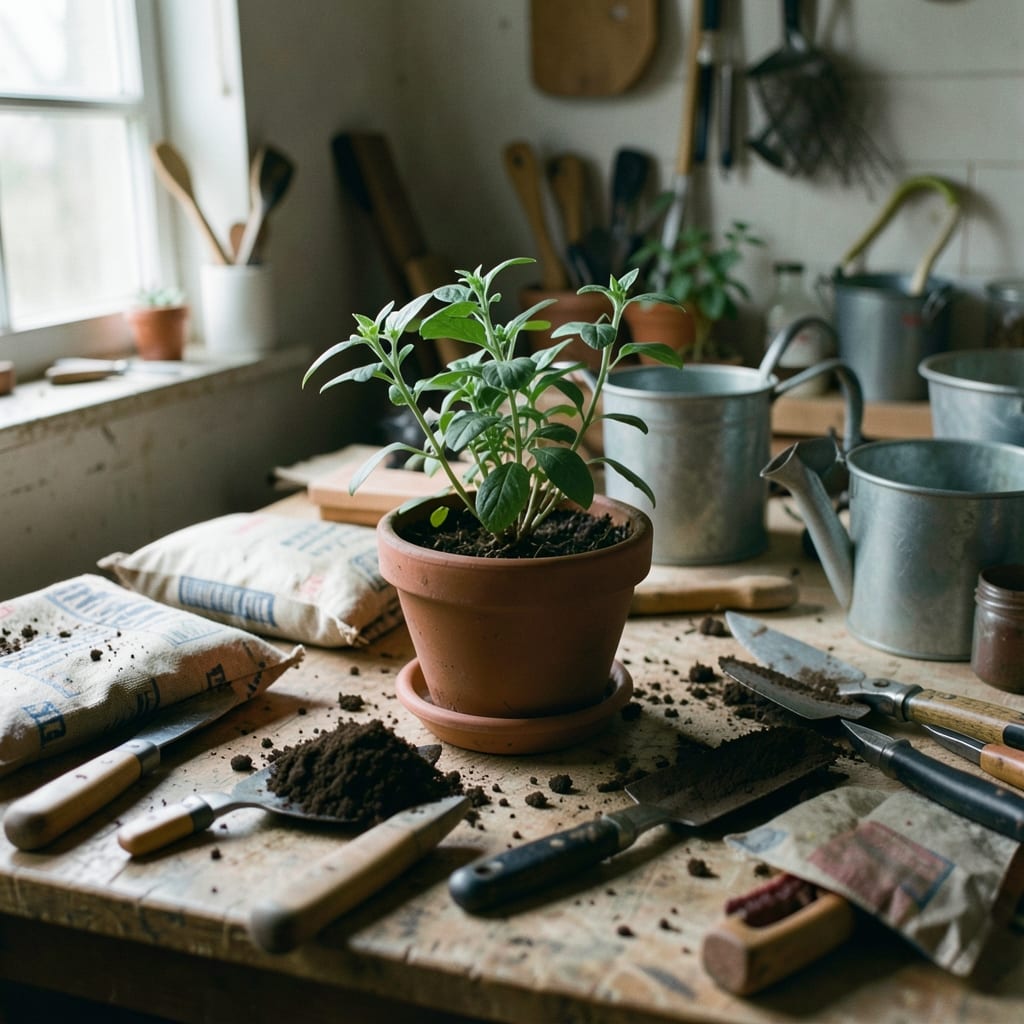
The photos aren’t staged—they’re of my own garden, with the mistakes still in them. And the tone? Still mine, but sharper. If I don’t know something, I say so. If a method failed three times, I tell you that too.
The biggest change is this: you can trust the order. Open any guide, and it’ll take you from ‘plant this’ to ‘harvest that’ without skipping steps. No more guessing if you’ve missed something. And if you do, the site tells you exactly where you went wrong.
| It used to be | Now it is |
|---|---|
| A mix of half-tested tips and personal rants. | Guides with a clear path—soil, seeds, sunlight, troubleshooting, harvest. |
| Stock photos of ‘perfect’ gardens. | Real photos of my garden, with dead leaves and all. |
| Advice that assumed you knew what a ‘leggy seedling’ was. | Explanations for beginners, like ‘why your basil is turning yellow’. |
| No structure—just whatever I’d learned that week. | Every post follows the same framework: what to do, when to do it, and what to watch for. |
The one that took years
For the first three years, I refused to write about failures. Not the big ones—the ones where an entire crop died over night—but the small, stubborn ones.
Like the time I swore my tomato plants would thrive in containers, only to watch them rot because I’d forgotten to check the drainage.
Or the year I planted basil in full sun and came home to crispy leaves, even though every guide said ‘partial shade.’ I’d edit those out, or spin them into ‘lessons,’ because I was ashamed.
The problem wasn’t just pride. It was the way I thought about gardening back then: as a series of wins, not a process. If I couldn’t grow something perfectly, I figured it wasn’t worth writing about.
So the site became a list of ‘what worked for me,’ which was useless if you lived in a different climate, had different soil, or just lacked my green thumb.
Readers would email—still do—asking about their wilting ferns or their sad zinnias, and I’d have no answer because I’d never documented the failures.
It took a reader pointing out that my ‘tomato growing guide’ didn’t mention blight for me to realize the truth: the mistakes were the most useful part. So I started a new section: *‘What Went Wrong.’* Now, every guide has one. The basil post?
It leads with ‘Why your basil hates full sun (and how to fix it).’ The tomato one? It has a whole subsection on fungal diseases, with photos of my own infected leaves. Even the successes have a ‘red flag’ section—things that looked fine but turned sour later.
Keeping it up costs time. I have to grow things twice: once to learn what works, and once to document what doesn’t. Last summer, I lost a batch of peppers to aphids, so I had to replant, let them get infested again, and photograph the process.
That’s two months of garden space wasted. But it’s worth it. The ‘What Went Wrong’ section is now the most read part of the site. People don’t just want to know how to grow something—they want to know how to save it when it’s already dying.
Meet the author

I used to think gardening was about following rules. You plant seeds at the right depth, you water them just so, you fertilize on a schedule, and if anything goes wrong, you blame the weather.
So my early posts were all about ‘the correct way’—timing charts, exact measurements, and stern warnings about ‘overwatering.’ I’d get frustrated when readers’ plants still died, but I never questioned the approach.
If my neighbor’s roses thrived, I assumed it was because she had ‘the magic touch.’ If my own tomatoes split open in the heat, I’d chalk it up to ‘bad luck’ and move on.
The breaking point came when I tried to grow microgreens indoors under LED lights. I followed every guide: the right soil mix, the perfect humidity, the exact 12-hour light cycle. Three weeks in, my sprouts were still yellow and stunted. I threw them out and bought new seeds.
Repeated the process. Same result. Finally, I read a forum post where someone mentioned ‘light burn’—the LEDs were too strong—and realized I’d been killing my plants with ‘perfect conditions.’ That was the day I stopped writing about ‘correct’ gardening and started writing about what actually happens.
What changed is that I learned to grow things *wrong* on purpose.
Now, Rafael Sandoval runs this site by treating every post like an experiment. If a method fails three times, it gets a deep dive. If a plant survives despite ‘all the rules,’ it gets an explanation for why.
The tone is still mine—frustrated when things go wrong, delighted when they don’t—but the focus is on the real work of gardening: paying attention, adjusting, and learning from the dirt itself.
Here, I don’t just tell you how to grow; I show you how to fix it when you’ve already messed up.
What did not change
The core belief hasn’t shifted: gardening is harder than it looks, but that’s what makes it rewarding. The first version of this site assumed you’d either been born with a green thumb or give up after your first failed attempt. Now, it assumes you’ll fail—and that’s okay.
But the *why* hasn’t changed. I still believe the best lessons come from the dirt: the way a seedling fights its way out of the soil, or how a plant bends toward the light even when you’ve forgotten to turn it.
Those moments are what keep me growing, and they’re what I want to share.
The other constant is the tone. I’ve never written like a textbook, and I never will. If I sound impatient or overly enthusiastic, it’s because I am.
Gardening isn’t just about plants—it’s about the frustration of waiting for something to sprout, the surprise of a flower you didn’t plant, the quiet satisfaction of pulling a weed and realizing you’ve actually improved the soil.
This site has always tried to capture that: the mess, the joy, and the fact that you’ll probably kill something along the way.
What is still being fixed
Right now, the biggest project is adding a ‘troubleshooting hub’—a searchable database of plant problems, sorted by symptom (yellow leaves, black spots, wilting) and cause (overwatering, pests, nutrient deficiency). It’ll pull from every ‘What Went Wrong’ section so you can see patterns across plants.
Think of it as a gardener’s ER: drag in your sad houseplant, and it tells you what’s wrong and how to save it. I’m still testing the best way to organize it, but the goal is simple: no more guessing if your basil is thirsty or sick.
If you’ve got a plant problem that isn’t covered yet—or a method that works for you but not me—let me know. The contact page is the best place to send details, especially if you’ve got photos. (Real ones, with the dirt and all.)
Things that would help
- A photo of your plant problem (with a coin for scale) and a description of what you’ve tried.
- A gardening method that’s worked for you but isn’t on the site—especially if it’s ‘unconventional.’
- A question about a plant that isn’t covered yet (e.g., ‘Why is my snake plant turning brown?’).
The guides are grouped by category: Blooming, Container Gardens, How To, Pests, Planting and Propagation.