
How To
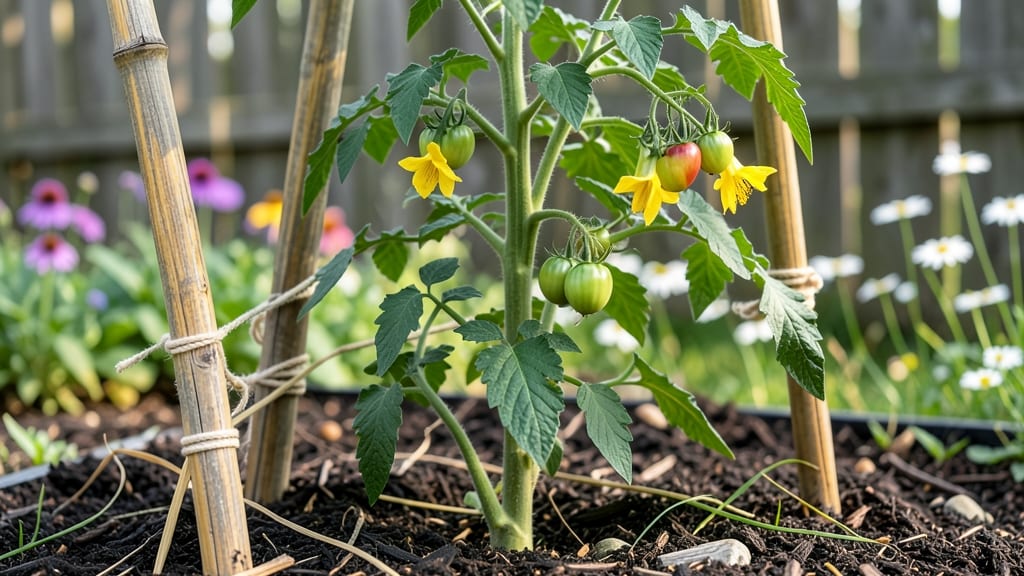
How to grow tall tomato plants that reach seven feet isn’t magic—it’s sunlight-hungry giants waiting for the right conditions. 🌞 I’ve grown tomatoes that nearly hit the ceiling by mastering just a few key tricks: stronger stems, smarter pruning, and relentless sun exposure. The difference between a 4-foot bush and a towering vine? Consistent sunlight and a little structural support.
Start with full sun (6+ hours daily) and sturdy cages or bamboo stakes—my vines need something to cling to by week 3. Prune aggressively (yes, really) to direct energy upward, and fertilize with a balanced mix every 2 weeks.
The payoff? Ripe tomatoes at eye level and plants that keep growing until frost. Just watch for wind—those tall stems need extra care when storms roll in.
📚 In This Guide
- What you need
- Instructions
- Tips and common mistakes
- Wrapping up and next steps
What you need
- ● Tomato seeds or seedlings: Choose tall, indeterminate varieties like Sungold, Big Beef, or Cherokee Purple (6–12 plants, depending on space).
- ● High-quality potting mix or garden soil: Well-draining, rich in organic matter (50 lbs or enough to fill 5-gallon containers).
- ● Fertilizer: Balanced 10-10-10 or 5-10-10 fertilizer (1 lb per 100 sq ft).
- ● Slow-release organic fertilizer (e.g., compost or worm castings).
- ● Watering can or hose with a gentle spray nozzle: 1–2 gallons capacity for efficient watering.
- ● Mulch (straw, grass clippings, or wood chips): 2–3 inches thick to retain moisture and suppress weeds.
- ● Tall tomato cages or stakes: 5–7 ft metal cages (1–2 per plant) or
- ● 6 ft bamboo or wooden stakes (2–3 per plant) + twine or soft plant ties.
- ● Pruning shears: Sharp, bypass-style for trimming suckers and dead leaves.
- ○ pH test kit: To ensure soil pH is between 6.0–6.8 (optional but helpful).
- ● Garden gloves: Heavy-duty to protect hands from thorns and dirt.
- ● Sunlight: A full-sun location (6–8+ hours of direct sunlight daily).
- ● Space: At least 18–24 inches between plants (or 3–4 ft in containers).
- ● Time: Commit to daily watering, weekly feeding, and regular pruning.
Step-by-Step instructions for cultivating towering tomato vines
Here's how I coax indeterminate varieties into 7-foot giants—with sunlight as the secret weapon.
🌱 Step 1: Select and Prepare the Right Variety
Indeterminate tomato varieties like 'Sungold', 'Brandywine', or 'Cherokee Purple' are bred to grow continuously until frost. These vines can reach 10-12 feet with proper care, but 7 feet is a realistic target for most gardeners. Start with 4-6 plants spaced 18-24 inches apart—crowding stunts vertical growth as plants compete for light.
Choose 1-gallon transplants instead of seeds for faster results. Look for stocky stems with deep green leaves and no signs of yellowing or spots. The reason I avoid smaller seedlings is that they struggle to establish strong root systems early, which is critical for supporting heavy vines later. Plant in full sun—meaning 8+ hours of direct sunlight daily—from the first day.
☀️ Step 2: Train Vines to Climb with Strategic Pruning
Install a 7-8 foot tall trellis or stake next to each plant at planting time. Use soft garden twine (not wire) to gently tie the main stem to the support as it grows. The key is to prune suckers aggressively—those little shoots that form in the leaf axils. Remove them when they're no bigger than a pencil, or they'll drain energy from fruit production.
Here's the thing—don't let the vine exceed 6 feet before pruning. Once it hits that height, trim the top 1-2 inches to encourage bushier growth. This technique, called "topping," redirects energy downward into existing branches rather than letting the plant shoot straight up like a pole bean. You'll see thicker stems and more lateral branches forming within 2-3 weeks of consistent pruning.
💧 Step 3: Master Watering for Vertical Growth
Deep, infrequent watering is non-negotiable for tall tomatoes. Water at the base only—never overhead—to prevent fungal diseases like early blight. Aim for 1-1.5 gallons per plant weekly, increasing to 2 gallons during fruit set. The soil should stay evenly moist but never soggy—stick your finger 2 inches deep; if it feels dry, water.
I schedule watering for early morning to give foliage time to dry before evening. Wet leaves at night invite blight spores to thrive. Mulch with 2-3 inches of straw to retain moisture and protect against soil-borne diseases. Watch for wilting in midday heat—this is normal, but if leaves stay limp by evening, the plant needs more water immediately.
✂️ Step 4: Support and Protect the Vertical Framework
As vines near 5 feet, reinforce supports with additional stakes or cross-bracing to prevent swaying in wind or rain. Use soft ties (like old T-shirts cut into strips) to avoid girdling stems. The goal is to keep the main stem straight and unobstructed—any bend weakens structural integrity.
When vines hit 6 feet, start pruning lower leaves that would shade fruit clusters. Remove leaves below the first flower truss, but leave 2-3 leaves above each cluster to provide energy. This improves airflow and sunlight penetration to developing tomatoes. You'll know you're doing it right when the upper canopy stays dense while the lower stem remains mostly bare.
🌿 Step 5: Harvest Strategically to Encourage Continuous Growth
Pick tomatoes when they're fully colored but still slightly firm—this prevents overloading the vine. Remove overripe fruit immediately to avoid attracting pests and diseases. The moment you harvest, new flower clusters will form within 7-10 days, keeping the vine productive until frost.
For 7-foot vines, expect 3-5 main trusses with fruit. The lower trusses will ripen first, so stagger harvesting to maintain a steady supply. If vines show signs of slowing (yellowing leaves, dropped blossoms), increase sunlight exposure by pruning nearby shading plants or moving the trellis to a sunnier spot. This final push can extend the harvest by 2-3 weeks before winter ends the growing season.
Tips & tricks for perfect towering tomato vines
Took me years of trial and error to master these tricks—here's how I coax those vines to reach their full potential without breaking.
Light Intensity Test: That white sheet trick in Step 1 is foolproof, but I've found an even better way: use a solar-powered garden light. Place it in your potential spot for a week. If it stays on continuously, you've got perfect sunlight. This method is especially helpful for containers where sunlight can be inconsistent.
Support System Hack: When installing your 6-foot bamboo stakes in Step 2, I recommend adding a third stake at a 45-degree angle to the main ones. This creates a triangular support system that prevents the plant from swaying in windy conditions. For trellises, use zip ties instead of wire—they're gentler on the stems and won't cut into the plant as it grows.
Pruning Precision: At the 18-inch mark in Step 3, I've learned to look for a specific pattern: remove suckers that appear below the first flower cluster. This forces the plant to focus energy on the main stem and existing fruit. For the lower leaf pruning at 4 feet, I use a small handheld vacuum to remove fallen leaves—this prevents disease buildup in the soil around your plant's base.
Watering Wisdom: The 1-2 inches weekly guideline in Step 4 works perfectly, but I've found that container growers need to adjust. Check soil moisture every other day during hot spells—containers dry out much faster. For in-ground plants, I water in the early morning and again in the late afternoon during heatwaves to maintain that critical 2-inch soil moisture level.
Pro Tips for Grow Tall Tomato Plants
- Took me years of trial and error to master these tricks—here's how I coax those vines to reach their full potential without breaking.
- Light Intensity Test: That white sheet trick in Step 1 is foolproof, but I've found an even better way: use a solar-powered garden light.
- Support System Hack: When installing your 6-foot bamboo stakes in Step 2, I recommend adding a third stake at a 45-degree angle to the main ones.
Frequently asked questions
Got questions about growing tall tomato plants? You’re not alone! Here are some of the most common queries—and their answers—to help you cultivate those sky-high vines with confidence.
How long does it take for tomato plants to reach 7 feet tall?
Most indeterminate tomato varieties can grow 7 feet tall in 60–90 days from transplanting, given ideal conditions (full sun, proper support, and consistent watering). However, growth speed depends on the variety, climate, and care. Patience is key—some plants may take longer, especially in cooler seasons.
Why are my tall tomato plants wilting even with regular watering?
Wilting in tall tomato plants often signals overwatering, underwatering, or root stress. Check the soil—it should be moist but not soggy. If the problem persists, inspect for blight, pests, or root rot. Prune lower leaves for better airflow and consider a support structure to prevent stem damage from wind or weight.
Can I grow tall tomatoes in containers? What size pot do I need?
Yes! Tall tomatoes thrive in containers, but you’ll need a 5-gallon pot or larger (at least 18–24 inches deep) to accommodate deep roots. Use a lightweight potting mix with compost, and ensure the container has drainage holes. Place it in a sunny spot and stake it early to avoid toppling as it grows.
Do tall tomato plants need special care in hot or cold climates?
In hot climates, provide afternoon shade and mulch to retain moisture. In cool climates, use black plastic mulch or row covers to warm the soil. Tall varieties are more sensitive to frost—consider starting seeds indoors or using a greenhouse. Always monitor soil temperature (aim for 60–85°F for optimal growth).
Will pruning my tall tomato plant stunt its growth or reduce fruit?
Pruning does not stunt growth—it actually encourages taller, stronger vines by directing energy upward. Remove suckers (shoots in the leaf axils) and lower leaves to improve airflow and reduce disease risk. Just avoid over-pruning; leave enough foliage to support photosynthesis and fruit production.
Wrapping up and next steps
Growing tall, thriving tomato plants is all about the right mix of sunlight, support, and care—and you’ve got the secrets to make it happen! 🌞 With the techniques shared here, your 7-foot vines will soon be heavy with juicy, sun-ripened tomatoes.
The key? Patience, consistency, and a little extra love for your leafy giants.
Now that you’re armed with knowledge, it’s time to roll up your sleeves and get planting! Start with a single healthy seedling or transplant, and watch your garden transform into a towering tomato paradise. Happy growing—and may your harvest be bountiful! 🍅✨