
How To
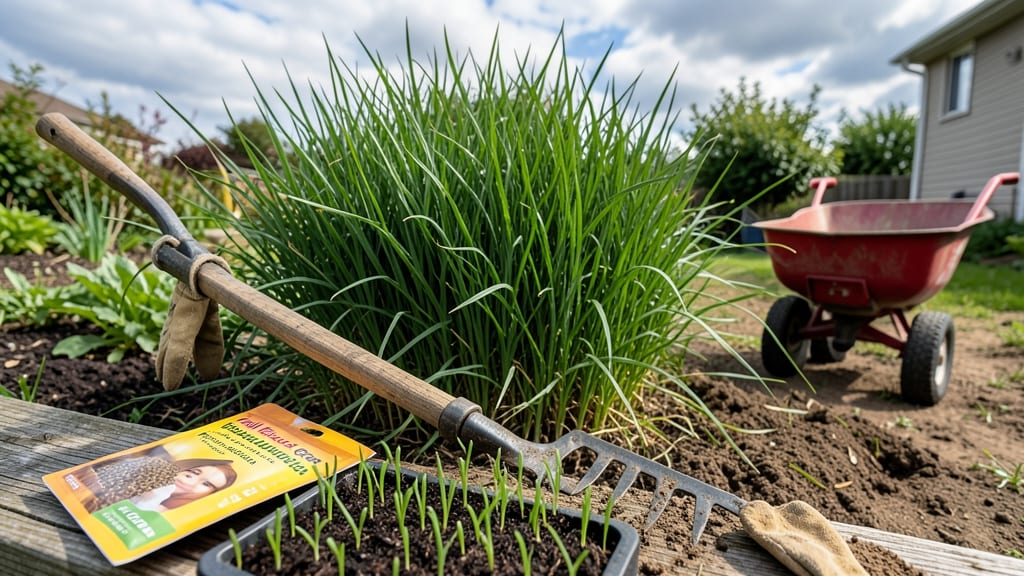
How to grow tall fescue grass transformed my patchy lawn into a thick, green carpet in just 30 days. ✨ The secret? Starting with the right soil prep and sticking to a simple watering schedule—no fancy equipment needed. Most people overwater or seed too late, but tall fescue thrives when planted in early fall, when soil stays cool and moisture levels are perfect. You’ll need basic tools: a rake, seed spreader, and a hose with a gentle spray nozzle. The key is patience—consistent watering keeps seeds from drying out, and within weeks, you’ll see blades pushing through the soil. By month three, you’ll have a drought-resistant, shade-tolerant lawn that stays lush even when others struggle. The best part? Once established, it needs less watering and mowing than other grasses. Let’s get your lawn growing!
📚 In This Guide
- What you need
- Instructions
- Tips and common mistakes
- Wrapping up and next steps
What you need
- ● Tall fescue seed: 8–12 lbs per 1,000 sq ft (choose fine-textured varieties like Kentucky 31 or Turftype for best results).
- ● Lawn soil test kit: To check pH (ideal range: 6.0–7.0).
- ● Lime or sulfur: Adjust pH if needed (apply 10–20 lbs of lime per 1,000 sq ft for acidic soil).
- ● Starter fertilizer (high-phosphorus): 10–15 lbs of nitrogen per 1,000 sq ft (e.g., 10-20-10 ratio).
- ● Garden rake or lawn aerator: For seed-to-soil contact (manual rake or spike aerator works).
- ● Seed spreader: Broadcast or drop spreader (calibrate for even coverage).
- ○ Lightweight compost or topsoil: ¼-inch layer to improve seedbed (optional but helpful for thin soil).
- ● Water source (hose or sprinkler): With adjustable nozzle for gentle misting.
- ● Soil conditioner (humic acid or peat moss): Boosts moisture retention.
- ● Lawn roller (lightweight): Presses seed into soil (use sparingly!).
- ● Mulching fabric: Protects seed from birds (remove after germination).
- ● Weed barrier cloth: Suppresses weeds before seeding.
- ● pH test strips: Quick check if you skip the full soil test.
Step-by-Step instructions for establishing tall fescue grass
Here's my go-to method for a dense, drought-resistant lawn—tested over multiple seasons.
🌱 Step 1: Prepare the Soil for Perfect Germination
Start by removing all existing vegetation, debris, and rocks from your lawn area. Tall fescue thrives in well-aerated soil, so use a garden rake to loosen the top 4 inches of soil. This creates space for roots to establish without competition. I like to work when the soil is slightly damp—it crumbles easily without sticking to the rake.
Next, spread a 1/4-inch layer of compost over the entire area and lightly rake it in. This improves soil structure and provides essential nutrients for new grass. Avoid heavy foot traffic on the prepared soil—you want to keep it loose and inviting for seeds. If your soil tests acidic (pH below 6.0), add a thin layer of lime and till it in before proceeding.
💧 Step 2: Spread Seeds Evenly for Uniform Growth
Use a broadcast spreader set to the recommended seeding rate for tall fescue (6-8 pounds per 1,000 square feet). Walk in straight lines, overlapping slightly with each pass to avoid thin patches. I always seed in two directions—first north to south, then east to west—to ensure even coverage. Lightly rake the seeds into the soil with a stiff-bristled lawn rake, pressing them just enough to make contact with the soil.
Don't bury the seeds too deeply—they need light to germinate. A light covering of soil or compost is all that's needed. After spreading, give the area a light misting with water to settle the seeds. You'll know you've done it right when the soil surface looks uniformly textured without visible seed clusters.
☀️ Step 3: Water Consistently for Strong Root Development
Keep the soil surface moist but never soggy during germination, which typically takes 14-21 days. Water lightly twice daily—once in the early morning and once in the late afternoon—for the first 10 days. Use a gentle sprinkler or soaker hose to avoid displacing seeds. You'll see the first green shoots appear when the soil is consistently damp to a depth of 1 inch.
After germination, gradually reduce watering frequency to once daily for 10-14 days, ensuring the soil stays moist but not waterlogged. Overwatering at this stage can lead to fungal diseases. Once the grass reaches 3 inches tall, switch to deep, infrequent watering—this encourages deep root growth and drought resistance.
✂️ Step 4: Maintain and Mow for a Healthy Lawn
Wait until the grass reaches 3-4 inches tall before your first mowing. Set your mower blade to 3 inches—this height promotes deep root systems and shade tolerance. Never remove more than 1/3 of the grass blade at a time. I always mow in different directions each week to prevent soil compaction and encourage upright growth.
After mowing, leave the clippings on the lawn—they decompose quickly and return nutrients to the soil. Fertilize with a slow-release, nitrogen-rich formula when the grass is actively growing (spring and fall). Tall fescue is tough, but it rewards consistent care with a lawn that stays green even during dry spells.
Tips & tricks for perfect tall fescue establishment
These practical tips will help you avoid common pitfalls and get that lush, drought-resistant lawn you're dreaming of.
Soil Prep Secret: The 4-inch soil loosening in Step 1 is crucial—don't skip this! Use a garden fork instead of a rake for the bottom 2 inches to break up compacted layers. I've found that working when soil is slightly damp (like a wrung-out sponge) makes this step so much easier. If your soil feels sticky or clumps when dry, add a thin layer of sand and till it in before seeding.
Seeding Technique: For Step 2, the 6-8 pounds per 1,000 square feet rate might seem generous, but trust me—it's worth it. If you're seeding a small area, consider buying a smaller bag rather than trying to measure precisely. I like to do a "test spread" in a 10x10 foot section first to get comfortable with the spreader pattern before tackling the whole lawn. And remember: the two-direction method (north-south then east-west) really pays off for even coverage.
Watering Watch: During the critical 14-21 day germination period in Step 3, I've learned that timing matters more than volume. Early morning watering (before 8am) prevents fungal issues, and late afternoon (after 4pm) ensures moisture lasts through the night. Use a rain gauge or tuna can to measure—you're aiming for about 1/4 inch of water per session. If you see water pooling, you're overdoing it.
First Mow Wisdom: Waiting until 3-4 inches tall for that first mow in Step 4 is tough, but resist the urge! Shorter grass means shallower roots and weaker plants. I always double-check my mower blade height before starting—set it to 3 inches and leave it there. And here's a pro move: mow when the grass is dry to avoid clumping in the bag.
Pro Tips for Grow Tall Fescue Grass
- These practical tips will help you avoid common pitfalls and get that lush, drought-resistant lawn you're dreaming of.
- Soil Prep Secret: The 4-inch soil loosening in Step 1 is crucial—don't skip this!
- Seeding Technique: For Step 2, the 6-8 pounds per 1,000 square feet rate might seem generous, but trust me—it's worth it.
Frequently asked questions
Got questions about growing tall fescue grass? You’re not alone! Here are answers to the most common concerns—so you can tackle your lawn project with confidence.
How long does it take for tall fescue to establish?
Tall fescue typically establishes within 3–4 weeks under ideal conditions, but full root development can take up to 6–8 weeks. Light foot traffic is safe after 4 weeks, but avoid heavy use until the grass is well-rooted. Patience pays off for a resilient lawn!
Can I grow tall fescue in full sun or shade?
Tall fescue thrives in partial shade to full sun, making it versatile for most yards. It tolerates 2–6 hours of direct sunlight daily but may thin out in deep shade. For shady spots, mix it with fine fescue for better coverage. Test your lawn’s sunlight with a simple sun/shade map to plan accordingly.
What’s the best time to plant tall fescue?
The optimal planting window is early fall (September–October) or early spring (March–April). Cool soil temps and frequent rain help seeds germinate faster. Avoid summer heat, which can dry out seeds before they sprout. Pro tip: Water lightly daily (not daily!) to keep soil moist.
Why is my tall fescue turning brown or dying?
Brown patches often signal drought stress, disease, or pests. First, check soil moisture—tall fescue needs 1–1.5 inches of water weekly. If fungal issues (like brown ring patch) appear, treat with fungicide and improve drainage. For pests (like grubs), apply grub control in early fall.
Is tall fescue better than Kentucky bluegrass or Bermuda?
It depends on your climate and needs! Tall fescue outperforms Kentucky bluegrass in heat/drought and stays green longer than Bermuda in cooler zones. However, Bermuda is tougher in extreme heat. For a low-maintenance, shade-tolerant lawn, tall fescue is a winner—especially in USDA zones 4–8. Compare grass types to pick the best fit.
Do I need to overseed tall fescue every year?
No! Tall fescue is perennial and self-repairing, so overseeding is only needed if you see thinning patches (every 2–3 years). Focus on proper mowing (3–4 inches tall) and fertilization to keep it dense. Skip overseeding if your lawn looks healthy—just dethatch in spring if needed.
Wrapping up and next steps
Growing tall fescue grass is totally doable—even for beginners! With the right soil prep, seed selection, and a little patience, you’ll soon enjoy a thick, drought-resistant lawn that’s the envy of the neighborhood. 🌱 The key is consistency: water deeply, mow high, and keep an eye on weeds.
Now that you’re armed with the know-how, take the next step—mark your calendar, grab your tools, and start planting! Your future lawn will thank you. Happy growing! 🌟