
Size
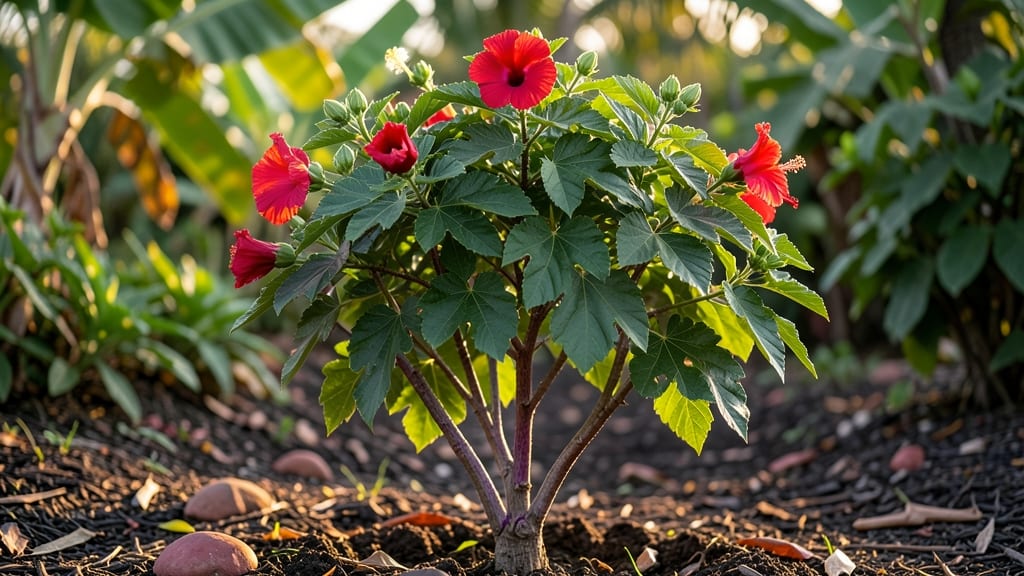
How to grow roselle hibiscus thrives where most plants struggle—hot, humid days and rich, well-draining soil. 🌿 I’ve grown it in Florida’s summer heat, and with just a few key adjustments, you can too. This isn’t your average flowering shrub; it’s a dual-purpose powerhouse with edible calyces and stunning deep red blooms that last all season.
The secret to success starts with soil—roselle loves it loose and fertile, almost like a tropical hug for its roots. Plant seeds or transplants after your last frost, spacing them 2-3 feet apart to give them room to sprawl.
Water deeply but let the top inch dry between soakings; soggy roots invite fungal problems, and nobody wants that.
By midsummer, you’ll see those iconic trumpet-shaped flowers opening daily, followed by the star of the show: the edible calyces. Harvest them when fully mature but still firm—think bright red, crisp pods ready to be simmered into tea or stews.
Prune lightly after harvest to encourage bushier growth, and watch it reward you with months of blooms and harvests.
Even in cooler climates, treat it as an annual or overwinter it in pots. The trade-off? A plant that’s drought-tolerant once established, pest-resistant, and gives back more than you’d expect from a single shrub. Now, let’s get those seeds in the ground!
📚 In This Guide
- What you need
- Instructions
- Tips and common mistakes
- Wrapping up and next steps
What you need
- ● Roselle hibiscus seeds or cuttings: 3–5 seeds (if starting from scratch) or 1–2 healthy cuttings (for faster growth). Look for organic or disease-resistant varieties!
- ● Well-draining potting mix: A blend of coco peat, perlite, and compost (ratio: 3:1:1) to prevent root rot.
- ● Containers or garden bed: For pots: 5–7 gallon containers (at least 12 inches deep) with drainage holes.
- ● For in-ground planting: Full sun exposure (6+ hours/day) and loose, fertile soil (pH 5.5–6.5).
- ● Watering can or hose with gentle spray: Roselle hates soggy roots—avoid overhead watering.
- ● Fertilizer: A balanced, slow-release fertilizer (10-10-10) or organic options like compost tea or fish emulsion (apply every 4–6 weeks).
- ● Pruning shears: Sharp, sterilized shears for trimming dead leaves or shaping the plant.
- ○ Mulch (optional but helpful): Straw or wood chips to retain moisture and suppress weeds.
- ● Temperature: Roselle thrives in warm climates (70–90°F / 21–32°C). If in a cooler zone, grow in containers and bring indoors during frost.
- ● Humidity: Prefers 60–80% humidity. Mist leaves lightly in dry climates or use a humidity tray.
- ● Sunlight: Full sun is a must—partial shade may reduce blooms and calyces (the edible parts!).
- ● Growth regulator (e.g., seaweed extract) to boost calyx production.
- ● Trellis or stakes (if growing tall varieties) for support.
- ● pH test kit to monitor soil acidity.
- ● Pest control: Neem oil or insecticidal soap (roselle attracts aphids and whiteflies!).
Step-by-step instructions for growing roselle hibiscus
Here's the easy method I've used to grow roselle—tropical, fast-growing, and perfect for tea lovers.
🌱 Step 1: Start Seeds Indoors or Buy Healthy Plants
Roselle hibiscus thrives from seeds, but they need warmth to germinate. Start them indoors 8-10 weeks before your last frost in small pots filled with seed-starting mix. Press 2-3 seeds per pot just below the soil surface—about ¼ inch deep—since roselle seeds are large and need good contact with moist soil. Cover lightly with mix and water gently until the soil feels damp.
Keep the pots in a warm spot (70-80°F) under grow lights or near a sunny window. Germination takes 7-14 days, so patience is key. If you live in a warm climate, you can direct-sow seeds outdoors after the soil warms to 65°F, but indoor starts give you a head start.
☀️ Step 2: Transplant When Warm and Provide Full Sun
Once seedlings have 3-4 true leaves and are 4-6 inches tall, they’re ready to move outdoors. Harden them off by placing them outside for 1-2 hours daily over 5-7 days, gradually increasing their time in sunlight. Choose a location with full sun (6+ hours daily)—roselle loves heat and blooms best when baked by the sun.
Dig holes twice as wide as the root ball but no deeper. Space plants 3-4 feet apart since roselle grows 6-10 feet tall and needs room to spread. Water deeply after planting to settle the soil, and mulch around the base to retain moisture and suppress weeds.
💧 Step 3: Water Deeply and Fertilize Regularly
Roselle hibiscus has deep roots, so water 1-2 inches per week, letting the soil dry slightly between waterings. Overwatering leads to root rot, while underwatering causes buds to drop. Check soil moisture by sticking your finger 2 inches deep—if it’s dry, it’s time to water.
Feed plants every 4-6 weeks with a balanced fertilizer (10-10-10) or compost tea. I use a slow-release granular fertilizer for convenience, but organic options work too. Stop fertilizing 6-8 weeks before harvest to avoid bitter flavors in the calyces.
✂️ Step 4: Prune for Shape and Harvest Calyces
Prune roselle to encourage bushier growth and better airflow. Pinch back the tips of young plants to promote branching, and remove any dead, yellow, or diseased leaves regularly. You can also trim back leggy stems to maintain a compact shape—just leave 2-3 sets of leaves on each branch.
Harvest begins 4-6 months after planting when calyces (the flower buds) turn red or green and are 2-3 inches long. Twist or cut them off just above a leaf node. Harvesting stimulates more blooms, so pick every 2-3 weeks during the growing season. Store fresh calyces in the fridge for up to 2 weeks or dry them for tea.
🌿 Step 5: Overwinter if Growing in Cooler Climates
Roselle hibiscus is tropical and won’t survive frost, so in colder zones, dig up the roots before the first freeze. Trim back the foliage, pot the plant, and move it indoors to a bright, cool spot (50-60°F). Reduce watering and fertilizing during dormancy, then resume care in spring.
If you’re in a warm climate, roselle can grow as a perennial, but it may need pruning to control size. Even in frost-free areas, a light pruning in early spring keeps plants healthy and productive.
Tips & tricks for perfect roselle hibiscus cultivation
Real talk: Growing roselle hibiscus feels like a tropical vacation for your garden—if you nail these key details.
Sunlight Strategy: Those 6-8 hours of sunlight are non-negotiable, but here's what I learned: In hot climates, I move plants to partial shade during peak afternoon sun (around 2-4 PM) to prevent leaf scorch. Watch for wilting leaves—they're your first warning sign. Morning sun is your friend, but afternoon heat can be brutal.
The Soil Secret: The 12-inch deep preparation isn't just about roots—it's about creating the perfect moisture balance. I've found that adding a handful of perlite to your compost mix improves drainage without sacrificing moisture retention. This prevents that dreaded "soggy feet" situation while keeping roots happy. Think of it as giving your plants a spa treatment.
Watering Wisdom: The 1-1.5 inches weekly guideline works, but timing matters more than you'd think. Water in the early morning so leaves have all day to dry—this prevents fungal diseases like powdery mildew. I use a rain gauge to track rainfall and adjust accordingly. Pro tip: Water at the base, not overhead, to keep those beautiful leaves dry and healthy.
Harvesting Hack: Those 3-4 inch calyces need perfect timing—harvest them when they're firm but still closed. I've ruined batches by waiting too long, only to find them opening into flowers. Use clean scissors and cut at a 45-degree angle to encourage more growth. Morning harvests give you the freshest flavor, and you'll notice the stems are still crisp at that time of day.
Pro Tips for Grow Roselle Hibiscus
- Real talk: Growing roselle hibiscus feels like a tropical vacation for your garden—if you nail these key details.
- Sunlight Strategy: Those 6-8 hours of sunlight are non-negotiable, but here's what I learned: In hot climates, I move plants to partial shade during peak afternoon sun (around 2-4 PM) to prevent leaf scorch.
- The Soil Secret: The 12-inch deep preparation isn't just about roots—it's about creating the perfect moisture balance.
Frequently asked questions
Got questions about growing roselle hibiscus? You’re not alone!
Here are answers to the most common queries from gardeners—whether you’re a beginner or a seasoned green thumb.
How long does it take for roselle hibiscus to grow from seed?
Roselle hibiscus typically sprouts within 7–14 days after planting seeds. Once established, expect 3–6 months for the plant to mature, produce flowers, and yield edible calyces. Patience pays off—these tropical beauties thrive in warm climates but need consistent care!
Can I grow roselle hibiscus indoors?
Yes, but with limitations. Roselle hibiscus needs bright, indirect light (6+ hours daily) and a warm spot (65–85°F). Use a large container (10+ inches deep) with well-draining soil. If indoors, supplement with grow lights in winter. Outdoor growth is easier, but indoor plants can still produce calyces with extra TLC!
What pests or diseases should I watch for?
Common issues include:
- Aphids (sap-sucking insects) – Spray with soapy water or neem oil.
- Whiteflies – Use yellow sticky traps or insecticidal soap.
- Powdery mildew (white fungus) – Improve airflow and avoid overhead watering.
- Root rot (from overwatering) – Ensure pots have drainage holes.
Are there drought-tolerant varieties of roselle hibiscus?
While roselle hibiscus prefers consistent moisture, some varieties (like Hibiscus sabdariffa) are more adaptable once established. To improve drought tolerance:
- Use mulch to retain soil moisture.
- Water deeply 2–3 times per week during dry spells.
- Avoid soggy soil—let the top inch dry between waterings.
Can I harvest roselle calyces year-round?
No—harvesting depends on your climate! In tropical/subtropical zones (USDA 9–11), you can harvest year-round with proper care. In cooler regions, growth slows in winter, and you’ll get limited yields (or none). Harvest calyces when they’re bright red and slightly soft (about 3–4 weeks after flowering). Prune spent blooms to encourage more flowers!
Wrapping up and next steps
Growing roselle hibiscus is a rewarding journey that brings vibrant blooms and versatile harvests with minimal effort! 🌿 With the right soil, sunlight, and care, you’ll enjoy lush plants that thrive in warm climates—or even containers for cooler regions.
Whether you’re harvesting flowers for tea, leaves for cooking, or simply admiring their beauty, your hard work will pay off in delicious and decorative ways.
Now that you’re armed with the knowledge, roll up your sleeves and start planting! Share your progress with fellow gardeners, experiment with different growing methods, and watch your roselle hibiscus flourish. Happy gardening! 🌸