
Plants
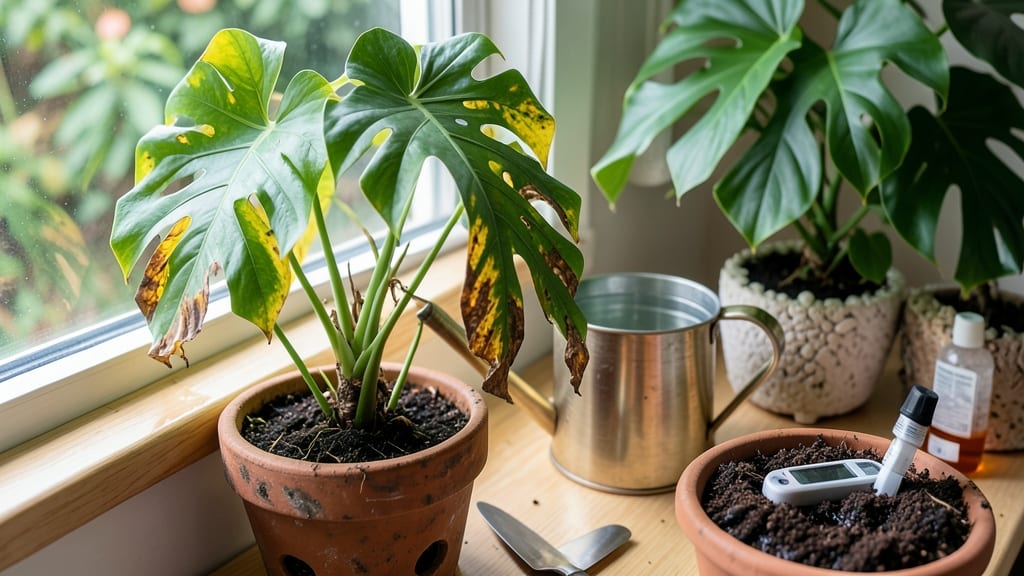
Your Monstera’s drooping leaves aren’t a death sentence—just a cry for help after how to fix an overwatered Monstera. 🌿 I’ve nursed back more than my fair share of soggy-rooted monsteras, and the fix is simpler than you’d think.
The key? Stopping the water stress now and giving roots room to breathe again.
Start by checking the soil—if it smells like a swamp or feels squishy, you’ve got root rot. Repot into fresh, chunky mix (think 60% potting soil, 30% perlite, 10% orchid bark) and trim any mushy roots with clean scissors.
This isn’t just about saving the plant; it’s about teaching it to drink like a grown-up.
Within 2-3 weeks, you’ll see new growth pushing through—pale green at first, then that signature glossy dark. The secret weapon? Water only when the top 2 inches of soil are bone-dry, and always use a pot with drainage holes. No more guesswork, just happy roots.
Here’s the thing—once you’ve done this once, you’ll spot the warning signs before they get bad. Yellowing leaves? That’s your Monstera’s way of saying, “Hey, maybe wait a week before I drink again.” Prevention turns into second nature after your first revival success.
📚 In This Guide
- What you need
- Instructions
- Tips and common mistakes
- Wrapping up and next steps
What you need
- ● Well-draining potting mix: A blend of peat moss, perlite, and orchid bark (or a pre-mixed Monstera-friendly mix). Aim for 2-3 gallons depending on pot size.
- ● Clean, breathable pot: Ensure it has drainage holes (terracotta or fabric pots work best). Size should match your plant’s current root ball—1-2 inches larger in diameter than the previous pot.
- ● Pruning shears or sharp scissors: Sterilized to avoid infection. Look for stainless steel blades for precision cuts.
- ○ Rooting hormone (optional but helpful): A fungicide-based or charcoal powder to prevent rot during repotting.
- ● Spray bottle with room-temperature water: For gentle hydration post-repotting.
- ● Newspaper or paper towels: To line your workspace and absorb excess moisture.
- ● Hydrogen peroxide (3% solution): Dilute 1 part peroxide to 4 parts water for a quick root soak to kill pathogens.
- ● Moisture meter: To check soil dryness before watering again (aim for 30-40% moisture).
- ● Humidity tray or pebble tray: Helps maintain 60-70% humidity while your Monstera recovers.
- ● Fertilizer (low-nitrogen, balanced): Wait 4-6 weeks post-repotting, then use a diluted liquid fertilizer (e.g., 10-10-10).
Step-by-Step instructions for reviving an overwatered monstera
Here’s how I rescue even the most soggy monstera roots—no drama, just results.
🪴 Step 1: Remove and Inspect the Roots Immediately
Gently slide the monstera from its pot and shake off excess soil to reveal the roots. You’ll see two types: healthy roots are firm and white, while overwatered roots are mushy, brown, or black. If the roots smell foul, that’s your cue to act fast—root rot spreads quickly.
Use sterilized scissors to trim away all mushy, discolored roots down to the firm white tissue. Don’t panic if it looks drastic—your monstera can regrow from healthy root zones. Rinse the remaining roots under lukewarm water to remove old soil, then let them air-dry for 10-15 minutes while you prep the next steps.
💧 Step 2: Repot in Fresh, Well-Draining Soil
Fill a clean pot—2 inches larger than the original—with a mix of 50% fresh potting soil and 50% perlite or orchid bark for aeration. The goal is to prevent compaction and improve drainage. Avoid garden soil; it retains too much moisture and invites rot.
Place your monstera in the pot and backfill with the mix, pressing lightly to secure it without compacting the soil. Water lightly only if the soil feels bone-dry—you’re testing moisture levels now, not drowning the roots. Let the plant sit in a shady spot for 3-5 days to recover before reintroducing light.
☀️ Step 3: Adjust Watering and Light Gradually
Wait until the top 2 inches of soil feel dry before watering again. Stick your finger in—if it’s damp past your first knuckle, wait another day. Overwatering is the enemy here, so err on the side of underwatering for the first 2-3 weeks while roots establish.
Move the monstera to bright, indirect light (like an east-facing window) to encourage new growth. Avoid direct sun—stressed plants burn easily. You’ll know it’s recovering when new leaves emerge with deep green color and healthy splits (fenestrations).
⏰ Step 4: Monitor and Maintain Recovery (Optional but Critical)
Check the soil weekly—your monstera’s thirst changes as it heals. If yellow leaves persist after 4-6 weeks, trim them to redirect energy to new growth. Fertilizer is a no-go until you see 2-3 new leaves, as overwatered plants can’t handle nutrients yet.
This is the moment that matters: patience. A revived monstera often shows signs of recovery in 3-4 weeks, but full strength can take 2-3 months. Keep adjusting care based on what you observe—drooping? Check soil moisture. Slow growth? Boost light slightly.
Tips & tricks for reviving an overwatered monstera
Real talk: I've seen even the most stubborn overwatered monsteras bounce back with these simple tricks. Here's what nobody tells you about bringing them back to life.
Root Inspection is Key: When you're trimming those mushy roots in Step 1, don't stop at the first sign of rot—keep cutting until you hit firm, white tissue. I learned this the hard way after seeing new roots grow from what looked like dead zones. The goal is to remove ALL compromised tissue, even if it means sacrificing some root mass. This prevents further rot from spreading to healthy areas.
Soil Mix Matters More Than You Think: The 50/50 soil mix in Step 2 isn't just about drainage—it's about creating an environment where roots can breathe. I recommend adding a handful of activated charcoal to your mix (optional but game-changing) to absorb any remaining toxins from the old soil. This extra step can make all the difference in preventing future rot issues.
Light Transition is Critical: That 3-5 day shady recovery period in Step 2 isn't just about resting—it's about letting your monstera adjust to its new environment. After those few days, gradually introduce light by moving it to a spot with morning sun for just 1-2 hours a day, then slowly increase. Sudden bright light can stress a plant that's already recovering from root trauma.
Patience Pays Off: The 3-4 week recovery timeline in Step 4 is when most people give up. But here's the secret: new root growth often starts before you see visible signs above ground. Check the soil surface weekly—you'll sometimes see tiny white root hairs emerging before leaves appear. This is your plant telling you it's working hard to recover, even when it looks dormant.
Pro Tips for Fix Overwatered Monstera
- Real talk: I've seen even the most stubborn overwatered monsteras bounce back with these simple tricks.
- Root Inspection is Key: When you're trimming those mushy roots in Step 1, don't stop at the first sign of rot—keep cutting until you hit firm, white tissue.
- Soil Mix Matters More Than You Think: The 50/50 soil mix in Step 2 isn't just about drainage—it's about creating an environment where roots can breathe.
Frequently asked questions
How do I know if my Monstera is overwatered?
Check for these red flags: yellowing leaves, mushy stems, or roots that smell foul. If the soil feels squishy or waterlogged (like a sponge), it’s overwatered. Tap the pot—if water drips out, you’ve been overdoing it. Pro tip: Stick your finger 2 inches deep; if it’s damp, wait to water!
How long does it take for an overwatered Monstera to recover?
Recovery time varies! With proper care (draining excess water, adjusting soil, and trimming damaged roots), you’ll see improvement in 2–4 weeks. Severe cases may take longer, but consistency is key. Monitor leaf regrowth—new, firm leaves mean progress! Remember: Patience beats rushing.
Can I save my Monstera if the roots are completely rotten?
Maybe! If most roots are mushy, trim the blackened ones with sterilized scissors and repot in fresh, well-draining soil. For total root failure, try propagating healthy stems in water or perlite mix—new roots will grow! Warning: If the stem is hollow, the plant may not recover.
Should I use a fan or grow lights to help my overwatered Monstera?
Both can help! A gentle fan (2–3 hours/day) speeds up drying, while grow lights (12–14 hours) boost photosynthesis for recovery. Avoid direct sunlight—it stresses weak plants. Pair this with reduced watering, and your Monstera will bounce back faster! Bonus: Humidity trays (without soggy soil) also help.
What’s the best soil mix to prevent future overwatering?
Ditch heavy potting soil! Mix 50% peat-free potting mix with 30% perlite and 20% orchid bark or coco coir for drainage. Add a handful of charcoal to deter fungus. Repot every 1–2 years, and always use a pot with drainage holes. Test your soil: Press it—if it crumbles easily, it’s ready for water!
Wrapping up and next steps
Your overwatered Monstera doesn’t have to be a lost cause—with patience and the right care, it can bounce back stronger than ever! 🌱 By adjusting your watering routine, ensuring proper drainage, and giving it time to recover, you’re already on the path to revival. Celebrate small improvements, like new growth or firmer leaves, as signs of progress.
Now that you’re equipped with the know-how, take action today! Start by trimming any damaged foliage and repotting if needed—your Monstera will thank you with lush, vibrant leaves. Happy planting! 🌿