
How To
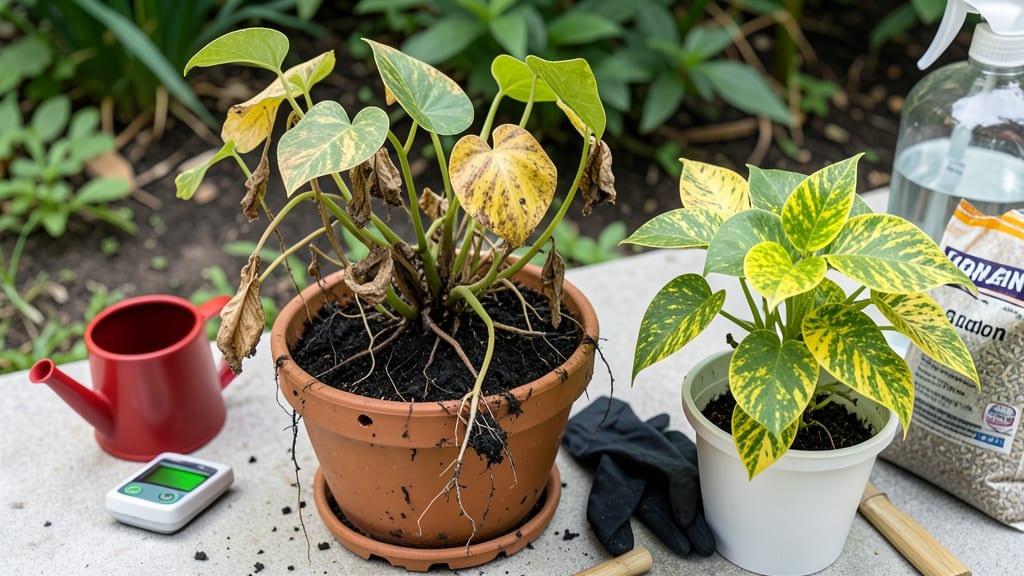
Here’s how to fix an overwatered pothos before the damage becomes permanent. 🌱 The yellowing leaves and mushy stems aren’t just sad—they’re screaming for help, and the good news is, you can save it. Overwatering turns vibrant green into a sad, soggy mess, but with the right moves, your plant will bounce back in just 2-4 weeks. The key is acting fast, trimming the damage, and giving the roots fresh air to heal.
First, stop watering completely. Let the soil dry out completely before touching it again—this is the hardest part, but it’s what stops root rot from spreading. Then, gently remove the plant from its pot and inspect the roots.
Healthy roots are firm and white; black, mushy roots need to go. Snip those off with clean scissors, then let the roots dry out for 24 hours before repotting in fresh, well-draining soil.
Once the roots are ready, choose a pot with drainage holes (if it doesn’t have them, drill a few) and fill it with a mix of potting soil and perlite or orchid bark for better airflow.
Trim back any yellow or brown leaves—they’re not coming back, and they’ll just slow down recovery. After repotting, water lightly only when the top 1-2 inches of soil feel dry to the touch.
Within 2-3 weeks, you’ll see new growth pushing through, and the remaining leaves will perk up. The secret to long-term success? Watering only when the soil is bone-dry, and never letting your pothos sit in saucers of water.
Once you’ve got the rhythm down, your plant will thrive—and you’ll spot the signs of overwatering before they become a crisis.
Root Causes of Overwatered Pothos
Overwatering your pothos (Epipremnum aureum) isn’t just a gardening mistake—it’s a chain reaction triggered by a few key factors. Understanding these causes helps you avoid them in the future and fix the damage faster.
Let’s break down the science behind why your plant might be drowning in too much water.
---
Pothos thrives in well-draining soil, but when drainage fails, water pools at the roots instead of draining away. Here’s why this happens:
- Clay or Compacted Soil: Heavy, dense soils (like clay) don’t allow water to escape easily. Roots suffocate in saturated conditions, leading to anaerobic stress—a lack of oxygen that triggers rot. - Lack of Drainage Holes: Pots without drainage holes act like bathtubs for your plant.
Water sits at the bottom, creating a soggy, disease-prone environment. - Overpotting: Using a container too large for your pothos means excess soil stays wet longer. Roots can’t absorb moisture fast enough, leading to waterlogging.
Pro Tip: 💡 If your pothos is in a decorative pot without holes, repot it into a cache pot with drainage or use hydroponic growing mediums (like coco coir or perlite mixes) to improve airflow.
---
Pothos are drought-tolerant, but inconsistent watering—especially overwatering followed by neglect—throws their roots into chaos. Here’s how it plays out:
- Watering on a Schedule: Plants don’t need water every 7 days. Pothos should be watered only when the top 1–2 inches of soil are dry.
Overwatering on a rigid schedule forces roots to sit in anaerobic conditions. - Ignoring Seasonal Changes: In winter, pothos grow slower and need 30–50% less water than in spring/summer.
Cold temperatures slow root activity, making them more susceptible to rot. - Using Ice Cubes or Cold Water: Sudden temperature shocks from icy water can disrupt root cell membranes, making them more vulnerable to fungal infections like Pythium.
Pro Tip: 🌡️ Stick your finger in the soil before watering—if it’s damp below 1 inch, wait. And always use room-temperature water to avoid shocking the roots.
---
Pothos love humidity, but too much of it—combined with poor airflow—creates a greenhouse effect that traps moisture around roots.
- High Humidity + No Airflow: In bathrooms or kitchens, humidity levels can exceed 60%. Without proper ventilation, water evaporates slower, keeping soil wet longer. - Cold Drafts Near Roots: Drafts from AC vents or open windows can cause temperature fluctuations, slowing root respiration.
Weak roots can’t process excess water efficiently. - Overcrowded Roots: If your pothos is root-bound (roots circling the pot), they compete for oxygen and water, leading to root suffocation and rot.
Pro Tip: ✨ Place pothos near a gentle fan (not direct airflow) to improve circulation. If humidity is high, reduce watering frequency by 20–30%.
--- Not all soils are created equal—and some are downright deadly for pothos. Here’s what goes wrong:
- Heavy Garden Soil: Pure garden soil compacts easily, blocking drainage. It lacks aeration, causing roots to drown. - Peat-Moss Overload: While peat holds moisture, it can stay soggy for weeks.
Mix it with perlite or orchid bark (20–30%) to improve drainage. - Fertilizer Burn: Over-fertilizing (especially with synthetic nitrogen) can burn roots, making them more prone to rot when overwatered.
Pro Tip: 🔥 Use a chunky, airy mix like: - 50% potting soil - 30% perlite or pumice - 20% orchid bark or coco coir
--- An unseen enemy might be sabotaging your pothos’ ability to handle water properly.
- **Root Rot Fungi (Phytophthora, Pythium): These thrive in waterlogged soil, clogging root cells and blocking nutrient uptake. Infected roots turn black and mushy. - Scale or Mealybugs: These pests weaken the plant, reducing its ability to process water efficiently.
Infested pothos may drop leaves or develop yellowing despite "proper" care. - Bacterial Soft Rot**: Caused by Erwinia bacteria, this turns roots to slime in wet conditions. It spreads rapidly in overwatered pots.
Pro Tip: 🎯 If you suspect pests, isolate the plant and treat with neem oil or insecticidal soap. For fungal rot, sterilize tools with rubbing alcohol to prevent spread.
Revive Your Pothos in 3 Steps
Now that you’ve identified the signs of overwatering—yellowing leaves, mushy stems, or drooping foliage—it’s time to take action! The good news? Pothos are resilient, and with the right care, they’ll bounce back faster than you think. Here’s how to trim, drain, and revive your plant in simple, effective steps.
---
Cause: Overwatering suffocates roots, cutting off oxygen and leading to rot. Fix: Let the soil dry out completely before watering again.
- 🌱 Check the soil: Stick your finger 1-2 inches deep into the pot. If it feels damp, hold off for another day. - ⏳ Wait it out: Pothos can survive weeks without water if the roots aren’t rotting.
Be patient! - 🚰 Drain excess water: If your pot has no drainage holes, transfer it to a tray and let it drain for 30 minutes after watering.
💡 Pro Tip: If your pothos is in a decorative (non-drainage) pot, repot it into a cache pot with holes or use a self-watering system to regulate moisture.
---
Cause: Yellow, mushy, or black leaves are beyond saving and can attract pests. Fix: Prune back the unhealthy parts to encourage new growth.
- ✂️ Sterilize your shears: Wipe blades with rubbing alcohol to prevent spreading disease. - 🌿 Cut above a node: Snip ½ inch above a leaf node (the bump where leaves grow) to encourage regrowth. - 🌱 Propagate the cuttings: Place healthy trimmings in water—you’ll have baby pothos in 2-4 weeks!
⚠️ Warning: Avoid cutting into mushy stems (they’re rotting). Focus on firm, green sections.
---
Cause: Compacted, soggy soil traps moisture and blocks roots. Fix: Give your pothos fresh, well-draining soil and a breathable home.
- 🏺 Choose the right pot: Opt for terracotta or plastic with drainage holes (1-2 inches larger than the current pot). - 🌿 Use lightweight mix: Combine potting soil with perlite or orchid bark (50/50 ratio) for better aeration. - 🌱 Gently remove the plant: Shake off old soil, then rinse roots under lukewarm water to remove debris. - ⏳ Let roots dry: Pat them dry with a paper towel before repotting to prevent further rot.
💡 Pro Tip: If roots smell foul or are black/mushy, trim them with sterilized scissors before repotting.
---
Cause: Overwatering often stems from inconsistent habits. Fix: Train yourself (and your plant) with a simple schedule.
| Sign | Action | Frequency | |------------------------|-------------------------------------|-----------------------------| | Soil feels dry 1 inch down | Water thoroughly until it drains | Every 10-14 days (varies by climate) | | Leaves curl slightly | Check soil moisture before watering | Never on a fixed schedule—always test first! | | Yellowing returns | Reduce water; improve drainage | Cut back to every 3 weeks |
🌡️ Climate Check: - Humid homes? Water less often (soil stays moist longer). - Dry air? Mist leaves lightly or place a humidity tray nearby.
---
Once your pothos is back on track, keep these habits to avoid future overwatering:
- 📊 Use the "finger test" before watering—always. - 🌱 Choose the right pot size—too big = more moisture retention. - 🚰 Empty saucers after watering to prevent root suffocation. - 🌿 Fertilize lightly (every 2-3 months in spring/summer) to avoid encouraging weak, waterlogged growth. - 🌱 Rotate your plant weekly for even light exposure—stressed plants handle water better.
--- 🎯 Final Reminder: Pothos are forgiving! Even if your plant looks sad now, trim the damage, refresh the roots, and adjust your care—you’ll have a lush, happy vine in 4-6 weeks. 🌿✨
Frequently asked questions
My pothos leaves are yellow but still firm—is this overwatering?
Not necessarily! Yellow leaves on firm stems often signal nutrient deficiency or too much light rather than overwatering. Check the soil first—if it's dry 1-2 inches deep, your plant may need fertilizer (use a balanced 10-10-10 mix) or a move to bright, indirect light. Only if the stems feel mushy or the pot smells sour is it overwatering.
Can I save a pothos with black, mushy stems?
Yes, but you'll need to act fast! Cut back to healthy green stems (above leaf nodes) and repot the remaining plant in fresh, well-draining soil. If the black mush extends deep into the stem, you may need to cut further back. Propagate the healthy cuttings in water—they'll root in 2-3 weeks while the main plant recovers.
How often should I water my pothos after fixing overwatering?
Start with a strict 3-week schedule after recovery, then adjust based on soil dryness. In winter, water every 4-6 weeks—pothos grow slower and need less moisture. Always check by sticking your finger 1-2 inches deep—if it's damp, wait another week. The key is consistency over frequency.
Will my pothos grow back if I cut all the yellow leaves?
Cutting yellow leaves actually helps your pothos focus energy on new growth. Just make clean cuts ½ inch above leaf nodes (the small bumps where leaves grow). The plant will redirect nutrients to these nodes, producing fresh leaves in 2-4 weeks. You'll often see new shoots emerging from the nodes within days!
Can I use hydrogen peroxide to treat overwatered pothos roots?
Yes! Mix 1 part 3% hydrogen peroxide with 4 parts water and use it to rinse roots during repotting. This disinfects and oxygenates the roots while preventing fungal growth. Soak the roots for 5 minutes max, then rinse with clean water before repotting. Do this every 2-3 months as preventive care for future watering issues.