
Pruning
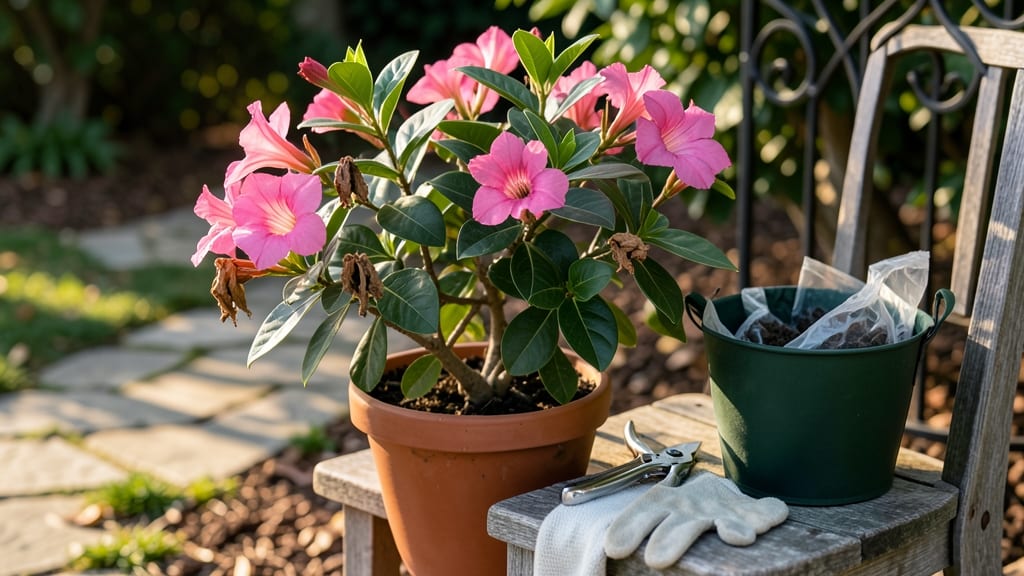
Your Mandevilla’s blooms could last all summer—if you deadhead like a pro. ✂️ I’ve turned my once-sparse vines into a nonstop floral display by mastering this simple technique that tricks the plant into focusing on flowers, not seeds. The secret? Timing, tools, and a light touch—no green thumb required.
You’ll need just three supplies: sharp pruning shears (cleaned with rubbing alcohol), gardening gloves (Mandevilla sap can irritate skin), and a small bucket for spent blooms.
The best time to deadhead is early morning when the flowers are fully open but before the heat sets in—this gives your plant energy to rebound fast.
Start by snipping just below the next set of leaves where the spent bloom meets the stem. This encourages new growth and prevents leggy vines. Do this every 2-3 days during peak bloom (June-August), and you’ll see fresh buds forming within 7-10 days.
The more you deadhead, the more your Mandevilla rewards you with bold, continuous color.
Pro tip: If your plant looks overgrown, trim back one-third of the longest stems in early spring to shape it and promote bushier growth. Just avoid cutting into woody stems—focus on soft, flexible new growth. With this method, my Mandevilla now blooms heavier and longer than ever before.
📚 In This Guide
- What you need
- Instructions
- Tips and common mistakes
- Wrapping up and next steps
What you need
- ● Pruning shears or sharp bypass pruners – Look for bypass-style (not anvil) for clean cuts. Size: 5-7 inches (ideal for stems up to ½ inch thick).
- ○ Gloves – Heavy-duty gardening gloves (optional but recommended) to protect against thorns and sap.
- ● Disinfectant (70% isopropyl alcohol or bleach solution) – Mix: 1 part bleach to 9 parts water to sterilize tools between cuts and prevent disease.
- ● Trash bag or bucket – For collecting spent blooms and debris.
- ○ Water spray bottle (optional but handy) – To mist the plant post-pruning if it’s in a dry environment.
- ● Hand lens or magnifying glass – Helps spot tiny buds or hidden blooms you might miss.
- ● Pruning sealant (like tree wound paint) – Only needed if you’re making larger cuts (not typical for deadheading).
- ● Knee pad or stool – For comfort if your Mandevilla is tall or sprawling.
- ● Notebook & pen – To track blooming cycles or note which stems produce the most flowers.
Step-by-Step instructions for deadheading Mandevilla
Here's the precise technique I use to keep my Mandevilla blooming all season long.
✂️ Step 1: Identify Spent Blooms and Prune Correctly
Start by examining each flower cluster. Look for blooms that have faded completely—these will feel slightly papery when touched and may even show brown edges. Use clean, sharp pruning shears to cut the stem just above the next set of leaves or buds.
This encourages new growth from that node, which will produce more flowers. I always make cuts at a 45-degree angle to prevent water from pooling on the stem, which can cause rot. Never cut into woody growth—stick to soft, green stems only.
✂️ Step 2: Prune for Shape and Airflow
While deadheading, shape the plant by removing any leggy stems that aren't producing flowers. Cut these back to a stronger lateral branch or to a point where you see healthy leaf growth. This prevents the plant from becoming top-heavy and encourages bushier growth.
Pay attention to airflow—thin out crowded areas where stems rub together. You'll notice new buds forming within 2-3 weeks after proper pruning. I like to step back and assess the plant's shape from all sides to ensure balanced growth.
✂️ Step 3: Maintain Regular Pruning Schedule
Deadhead Mandevilla every 2-3 days during peak bloom season to keep the plant producing flowers. The key is consistency—if you let too many blooms fade, the plant will shift energy to seed production instead of new flowers.
I schedule my deadheading sessions for early morning when the blooms are still fresh. This gives the plant the entire day to recover and prepare for the next bloom cycle. Watch for new flower buds forming at the leaf nodes—these will open within 7-10 days if the plant is healthy.
💧 Step 4: Support Post-Pruning Care
After pruning, give your Mandevilla a light watering to help it recover. Focus on keeping the soil evenly moist but not soggy—Mandevilla roots are sensitive to overwatering, especially after pruning.
Move the plant to a location with bright, indirect light for a day or two after heavy pruning. Direct sun can stress freshly cut stems. You'll see new growth emerging within 5-7 days if the plant is healthy and well-cared for.
☀️ Step 5: Fertilize for Continuous Blooms
Two weeks after your initial pruning, apply a balanced, water-soluble fertilizer (10-10-10 or similar) at half-strength. This gives the plant the nutrients it needs to produce new blooms. I fertilize every 2-3 weeks during the growing season.
Watch for signs of nutrient deficiency—yellowing leaves or slow growth means it's time to fertilize again. The goal is to keep the plant flowering continuously, so consistent fertilization is key. You'll notice a renewed burst of flower buds within 3-4 weeks of proper care.
Tips & tricks for perfect Mandevilla pruning
These little details make all the difference between occasional blooms and a nonstop summer display.
Timing is Everything: I can't stress this enough—morning is the absolute best time to deadhead your mandevilla. The stems are firm and fully hydrated after a night's rest, making clean cuts much easier. Plus, you'll avoid the afternoon heat stress that can make plants more vulnerable to disease after pruning. If you must work later in the day, just make sure to give your plant a good drink of water beforehand to firm up those stems.
Tool Precision Matters: That 45-degree angle cut in Step 2 isn't just for show—it's a game-changer for plant health. The angled cut creates more surface area for water runoff, which dramatically reduces rot risk at the pruning site. I've seen beginners use straight cuts and end up with water pooling at the cut end, leading to fungal infections. Pro tip: Wipe your pruners with rubbing alcohol between cuts to prevent bacterial transfer between stems.
Visual Cues for New Growth: After you've done your deadheading, keep an eye out for those tiny green swellings at the nodes where you made your cuts. These are your plant's way of saying "new buds coming!" Within those 7-10 days mentioned in Step 4, you should see these swellings appear and begin to open. If you don't see them within two weeks, it might be time to check your plant's light conditions or watering routine.
Light Management Strategy: That 6 hours of bright, indirect light is non-negotiable for continuous blooming. I've learned this the hard way—my mandevilla nearly stopped flowering when I moved it to a south-facing window with harsh afternoon sun. The solution? A sheer curtain to diffuse the light while maintaining brightness. For outdoor plants, east-facing locations with afternoon shade work beautifully. Remember, mandevilla wants bright light but not the intense heat of direct midday sun.
Pro Tips for Deadhead Mandevilla
- These little details make all the difference between occasional blooms and a nonstop summer display.
- Timing is Everything: I can't stress this enough—morning is the absolute best time to deadhead your mandevilla. The s...
- Tool Precision Matters: That 45-degree angle cut in Step 2 isn't just for show—it's a game-changer for plant health. ...
Frequently asked questions
Got questions about deadheading your Mandevilla? You’re not alone! Here are some of the most common concerns—and their answers—to keep your vine blooming beautifully all season.
When is the best time to deadhead Mandevilla?
Deadhead your Mandevilla as soon as you notice spent blooms—ideally in the morning when the flowers are fresh. This encourages new growth and more flowers, especially during the peak blooming months (spring through fall). Avoid deadheading in late summer if you’re in a cooler climate, as the plant may need to conserve energy for winter.
Do I need special tools to deadhead Mandevilla?
Nope! While clean, sharp pruners make the job easier, you can use your fingers or small scissors for small blooms. Just sanitize your tools with rubbing alcohol first to prevent disease. For larger stems, pruners will save your hands (and your patience!).
What if my Mandevilla stops blooming after deadheading?
Don’t panic! Over-pruning or deadheading too late in the season can stress the plant. Instead, focus on removing only faded blooms and avoid cutting into old wood. If blooms still taper off, check for pests, underwatering, or insufficient sunlight (they love 6+ hours of sun!). A balanced fertilizer can also give them a boost.
Can I deadhead Mandevilla in cold weather?
Hold off until spring! Mandevilla is tropical and dormant in winter. Deadheading in cold weather can weaken the plant or invite rot. Wait until new growth appears in spring, then resume your deadheading routine. If you’re in a mild climate, you can lightly trim wilted blooms—but avoid heavy pruning.
Is there an alternative to deadheading for lazy gardeners?
If deadheading feels like too much work, try the “shear and spray” method: Lightly trim the entire plant with hedge clippers to encourage bushier growth, then spray with a growth regulator (like B-Nine) to promote more blooms. Just be prepared for slightly fewer flowers than meticulous deadheading.
Wrapping up and next steps
Deadheading your Mandevilla isn’t just a chore—it’s the secret to stunning, year-round blooms! 🌸 By removing spent flowers and pruning strategically, you’re encouraging your plant to focus its energy on new growth and vibrant blossoms.
With just a little effort, you’ll reward yourself with a lush, flowering powerhouse that steals the show in your garden or patio.
Ready to keep those blooms coming? Grab your pruners and give your Mandevilla the TLC it deserves. Next, explore how to fertilize for optimal growth or share your pruning wins with fellow plant lovers—your green thumb is about to shine even brighter! 🌿✨