
Tools
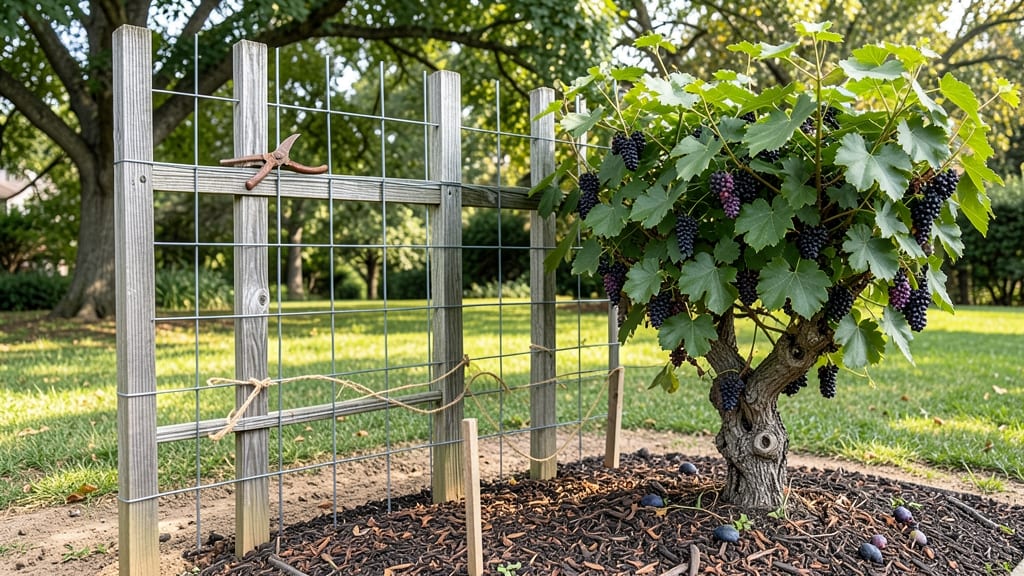
How to build a muscadine trellis—you’ll need a sturdy frame that won’t snap under their weight. ✨ I’ve built three over the years, and this design—using 4x4 posts and heavy-duty wire—holds up even after a storm. The key is spacing: 8-10 feet between posts for mature vines, with 12-gauge galvanized wire stretched tight enough to support 20+ pounds of fruit. Most people underestimate how much these vines climb. My first attempt used flimsy PVC, and the trellis bowed by summer. This version adds diagonal braces for extra stability, plus wooden crossbeams every 3 feet to prevent sagging. The result? A sturdy frame that lasts 10+ years with minimal upkeep. By the time your vines reach full size, you’ll have a neat, productive wall of grapes—no more tangled messes or broken branches. The trellis also makes harvesting easier, since fruit hangs where you can reach it without bending over. Plus, the open structure lets sunlight and air circulate, reducing disease risk. This design works for arbors, pergolas, or simple fence trellises. For small spaces, shrink the spacing to 6 feet—just adjust the wire tension accordingly. Let’s get those posts in the ground!
📚 In This Guide
- What you need
- Instructions
- Tips and common mistakes
- Wrapping up and next steps
What you need
- ● T-posts or metal stakes: 8–12 stakes (5–6 ft tall, ½-inch diameter) for corner and mid-support posts.
- ● Galvanized wire (16–18 gauge): 100–150 ft (for horizontal and vertical lines).
- ● Wooden posts (4x4 or 6x6 pressure-treated lumber): 4–6 posts (8 ft tall) for main trellis supports.
- ● Concrete mix: 50 lbs (for anchoring posts securely).
- ● Trellis wire or nylon cord: 50–100 ft (for vine guidance).
- ○ Post caps (optional but recommended): 4–6 caps to protect wooden posts from moisture.
- ● Post hole digger or auger
- ● Level
- ● Measuring tape
- ● Wire cutters or bolt cutters
- ● Hammer or mallet
- ● Drill (for securing post caps)
- ● Gloves and safety glasses
- ● Clear, level ground (or a slight slope for drainage).
- ● Sunny location with 6+ hours of sunlight daily.
- ● Well-draining soil (amend with compost if needed).
- ● Existing muscadine vines (or space to plant them near the trellis).
Step-by-step instructions for building a muscadine trellis
Here's how I build a trellis that supports muscadine vines through their heavy fruiting seasons—no wobbly stakes or flimsy wire here.
🪴 Step 1: Select and Prepare Sturdy Posts
Choose 4-foot tall T-posts (2x2-inch lumber works best) for each corner of your trellis rectangle. Drive them 18-24 inches deep into moist soil—muscadines need deep anchorage for wind resistance. I use a sledgehammer to seat them firmly, then check for plumb with a level before moving on.
For extra stability, I bury 12-inch long rebar stakes at a 45-degree angle alongside each post, then pour concrete around the base. This prevents posts from leaning when vines load up with fruit. Let the concrete cure 24 hours before attaching any horizontal supports.
✂️ Step 2: Install Horizontal Rails and Cross Braces
Attach 2-inch diameter PVC pipes horizontally between posts at 3-foot intervals—this creates three parallel wires for vine training. Use heavy-duty galvanized straps or lag bolts to secure them. I always add diagonal cross braces between posts for additional wind resistance, especially in exposed areas.
For the top rail, position it 5-6 feet high to accommodate mature vine growth. The middle rail at 3 feet helps distribute weight when fruit clusters develop. Use a string level to ensure all rails stay perfectly horizontal—uneven rails create training headaches later.
🌱 Step 3: Add Trellis Wire and Secure Anchors
Stretch 12-gauge galvanized wire tightly between each pair of posts, creating three parallel lines. Space them 8-12 inches apart vertically to accommodate vine growth. I use a tensioning tool to eliminate all sag—muscadines hate loose supports that let vines flop.
Anchor the wire ends with heavy-duty zip ties or wire clamps at each post. For extra security, I loop the wire around the PVC pipes twice before securing. This prevents wire from slipping during storms or when vines thicken. Test each wire's tension by pulling firmly—it should barely move.
💧 Step 4: Prepare Soil for Heavy Vine Support
Amend the soil within 2 feet of the trellis posts with 2 inches of compost mixed into the top 6 inches of soil. Muscadines have deep roots and need nutrient-rich soil to support their weight. I also add 1 cup of bone meal per planting hole for phosphorus—this strengthens root development before vines climb.
Create a 12-inch wide planting trench along the base of the trellis. This gives roots room to spread without competing with the trellis structure. Water the amended soil thoroughly before planting—settled soil prevents posts from shifting as vines mature.
☀️ Step 5: Train Vines Using the 3-Wire System
When vines reach 3-4 feet tall, guide the main stem upward along the bottom wire. Once it reaches the top wire, pinch the tip to encourage lateral branches. These will grow along the middle and top wires, creating a natural weight distribution.
I prune suckers that grow below the bottom wire—these drain energy from fruit production. For established vines, I use soft plant ties to secure branches to the wires without damaging bark. The goal is a fan-shaped canopy that spreads weight evenly across all support points.
Tips & tricks for sturdy muscadine trellis construction
After years of watching trellises collapse under muscadine vines, I've learned these critical tricks for building one that lasts through heavy fruiting seasons.
Post Placement Precision: When driving your 4-foot T-posts 18-24 inches deep, mark the exact location of each post corner with wooden stakes first. Muscadines spread aggressively—leave at least 12 feet between posts to prevent root competition. I use a tape measure and string line to ensure perfect square alignment before driving posts, which saves hours of adjustments later. The 24-hour concrete curing time isn't just about strength—it's when the posts truly settle into their final position.
Wire Tension Technique: That 12-gauge galvanized wire needs to be tighter than you think. After stretching it between posts, use a tensioning tool to pull each wire until it's nearly drum-tight—muscadines will sag loose wire like a trampoline. I test tension by pulling each wire with both hands; if it moves more than 1 inch, it's not tight enough. For the vertical spacing of 8-12 inches between wires, I use a carpenter's level to mark equal intervals on the posts before attaching wires—this ensures perfect alignment for vine training.
Soil Preparation Secret: The 2 inches of compost mixed into the top 6 inches of soil is non-negotiable for heavy vines. I double this amount (4 inches of compost) in the planting trench area where roots will concentrate. For the bone meal, I mix it directly with the compost before soil amendment—this ensures phosphorus reaches root zones immediately. The 12-inch wide trench isn't just about space; it creates a nutrient-rich zone that prevents roots from circling the trellis structure, which can strangle growth over time.
Vine Training Visual: When your vines reach 3-4 feet and you're guiding them along the bottom wire, imagine a "V" shape. The main stem should climb straight up, while lateral branches should spread outward at 45-degree angles along the middle and top wires. This creates the fan-shaped canopy that distributes fruit weight evenly. I use small plastic clips (not wire) to secure branches initially—these won't damage bark when vines thicken later.
Pro Tips for Build A Muscadine Trellis
- After years of watching trellises collapse under muscadine vines, I've learned these critical tricks for building one that lasts through heavy fruiting seasons.
- Post Placement Precision: When driving your 4-foot T-posts 18-24 inches deep, mark the exact location of each post corner with wooden stakes first.
- Wire Tension Technique: That 12-gauge galvanized wire needs to be tighter than you think.
Frequently asked questions
Got questions about building a muscadine trellis? You’re not alone! Here are some common concerns—and their answers—to help you create the perfect support system for your heavy vines.
What’s the best time of year to build a muscadine trellis?
Build your trellis in late winter or early spring (before bud break) or late summer/early fall (after harvest). This gives vines time to establish roots before heavy fruiting. Avoid building during extreme heat or frost—soil conditions matter for stability!
Can I use wood scraps or repurpose materials for a trellis?
Cedar, redwood, or treated lumber
are great for longevity, but you can also use reclaimed wood, metal pipes, or even sturdy branches if secured properly. Just ensure materials are rot-resistant and won’t corrode. Avoid pressure-treated wood if vines will touch it directly—opt for untreated or naturally weather-resistant options.
How do I keep muscadine vines from snapping under their weight?
Muscadines are heavy—use galvanized wire, strong twine, or zip ties to loosely tie vines to the trellis every 12–18 inches. Space stakes or posts every 6–8 feet and angle them slightly for extra support. If vines sag, add horizontal crossbars for better weight distribution.
Do I need to prune muscadines differently with a trellis?
Yes! With a trellis, prune aggressively in late winter to encourage upward growth. Remove weak or crossing branches and thin out crowded vines to improve airflow. Aim for a single main stem with lateral branches spaced along the trellis—this prevents overloading and makes harvesting easier.
What if my trellis collapses under the weight of the grapes?
Check for loose connections, rotting wood, or weak anchors first. Reinforce with additional stakes, guy wires, or concrete footings if needed. If the issue persists, upgrade to heavier-duty materials (like 4x4 posts) or shorten the trellis height to reduce strain. Regularly inspect after rain or storms!
Wrapping up and next steps
Building a sturdy muscadine trellis is all about patience, precision, and passion—and now you’ve got the know-how! 🌱 Whether you chose a T-post, wooden frame, or wire system, your vines will thrive with the right support, soil prep, and seasonal care.
Remember, consistency is key: prune regularly, monitor for pests, and adjust as your plants grow.
Ready to see your trellis in action? Start by planting your muscadines—or treat yourself to a well-earned break and admire your handiwork! 🍇 Once those vines take hold, you’ll be harvesting sweet, juicy grapes in no time. Happy gardening!