
Blooming
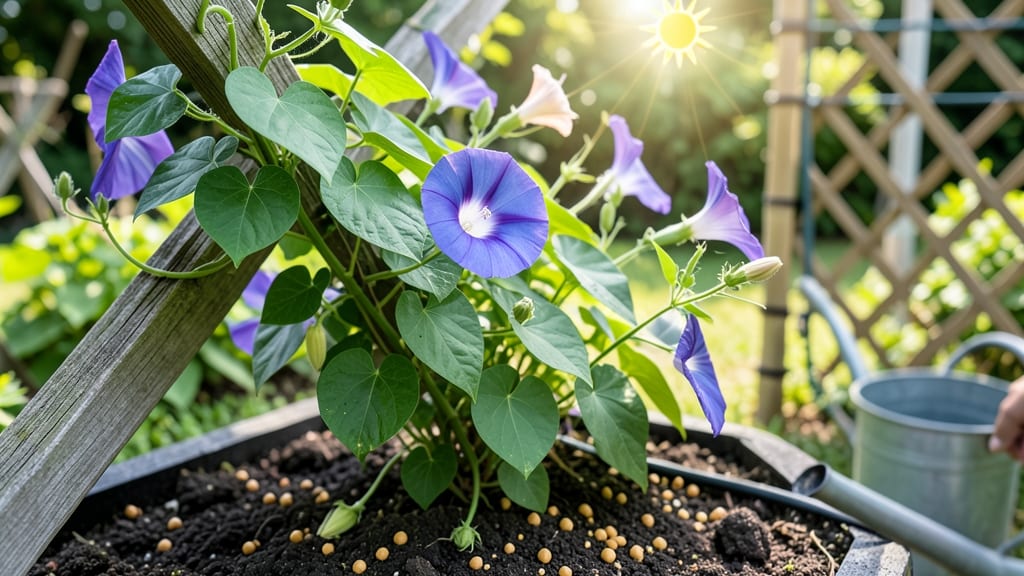
Morning glories refuse to bloom? The fix starts with sunlight. ✨ These climbers need 6+ hours of direct sun daily—more means more flowers. I learned this the hard way after my vines produced leaves but no blooms last summer. The secret isn’t just light, though—it’s timing too.
Begin with well-draining soil rich in organic matter (think compost or aged manure). Over-fertilizing with nitrogen creates leafy monsters at the expense of flowers—stick to a balanced 10-10-10 formula.
Water consistently but avoid soggy roots; morning glories hate wet feet. Prune leggy growth to encourage bushier vines that support more blooms.
By late spring, you’ll see trumpet-shaped flowers unfurling daily—each lasting just hours but replaced by fresh blooms. The fragrance alone makes it worth the effort. For extra blooms, deadhead spent flowers (gently!) and provide trellises for vertical growth. Even in partial shade, these vines reward patience with show-stopping displays.
Troubleshooting tip: If blooms still lag, check for pests like aphids or spider mites—these sap-suckers stress plants. A strong spray of water or neem oil often revives struggling vines. The key is balance: sunlight, soil, and space to stretch. Your morning glory trellis will become the garden’s star attraction.
📚 In This Guide
- What you need
- Instructions
- Tips and common mistakes
- Wrapping up and next steps
What you need
- ● Morning glory seeds: Choose Ipomoea purpurea (common morning glory) or Ipomoea tricolor (heavenly blue). Plant 3-5 seeds per foot for dense vines.
- ● Well-draining potting mix: 5-10 gallons (sterilized to prevent disease). Mix 60% garden soil, 30% compost, and 10% perlite for aeration.
- ● Containers or garden bed: Containers: 5-gallon pots or larger (with drainage holes) for climbing varieties. Use 1 pot per 3-5 plants.
- ● Garden beds: Full sun (6+ hours/day) with 6-inch-deep soil amended with compost.
- ● Trellis, fence, or obelisk: 6-10 feet tall (bamboo, metal, or wooden). Secure with garden twine for support.
- ● Watering can or hose: With a gentle spray nozzle to avoid disturbing seedlings.
- ● Fertilizer: Balanced 10-10-10 (granular or liquid) or compost tea for organic growth.
- ● Pruning shears: Sharp, sterilized shears for trimming dead blooms or overgrowth.
- ● Mulch: 2-3 inches of straw or wood chips to retain moisture and suppress weeds.
- ● Slow-release fertilizer spikes: For low-maintenance nutrient delivery.
- ● Epsom salt: 1 tbsp per gallon of water (monthly) to boost magnesium for vibrant blooms.
- ● Garden gloves: To protect hands while handling thorny vines or soil.
- ● Shade cloth (30-50% coverage): For seedlings if your climate has intense afternoon sun.
- ● Bloom booster: Fish emulsion or kelp extract to encourage flowering.
- ● Decorative accents: Solar-powered lights or colorful beads for a whimsical touch!
Step-by-step instructions for encouraging morning glory blooms
Morning glories love sun, space, and a little patience—here’s how to coax those iconic trumpet flowers into full, fragrant display.
☀️ Step 1: Plant in Full Sun for Maximum Blooms
Morning glories thrive in 6-8 hours of direct sunlight daily. Choose a south- or west-facing location where they’ll receive unfiltered morning rays—this is their energy source for vibrant blooms. If your space gets afternoon shade, that’s fine too, but avoid spots that stay in shadow past noon.
I always plant mine near a fence or trellis where they can climb upward immediately. The more vertical growth, the more blooms you’ll see—each vine can produce 50+ flowers per season if given proper support. Watch for leaves turning pale or stems stretching too fast; that’s your cue to move them closer to the light.
🌱 Step 2: Provide a Strong Trellis or Support Structure
Use a 6-foot-tall trellis, fence, or sturdy wire mesh to give vines something to climb. Morning glories twine naturally, but a tall structure prevents sprawling and encourages upward growth where blooms appear. I like using a simple wooden lattice or even a sturdy chain-link fence—whatever keeps vines vertical and off the ground.
Plant seeds ½ inch deep and 6 inches apart in well-draining soil. Once sprouts appear, gently guide the first tendrils toward the trellis. You’ll see blooms form more abundantly when vines are supported—unsupported plants waste energy sprawling instead of flowering.
💧 Step 3: Water Deeply but Infrequently
Morning glories are drought-tolerant once established, but consistent moisture encourages strong blooms. Water deeply 2-3 times per week until the top 2 inches of soil feel dry. Overwatering causes root rot, which weakens plants and reduces flowering. I check soil moisture with my finger—if it’s damp below the surface, hold off on watering.
Mulch around the base with 1-2 inches of organic mulch to retain moisture and suppress weeds. This keeps roots cool and encourages steady growth. You’ll notice healthier vines and more blooms when soil stays consistently moist but not soggy.
✂️ Step 4: Prune Strategically for More Flowers
Pinch back the tips of young vines when they reach 6-8 inches tall to encourage bushier growth. This redirects energy from leaf production to flower formation. I use clean pruners to snip just above a leaf node—never cut into woody stems, as morning glories are annuals and won’t recover well.
Remove spent blooms daily to prevent seed pods from forming. Each flower that goes to seed steals energy from potential new blooms. You’ll see a dramatic increase in flowers if you keep the plants tidy—think of it as giving your vines a second wind for more displays.
🌿 Step 5: Fertilize Lightly for Continuous Blooms
Use a balanced, water-soluble fertilizer (10-10-10) every 4-6 weeks during the growing season. Morning glories don’t need heavy feeding—they’re fast growers that can become leggy if over-fertilized. I mix a ½ teaspoon per gallon of water and apply it at the base of the plant in the early morning.
Watch for dark green leaves with rapid growth but few blooms—that’s a sign of too much nitrogen. If you see this, switch to a low-nitrogen, high-phosphorus fertilizer (like 5-10-5) to push flowering. You’ll know you’ve got the right balance when vines grow steadily but produce abundant blooms.
Tips & tricks for perfect morning glory blooms
Here's what nobody tells you about getting those trumpet-shaped blooms to shine brighter than ever.
Sunlight Strategy: Those 6-8 hours of daily sunlight are non-negotiable for vibrant blooms. I've found that morning glories actually prefer the cooler morning sun over intense afternoon heat—so if you're in a hot climate, consider giving them some afternoon shade to prevent leaf scorch while still getting those morning rays. The first sign you're on the right track? Leaves that stay a rich, deep green rather than turning pale or yellow.
Support System: Don't underestimate the power of that 6-foot trellis! I've seen vines that reach 10 feet tall when properly supported, producing hundreds of blooms along the way. The key is guiding those first tendrils toward the trellis as soon as they appear—this establishes the climbing path and prevents tangled messes later. Pro tip: Use a lightweight trellis that won't snap under the weight of all those blooms!
Watering Wisdom: The 2-3 times per week watering schedule works best when you water deeply—aim to moisten the soil down to about 6 inches. I use my finger to check moisture: if the top 2 inches are dry but the soil below is still damp, that's your cue to water. Overwatering is the #1 cause of poor blooming in morning glories, so let the soil dry out slightly between waterings to encourage stronger root development.
Pruning Payoff: That pinch-back at 6-8 inches might seem counterintuitive, but it works wonders for bushier growth. I've seen plants that went from sparse blooms to bursting with flowers after just one pruning session. And don't forget to remove those spent blooms daily—they're energy vampires that steal nutrients from potential new flowers. Think of it like giving your plants a daily spa treatment!
Pro Tips for Make Morning Glories Bloom
- Here's what nobody tells you about getting those trumpet-shaped blooms to shine brighter than ever.
- Sunlight Strategy: Those 6-8 hours of daily sunlight are non-negotiable for vibrant blooms.
- Support System: Don't underestimate the power of that 6-foot trellis!
Frequently asked questions
Got questions about coaxing those stunning morning glories into bloom? You’re not alone! Here are answers to the most common queries—so you can grow a show-stopping display without the guesswork.
How long does it take for morning glories to bloom after planting?
Most morning glories bloom 6–10 weeks after planting seeds, depending on variety and growing conditions. Fast growers (like Ipomoea purpurea) may flower in as little as 4–6 weeks, while some heirlooms take longer. Patience pays off—once established, they’ll reward you with daily blooms for weeks!
Can I make morning glories bloom faster?
To speed up blooming, ensure they get full sun (6+ hours/day) and well-draining soil. Deadhead spent flowers to encourage new blooms, and fertilize lightly with a balanced, low-nitrogen mix (like 5-10-10) every 3–4 weeks. Avoid overwatering—consistent moisture is key, not soggy soil.
Why aren’t my morning glories blooming—just growing leaves?
Leafy growth without flowers usually means too much nitrogen or insufficient sunlight. Switch to a phosphorus-rich fertilizer (like 10-20-10) to boost blooms, and move plants to a sunnier spot if possible. Prune leggy vines to redirect energy to flowers, and check for pests (like spider mites) that stress plants.
Can morning glories grow in containers or hanging baskets?
Morning glories thrive in 5-gallon+ containers or hanging baskets, especially trailing varieties like Ipomoea tricolor. Use a lightweight, well-draining potting mix and a trellis or cage for support. Water consistently (containers dry out faster) and fertilize monthly. Just ensure the container gets full sun—they’re sun-worshippers!
Do morning glories bloom all day, or just in the morning?
True to their name, most morning glories open by mid-morning and close by early afternoon (or when shaded). However, some varieties (like heavenly blue) may reopen briefly on cloudy days. For continuous color, plant multiple varieties with staggered bloom times—your garden will thank you!
Still stumped? Drop your question in the comments—we’re happy to help you troubleshoot!
Wrapping up and next steps
Growing vibrant morning glories is all about patience, sunlight, and a little TLC—and you’re already on the right path! By choosing the perfect spot, providing consistent care, and troubleshooting early, you’ll soon be rewarded with stunning, fragrant blooms that climb and dazzle. 🌸
Ready to watch your garden transform? Start by planting a few seeds or cuttings this week—your future trellis of color is just a season away! For extra inspiration, join gardening forums or share your progress with fellow plant lovers. Happy growing! 🌱