
How To
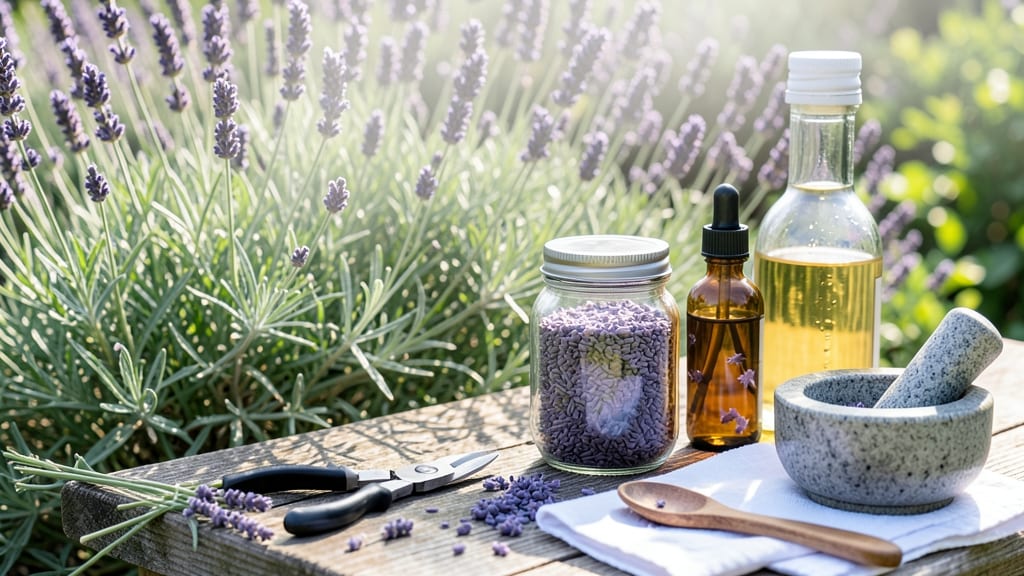
Your lavender tincture starts with the right harvest. ✨ The key is picking buds just before they fully open—this captures the most essential oils. Too late, and you lose potency; too early, and the scent isn't fully developed.
I've learned that mid-morning is perfect, when dew has dried but the sun hasn't scorched the oils yet.
Drying takes patience but preserves the lavender's magic. Spread the buds in a single layer on a screen or paper towel, away from direct sunlight. After 1-2 weeks, they'll be crisp and ready for extraction.
The right solvent matters too: vodka (80 proof) extracts well while staying accessible, but apple cider vinegar works for alcohol-free options.
You'll end up with a golden liquid that smells like summer in a bottle. This isn't just perfume—it's a concentrated remedy for stress, a skin-soothing balm, and a natural sleep aid.
The potency depends on your infusion time: 4-6 weeks in a cool, dark place gives the strongest results, though you can use it sooner if needed.
Store it properly, and this tincture will last 2+ years. Use 1-2 droppers in tea, add to bathwater, or dilute for facial toners. The first time you make it, you'll wonder why you didn't start sooner—it's that transformative. Here's how to do it right the first time.
📚 In This Guide
- What you need
- Instructions
- Tips and common mistakes
- Wrapping up and next steps
What you need
- ● Fresh lavender buds: 1 cup (about 10-12g, or ~30-40 buds). Use organic lavender if possible for purity.
- ● High-proof alcohol: 1 cup (8 oz) of 100-proof vodka, everclear, or grain alcohol. Avoid rubbing alcohol!
- ● Clean glass jar: A 16-oz (or larger) amber or cobalt glass jar with an airtight lid (UV protection preserves potency).
- ● Fine-mesh strainer or cheesecloth: For filtering out plant debris.
- ● Dark glass dropper bottles: 2-4 oz amber bottles (for storage).
- ○ Optional but helpful: A mortar and pestle (to bruise lavender buds for better extraction).
- ● A small funnel (for easy transfer to bottles).
- ● Labeling supplies (to mark potency, date, and usage).
- ● A clean workspace (sterile tools prevent contamination).
- ● Patience—lavender tinctures need 4-6 weeks to infuse fully!
- ● Storage space in a cool, dark place (like a pantry or cabinet).
Step-by-step instructions for making lavender tincture
Here's how I make a potent lavender tincture that lasts for years—simple, fast, and perfect for stress relief or sleep support.
🌿 Step 1: Gather Fresh or Dried Lavender Buds
Use 1 cup of fresh lavender buds or ½ cup of dried buds—fresh flowers work best if you have them, but dried holds up well too. I always pluck buds just before they open fully for maximum oil content. Avoid stems and leaves; they dilute the potency. If using dried lavender, check for mold or musty smells—discard any questionable batches.
For fresh lavender, gently shake off any dirt or debris. For dried, give it a quick stir to break up any clumps. This step ensures you're working with the most aromatic, therapeutic parts of the plant. If you're short on time, dried buds will work, but fresh gives a brighter, more vibrant tincture.
💧 Step 2: Choose Your Solvent and Prepare the Jar
Fill a clean 1-pint mason jar with the lavender buds, packing them lightly but not compressing them. Add enough high-proof vodka (100 proof or higher) to cover the buds by about 1 inch. Vodka is ideal because it extracts oils well and won’t spoil easily. If you don’t have vodka, everclear (190 proof) diluted to 80 proof works too—just mix equal parts everclear and water before adding.
Leave a ½-inch headspace at the top of the jar to prevent mold growth. Seal the jar tightly and give it a gentle shake to help the solvent penetrate the buds. This step is crucial—if the buds aren’t fully submerged, the extraction will be weak, and you’ll end up with a faintly perfumed liquid instead of a potent tincture.
☀️ Step 3: Steep in a Dark, Warm Place for 4-6 Weeks
Store the jar in a cool, dark place like a pantry or cabinet—direct sunlight breaks down the beneficial compounds. I like to place mine on a shelf near my kitchen, where it stays around 65-75°F. Shake the jar gently every 2-3 days to keep the buds suspended in the solvent. You’ll notice the liquid turning a pale lavender color within the first week, but full potency takes time.
After 4 weeks, check the color and aroma. If it’s still faint, steep it for another 2 weeks. Once it smells strongly of lavender and has a deep hue, it’s ready. Patience here pays off—rushing the process means a weaker tincture. If you’re in a hurry, you can strain it early, but the flavor and therapeutic benefits won’t be as strong.
🪴 Step 4: Strain and Store Properly
Line a fine-mesh strainer or cheesecloth with a coffee filter to catch any fine particles. Pour the tincture through the strainer into a clean, dark glass bottle—amber or cobalt works best to protect it from light. Press the lavender buds gently with a spoon to extract every last drop, but don’t squeeze too hard or you’ll get bitter compounds from the stems.
Label your tincture with the date and contents. Store it in a cool, dark place for up to 2 years. A well-made lavender tincture will keep its color and aroma for years if stored properly. If you notice any cloudiness or off smells, it’s time to toss it—this means the tincture has gone bad.
⏰ Step 5: Test and Use Your Tincture
Start with 1-2 drops in water or tea to test potency. You should notice a strong, floral aroma and a calming effect. If it’s too mild, steep another batch for a longer time. For stress relief, I take 5 drops under the tongue daily, holding it there for 30 seconds before swallowing. For sleep support, take 10 drops in warm herbal tea 30 minutes before bedtime.
This tincture is versatile—add it to bath salts, homemade lotions, or even cocktails for a soothing twist. The key is consistency in storage and dosage. If you’re new to herbal tinctures, start small and adjust based on how your body responds. Lavender is generally safe, but as with anything, moderation is key.
Tips & tricks for perfect lavender tincture
Here's what nobody tells you about making a lavender tincture that actually packs a punch.
Quality Matters: The lavender buds you choose make all the difference. For the strongest extraction, use buds that are just starting to open—they contain the highest concentration of essential oils. If you're using dried lavender, look for buds that are a vibrant purple color with no signs of gray or brown spots. I've ruined batches using low-quality dried lavender that smelled more like hay than flowers. Fresh buds give you the brightest, most aromatic tincture, but high-quality dried works too if you're in a hurry.
Solvent Selection: While vodka is the classic choice for lavender tinctures, don't overlook other high-proof alcohols. Everclear diluted to 80 proof works perfectly, and brandy can add a lovely depth of flavor to your tincture. Just make sure whatever you use is at least 80 proof—lower proof alcohols won't extract the lavender oils effectively. I've experimented with different solvents, and while vodka gives the cleanest flavor, brandy creates a more complex, slightly sweet profile that's wonderful for sleep support.
Steeping Strategy: The 4-6 week steeping time might seem long, but it's absolutely worth the wait. For maximum potency, place your jar in a location where it stays consistently between 65-75°F—this temperature range is ideal for extraction without encouraging mold growth. I like to set mine on a shelf in my pantry where it gets indirect light but stays cool. After the initial 4 weeks, give it a good shake before deciding whether to continue steeping—sometimes you'll be surprised at how strong it's become already. Remember, the longer you steep, the more therapeutic compounds you'll extract.
Storage Wisdom: Once you've strained your tincture, transfer it to an amber or cobalt glass bottle immediately. These dark glasses protect the delicate compounds from light degradation, which can turn your beautiful lavender tincture into a dull, ineffective liquid. Label your bottle with the date—properly stored, your tincture will maintain its potency for up to 2 years. I keep mine in a drawer where it's completely dark, and I've had batches that were just as effective after 18 months as they were when I first made them.
Pro Tips for Make Lavender Tincture
- Here's what nobody tells you about making a lavender tincture that actually packs a punch.
- Quality Matters: The lavender buds you choose make all the difference. For the strongest extraction, use buds that ar...
- Solvent Selection: While vodka is the classic choice for lavender tinctures, don't overlook other high-proof alcohols...
Frequently asked questions
Got questions about making your own lavender tincture? You’re not alone! Here are some of the most common queries—and their simple, no-fuss answers—to help you craft the perfect herbal remedy at home.
How long does lavender tincture last once made?
A properly made lavender tincture can last 2–3 years if stored in a cool, dark place (like a pantry or fridge). Always use a dark glass bottle to protect it from light degradation. Check for mold or off smells—if it’s cloudy or smells funky, toss it!
Can I speed up the infusion process?
While traditional tinctures take 4–6 weeks for full potency, you can shorten it to 2–4 weeks by gently shaking the jar daily or using a tincture press to extract the oil faster. Just know it may be slightly less concentrated than a slow-infused version!
What’s the best alcohol ratio for lavender tincture?
The classic ratio is 1:5 (1 part dried lavender to 5 parts alcohol by volume). For a milder taste, use 40–60% proof vodka or everclear. Avoid high-proof alcohol (like 190-proof) unless you’re extracting for medicinal use—it can overpower delicate lavender flavors.
Can I use fresh lavender instead of dried?
Fresh lavender works, but it’s less potent due to higher water content. If using fresh, double the amount (e.g., 2 parts fresh lavender to 5 parts alcohol) and steep for 2–3 weeks. Dried lavender is ideal for consistency and potency—think of it as the "gold standard" for tinctures!
What if my tincture turns cloudy or smells bad?
Cloudiness or a sour/yeasty smell means contamination (likely mold or bacteria). Toss it immediately—don’t risk it! To prevent this, sterilize jars, use clean tools, and store in a dark, dry place. If your tincture smells strongly herbal but clear, it’s likely fine!
Can I make lavender tincture without alcohol?
Yes! Use apple cider vinegar, glycerin, or coconut oil as alternatives. For vinegar/glycerin, follow the same 1:5 ratio and steep 4–6 weeks. Oil-based tinctures (like coconut oil) are great for topical use (e.g., skin soothers) but won’t last as long—store them in the fridge for up to 6 months.
Wrapping up and next steps
You’ve now mastered the art of crafting a soothing lavender tincture—a simple yet powerful way to harness nature’s calming benefits! Whether you’re using it for relaxation, skincare, or home remedies, this easy DIY process puts the power of herbal wellness in your hands. 🌿✨
Ready to take it further? Experiment with infusing other herbs like chamomile or peppermint, or explore creative ways to incorporate your tincture into daily self-care routines. Your journey to natural wellness starts here—cheers to your new herbal ally! 🥂