
Tools
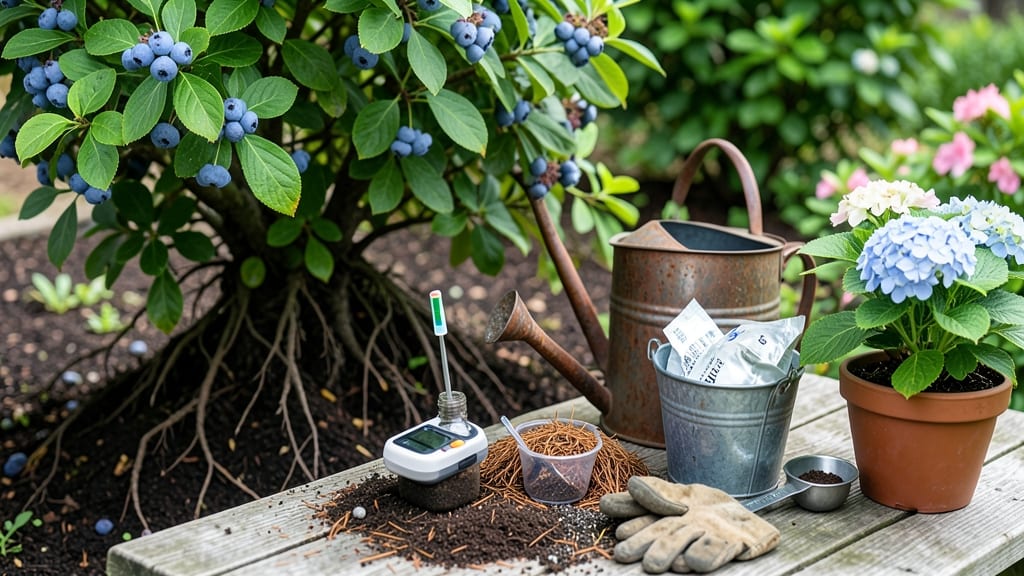
How to lower the pH in your garden—your blueberries are begging for help, and it’s not what you think. 🌿 The problem isn’t too much water or not enough sun; it’s soil pH that’s too high, locking out nutrients your acid-loving plants desperately need. Lowering pH doesn’t require lime or complicated chemistry—just the right amendments applied correctly.
Most gardeners reach for sulfur or peat moss, but even vinegar (yes, the kitchen kind) can work in a pinch. The key is testing first—your soil might need a 1-2 point drop or a dramatic shift to 4.5-5.5 for plants like azaleas or hydrangeas.
Organic options like pine needles or coffee grounds work slowly but safely, while elemental sulfur delivers faster results.
Within 4-8 weeks, you’ll see the difference: deeper green foliage, bigger berries, and flowers that stay vibrant all season. The secret? Consistency—re-test every few weeks until you hit that sweet spot where your plants finally thrive.
Works for containers, raised beds, or in-ground gardens. Here’s how to do it without burning your plants or breaking the bank—because even acid-loving plants deserve a fighting chance.
📚 In This Guide
- What you need
- Instructions
- Tips and common mistakes
- Wrapping up and next steps
What you need
- ● pH Test Kit: Digital or liquid test kit (e.g., LaMotte Soil pH Test Kit or Bluelab Soil pH Meter) to measure current pH levels (accuracy within ±0.2 pH units).
- ● Acidifying Agents (Choose 1-2): Elemental Sulfur: 20-30 lbs per 100 sq ft (for gradual pH adjustment; takes 2-6 months to work).
- ● Aluminum Sulfate: 5-10 lbs per 100 sq ft (faster-acting, ideal for immediate needs).
- ● Peat Moss: 2-3 inches spread evenly (organic, slow-release option).
- ● Cottonseed Meal: 5-10 lbs per 100 sq ft (also adds nitrogen; great for acid-loving plants like azaleas).
- ● Vinegar (White, 5% Acetic Acid): 1 cup per 10 sq ft (for spot treatments; use sparingly—rinse soil afterward).
- ● Coffee Grounds: 1-2 inches composted grounds (adds organic matter and mild acidity; best mixed into soil).
- ● Garden Tools: Garden fork or tiller (for mixing amendments into soil).
- ● Garden hose with spray nozzle (for rinsing or diluting liquid acidifiers).
- ● Wheelbarrow or bucket (for mixing materials).
- ● Gloves and safety goggles (for handling sulfur or aluminum sulfate).
- ● Compost or Composted Manure: 1-2 inches to improve soil structure while lowering pH slightly.
- ● Wood Ash (Use Cautiously!): Only if your soil is too acidic (wood ash raises pH—avoid if you’re targeting acid-loving plants).
- ● pH Buffer Solution: For recalibrating your test kit (e.g., LaMotte pH Buffer Tablets).
- ● Rain Gauge or Moisture Meter: To track watering needs post-treatment (acidifiers work best in moist soil).
Tips & tricks for perfectly balanced garden soil
Here's what nobody tells you about getting those pH numbers just right without harsh chemicals.
Test Smart: When you take your soil samples in Step 1, collect from multiple spots—especially if your garden has sun/shade variations. I've seen readings jump from 6.8 in full sun to 5.8 just a few feet away in shade. Take the average of 3-4 samples for the most accurate baseline before deciding how much acidifier to apply. This prevents over- or under-correcting.
The Sulfur Science: In Step 2, elemental sulfur is your fastest solution, but timing matters. Apply it when soil is moist—not bone dry. The sulfur needs moisture to activate and dissolve properly. I water the area lightly before spreading, then work it into the top 2-3 inches. For extreme alkalinity (above pH 7.5), you might need two applications spaced 2 weeks apart rather than one heavy dose.
Peat Moss Precision: When mixing peat moss in Step 2, don't just dump it on top. Work it into the top 4-6 inches of soil where your acid-loving plants' roots will grow. The deeper you incorporate it, the longer it will gradually release acids. For container plants, blend 1 part peat moss with 3 parts existing soil—this prevents compaction while still lowering pH effectively.
Mulch Strategy: For the pine needle/oak leaf mulch in Step 3, focus on the root zones of your acid-loving plants rather than spreading evenly across the entire bed. I create a 3-inch thick ring around each plant's drip line (where water naturally falls). This targeted approach prevents over-acidifying areas where non-acid-loving plants might be growing nearby.
Pro Tips for Lower Ph In Garden
- Here's what nobody tells you about getting those pH numbers just right without harsh chemicals.
- Test Smart: When you take your soil samples in Step 1, collect from multiple spots—especially if your garden has sun/...
- The Sulfur Science: In Step 2, elemental sulfur is your fastest solution, but timing matters. Apply it when soil is m...
Frequently asked questions
Got questions about lowering your garden’s pH without lime? You’re not alone!
Here are answers to the most common concerns—plus pro tips to keep your acid-loving plants happy and healthy.
Can I lower soil pH too quickly, and what happens if I do?
Yes, rapid pH drops (especially below 5.0) can harm soil microbes and nutrient availability. Symptoms include yellowing leaves, stunted growth, or even plant death. Test soil every 2–4 weeks and adjust gradually—aim for a 0.5–1.0 pH change per month. Organic matter (like peat moss) buffers changes naturally.
How long does it take to see results after adding acidifiers?
Results vary by method:
- Elemental sulfur: 2–6 months (slower but long-lasting).
- Aluminum sulfate: 1–3 weeks (faster but requires reapplication).
- Organic amendments (pine needles, coffee grounds): 4–8 weeks (gentler, minimal risk).
Retest soil 4–6 weeks after application for accuracy. Patience pays off—rushing leads to over-acidification!
Are there natural, lime-free alternatives to lower pH?
Try these eco-friendly swaps:
- Pine bark fines or sphagnum peat moss (adds organic acidity slowly).
- Coffee grounds (use 1–2 cups per plant, worked into top 2 inches of soil).
- Wood ash from untreated hardwoods (paradoxically, it raises pH—avoid for acid-lovers!).
- Vinegar or citrus peels (dilute 1:10 vinegar:water for spot treatments; not for large areas).
Pro tip: Mix amendments into soil before planting for even distribution.
My plants look unhealthy after lowering pH—what went wrong?
Check these common culprits:
- Over-acidification: Test again—aim for 5.0–6.5 for most acid-lovers (e.g., blueberries, azaleas).
- Nutrient lockout: Low pH can leach calcium, magnesium, or phosphorus. Add kelp meal or bone meal if needed.
- Salt buildup: Aluminum sulfate can cause this. Flush soil with water if leaves crisp.
- Fungal issues: Too-acidic soil may encourage Phytophthora. Improve drainage and reduce watering.
If symptoms persist, amend with compost or gypsum to balance pH and improve soil structure.
Do I need to lower pH every year, or just once?
It depends on your soil and plants:
- Sandy soils: May need annual adjustments (leach nutrients faster).
- Clay soils: Hold acidity longer—retest once every 2–3 years.
- Heavy feeders (e.g., tomatoes, peppers): Monitor pH yearly, even if not acid-loving.
Rule of thumb: Test soil spring and fall and adjust only if pH drifts outside your plants’ ideal range.
Wrapping up and next steps
Lowering your garden’s pH doesn’t have to be complicated—especially when you skip the lime and embrace natural, plant-friendly solutions! 🌱 From elemental sulfur to organic amendments, the right approach ensures your acid-loving plants thrive without disrupting your soil’s balance.
Start small, test often, and watch your garden flourish with vibrant blooms and lush foliage.
Ready to take the next step? Grab your pH meter, pick your favorite acidifier, and roll up your sleeves! Your garden’s happy future starts with just one test—and one thoughtful tweak. 💪