
How To
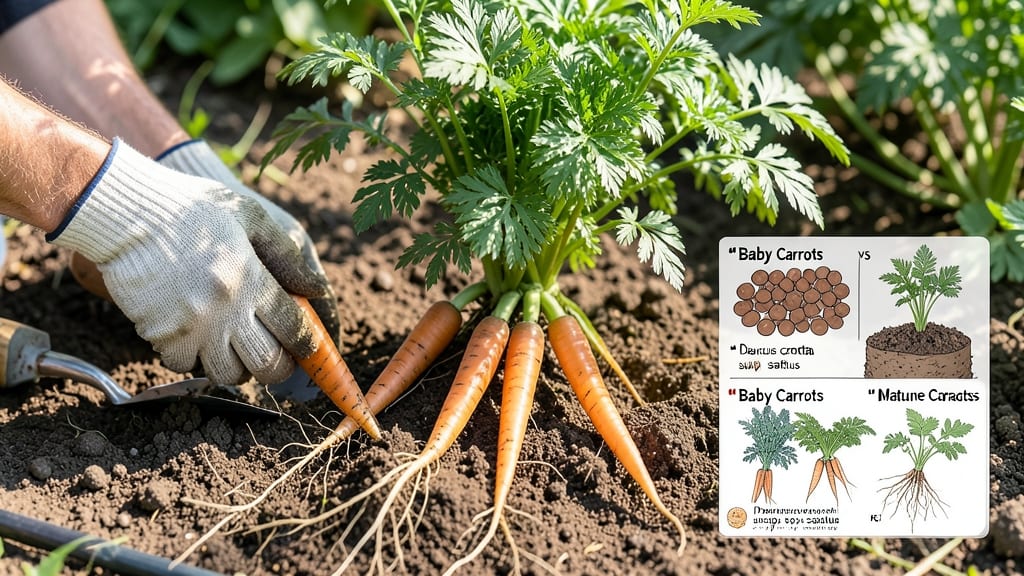
How to know when carrots are ready to pick can feel like guessing—until you learn the three simple tricks that make all the difference. Those crisp, sweet roots you dream about? They’re hiding just beneath the soil, waiting for the perfect moment to be pulled. The good news? You don’t need a crystal ball—just your hands, a little patience, and these easy checks to avoid tough, bitter carrots.
Most gardeners wait too long, ending up with oversized roots that lose their tender snap. But here’s the secret: carrots are ready when their tops reach about 4-6 inches tall and the soil resists gentle pressure.
Whether you’re growing short-season varieties like ‘Paris Market’ or long-season types like ‘Danvers,’ these tactile tests work for every type. Let’s break down exactly what to look for before you grab that trowel.
Timing matters almost as much as technique. Planting in spring (March-April) or fall (August-September) gives you two harvest windows—June-July for spring carrots and October-November for fall crops. But if you miss the sweet spot, you’ll end up with roots that are either too small or woody.
That’s why I’ll show you how to read your soil, check leaf health, and test firmness like a pro.
Ready to go from guesswork to garden confidence? By the end of this guide, you’ll pull carrots at their peak—crisp, flavorful, and just the right size—every single time. No more second-guessing, just perfect harvests.
3 Tactile tests to determine carrot maturity before digging
Carrots hide their true maturity beneath the soil, but three simple tactile tests reveal when they’re ready to harvest. These hands-on methods work for short-season varieties like 'Paris Market' and long-season types like 'Danvers', ensuring you pull them at peak sweetness.
The key is checking leaf size, root firmness, and soil resistance—no guesswork required!
Start by examining the top greens. Mature carrots develop 4-6 inch tall, vibrant foliage with a yellowish-green stem buried just below the soil line. If the green stem end is still visible, the root isn’t ready—it’s likely too small or woody.
This visual cue alone can save you from digging prematurely.
Next, perform the firmness test on a few carrots. Gently grasp a root near the soil surface and squeeze lightly. If the skin resists pressure but isn’t rock-hard, it’s ready.
A soft or easily pierced skin means it’s underripe, while extreme hardness signals overmaturity. Think of it like testing a ripe avocado—just the right give!
Here’s where the soil resistance test comes in. Use your fingers to gently wiggle a carrot in the soil. If it pulls out with minimal resistance, it’s harvest-ready. If it feels tightly anchored, wait a few days.
For loose, sandy soil, this test is foolproof; in compacted clay, you may need to dig carefully to avoid forking.
- Leaf Size Check: 4-6 inch tall greens with yellowish-green stem buried in soil.
- Firmness Test: Skin resists gentle pressure (not soft or hard).
- Soil Resistance: Carrot pulls out easily without digging resistance.
For short-root varieties like 'Baby Danvers', aim for 3-4 inches in length, while standard types (6-8 inches) need more time. Pro tip: Harvest a few test carrots 2-3 days before the estimated maturity date on seed packets.
This lets you adjust for your climate and soil conditions, which can speed up or slow down growth.
Watch for variety-specific cues. Heirloom carrots like 'Purple Haze' may take 75-80 days to mature, while quick-maturing 'Nantes' are ready in 60-70 days. If your carrots bolt (send up flower stalks), they’ve overmatured—harvest immediately or they’ll become woody. Bolting is common in hot weather or when days lengthen.
Timing matters beyond just days—seasonal factors play a role. In cool climates, carrots grow slower, so check for readiness 10-14 days later than the seed packet suggests.
Conversely, warm weather can accelerate growth, so test earlier. Always water deeply the day before harvesting to loosen the soil and make pulling easier.
One common mistake? Overlooking baby carrots. Even if your main crop isn’t ready, smaller roots (2-3 inches) can be harvested early for salads. Thin seedlings early to give remaining carrots space to grow, and use the thinnings as tasty snacks. This double harvest strategy maximizes your garden’s yield!
Finally, time your harvest for the coolest part of the day—early morning or late afternoon. This prevents stress on the roots and keeps them crisp.
Store freshly pulled carrots in the crisper drawer of your fridge for up to 2 weeks, or blanch and freeze for long-term storage. With these tests, you’ll never again wonder if your carrots are ready!
3 Tactile tests to determine carrot maturity before digging
Carrots don’t send obvious signals like tomatoes turning red or beans swelling on the vine. Instead, you’ll need to use your hands and eyes to assess readiness. The key is checking three simple but critical factors: leaf size, root firmness, and soil resistance.
These tactile tests work for all varieties—whether you’re growing short-season Nantes or long Danvers types.
Start by examining the carrot tops. Mature leaves should be 4-6 inches tall and vibrant green, not yellowing or leggy. The stem end (where leaves meet the root) should be buried just below the soil line.
If you still see the green stem peeking above ground, the carrot isn’t ready yet. This visual cue alone can save you from harvesting too early.
For heirloom or long varieties, like 'Purple Haze' or 'Black Nebula', wait until the roots reach 8-10 inches in length. These types often need 10-14 extra days compared to standard 6-inch varieties.
Always check the seed packet for variety-specific guidance—some baby carrots (like 'Little Finger') are ready in just 45-50 days!
Timing matters even more for fall-planted carrots. In cooler climates, first frost (around October 15 in Zone 6a) can turn roots woody. If your carrots are close to maturity but frost looms, harvest 2-3 days early—they’ll keep in the fridge for 2-3 weeks without losing quality.
One final trick: Dig up a test carrot if you’re unsure. Cut it open—bright orange flesh with no green shoulders (the woody top) means you’re golden. If you see green streaks or a hard core, it’s overripe. Adjust your next harvest window accordingly!