
Shrubs
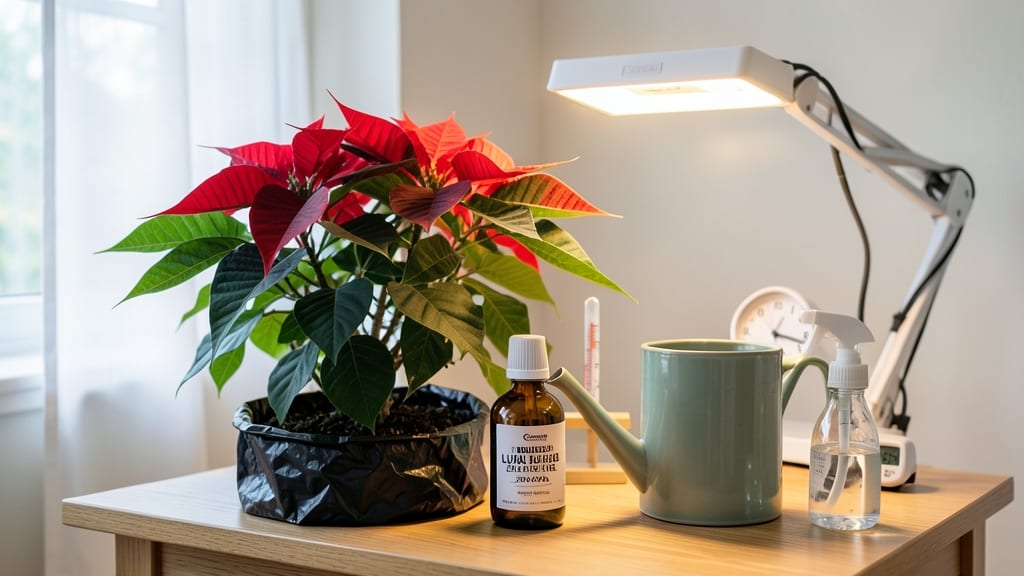
How to keep poinsettias red—your bold holiday leaves won’t last if you miss these secrets. 🌿 I’ve nursed more faded poinsettias back to vibrant glory than I’d like to admit—and the fix isn’t complicated. It’s all about light, temperature, and a few subtle care tweaks that most people miss entirely.
The biggest mistake? Assuming poinsettias thrive on love alone. They actually demand consistent light (6-8 hours of bright, indirect sunlight daily) and cool nights (55-65°F) to keep their color.
Too much heat or drafts? Watch those leaves turn splotchy or pale. Even watering matters—overwatering drowns roots, while underwatering stresses the plant, both of which dull the color fast.
Once you nail these basics, your poinsettia will stay deep red for weeks, not just days. The key is mimicking its natural winter conditions: bright light by day, cooler temps at night, and just enough water to keep soil lightly moist.
No fancy tools needed—just attention to these three critical factors.
Here’s the best part: these same rules work whether you’re keeping your poinsettia indoors for the holidays or extending its life through winter. The secret to holiday-long vibrancy isn’t a mystery—it’s methodical care. Let’s get those leaves popping again.
📚 In This Guide
- What you need
- Instructions
- Tips and common mistakes
- Wrapping up and next steps
What you need
- ● Poinsettia plant – A healthy, blooming variety (preferably Euphorbia pulcherrima).
- ● Well-draining potting mix – A blend of peat moss, perlite, and sand (or a pre-mixed cactus/succulent mix). Quantity: Enough to repot or refresh the soil (about 2–3 gallons per plant).
- ● 6–8 inch pots with drainage holes – Terracotta or plastic pots work well. Size: Slightly larger than the current root ball.
- ● Balanced liquid fertilizer – A 10-10-10 or 20-20-20 NPK ratio (diluted to half-strength). Quantity: 1–2 teaspoons per gallon of water.
- ● Watering can or spray bottle – For gentle hydration (avoid soggy soil!).
- ● Pruning shears or clean scissors – Sharp and sterilized to avoid disease.
- ● Grow lights or a sunny windowsill – 6–8 hours of indirect light daily (south- or west-facing windows are ideal).
- ○ Thermometer (optional but helpful) – To monitor temperatures between 60–70°F (15–21°C) during the day and 55–60°F (13–16°C) at night.
- ● Slow-release fertilizer pellets – Mix into soil for steady nutrition.
- ● Plant food with calcium nitrate – Boosts red pigmentation.
- ● Humidity tray or pebble tray – Keeps air moist (poinsettias love 40–50% humidity).
- ● Reflective surface (aluminum foil or white board) – Doubles light exposure if natural light is limited.
- ● Plant growth regulator (e.g., B-Nine) – Helps maintain color longer (use sparingly!).
Step-by-Step instructions for maintaining poinsettia color all holiday season
Here's how I keep my poinsettias vibrant through December and beyond—no black leaves or faded blooms.
☀️ Step 1: Position for Optimal Light Exposure
Place your poinsettia near a south or west-facing window where it receives bright, indirect light for 10-12 hours daily. Direct sunlight scorches the leaves, while low light causes color fading and leggy growth. I rotate my plant quarter-turn weekly so all sides get even exposure—this prevents uneven color development.
Watch for leaves that start yellowing or curling at the edges—this is your signal the light is too intense. Move it back 6 inches if you notice these signs. Fluorescent lights work in a pinch, but full-spectrum LED grow lights positioned 12-18 inches away provide the best color maintenance during short winter days.
💧 Step 2: Master the Watering Balance
Water only when the top inch of soil feels completely dry—overwatering causes root rot and dull foliage. I stick my finger in the soil daily after the first week; if it's damp, I wait. Use room-temperature water to avoid shocking the roots, and water until it drains freely from the bottom. Empty the saucer after 10 minutes to prevent soggy roots.
Here's the thing—poinsettias hate wet feet. If the leaves start yellowing from the bottom up, you're overwatering. On the flip side, crispy brown edges mean underwatering. The goal is consistent moisture, not soggy soil or bone-dry pots. I've found that watering every 3-4 days works best in my 60-65°F home during winter.
⏰ Step 3: Control Temperature and Humidity
Keep your poinsettia in 65-75°F conditions during the day and 55-60°F at night. Drafts from windows or heating vents cause color loss and stress. I place mine 3 feet away from heat sources and avoid cold drafts. Sudden temperature swings—like moving it from a warm room to a chilly garage—shock the plant and fade the bracts.
Boost humidity to 40-50% by placing the pot on a tray of pebbles with water (never letting the pot sit in water) or using a small humidifier nearby. Watch for curled leaves or brown tips—these are classic signs of dry air. A quick misting in the morning helps, but avoid wetting the bracts, which can cause them to spot.
🌿 Step 4: Fertilize Strategically for Color Retention
Feed your poinsettia every 2-3 weeks with a balanced, water-soluble fertilizer (10-10-10 or 20-20-20) diluted to half-strength. I start fertilizing 2 weeks after bringing the plant home and continue until early December. Over-fertilizing burns roots and causes salt buildup, which shows as white crust on the soil surface.
Stop fertilizing in mid-December to let the plant rest. You'll see the difference immediately—plants fertilized too late often develop weak new growth and dull bracts. If you notice leaves yellowing between the veins, that's a classic nitrogen overload. Flush the soil with water to cleanse excess salts and reduce feeding frequency to every 4-6 weeks.
✂️ Step 5: Prune and Maintain for Next Season's Color
After the holidays, when the bracts fade, cut stems back to 4-6 inches above the base. This encourages bushier growth for next year's color display. I prune in early February, just as new growth begins. Remove any yellow or damaged leaves immediately—they drain energy from the plant and prevent vibrant color development.
Pinch back new growth tips in March and April to encourage branching. You'll see more stems and a fuller plant by summer. Here's the secret: light exposure matters most for next year's color. If you keep your poinsettia in low light during summer, it won't develop the short-day photoperiod needed for red bracts. Move it to bright, indirect light for 12+ hours daily during the growing season.
Tips & tricks for holiday-long poinsettia vibrancy
These small adjustments make all the difference between a poinsettia that fades by New Year's and one that stays vibrant through January and beyond.
Light Exposure Precision: The 10-12 hours of bright, indirect light in Step 1 is non-negotiable for color retention. I use a timer on my phone to remind me to rotate the plant every week—this prevents the plant from leaning toward the light source. For indoor grow lights, position them exactly 12-18 inches away and keep them on for the same 10-12 hours daily. The key is consistency—even small variations in light exposure can cause color fading within days.
Watering Technique: That 10-minute drainage period after watering in Step 2 is crucial. I've learned the hard way that leaving water in saucers leads to root rot, which shows up as blackened stems and yellowing leaves. Use a moisture meter if you're unsure—it should read "dry" at the top inch before watering again. Room-temperature water is essential; cold water shocks the roots and stresses the plant.
Temperature Transition Strategy: The nighttime 55-60°F range in Step 3 is where most people fail. I've found that moving the plant to a cooler room at night (like a basement or garage) works wonders, but only if the temperature stays stable. Sudden drops below 50°F can cause the bracts to lose their vibrant color. If your home doesn't naturally cool at night, a small space heater with a thermostat set to 55°F works perfectly—just keep it 3 feet away from the plant.
Fertilizer Timing: The 2-3 week feeding schedule in Step 4 is perfect, but here's what nobody tells you: the last feeding should be exactly 3 weeks before Christmas. After that, the plant needs to rest. I've seen plants that were fertilized right before Christmas develop weak stems and pale bracts—it's a sure sign of overfeeding. If you notice white crust on the soil surface, flush it immediately with water to prevent salt buildup.
Pro Tips for Keep Poinsettias Red
- These small adjustments make all the difference between a poinsettia that fades by New Year's and one that stays vibrant through January and beyond.
- Light Exposure Precision: The 10-12 hours of bright, indirect light in Step 1 is non-negotiable for color retention.
- Watering Technique: That 10-minute drainage period after watering in Step 2 is crucial.
Frequently asked questions
about keeping your poinsettias vibrant and red all holiday season!Why did my poinsettia turn green instead of staying red?
Poinsettias lose their red color when exposed to too much light (especially direct sun) or long daylight hours. To fix it, move your plant to a spot with bright, indirect light (like an east-facing window) and reduce daylight exposure to 10-12 hours max using a curtain or timer. If it’s already green, don’t worry—you can often coax red back with proper care!
Can I keep my poinsettia red after the holidays?
Yes! Poinsettias stay red longer if you limit daylight to 10 hours (use blackout curtains at night) and keep them in cool (60-70°F) conditions. Once the holidays pass, treat them like houseplants: water when soil is dry, and they’ll reward you with year-round color if you maintain these habits.
How often should I water my poinsettia to keep it red?
Water your poinsettia when the top inch of soil feels dry—overwatering causes root rot, which stresses the plant and dulls its color. Use room-temperature water and avoid letting it sit in soggy soil. A well-draining pot with drainage holes helps too!
What if my poinsettia drops its leaves?
Leaf drop usually means underwatering, overwatering, or temperature stress. Check the soil moisture and adjust your watering routine. Keep your poinsettia away from drafts, heaters, or cold windows—ideal temps are 65-75°F. If leaves drop early, it’s a sign to trim damaged stems and focus on recovery.
Can I reuse last year’s poinsettia to keep it red?
With the right care, your poinsettia can rebloom yearly. After the holidays, prune it back, move it to a sunny spot, and fertilize lightly every 4-6 weeks in spring/summer. In late summer, return it to 10-hour daylight to trigger red bracts—just like new!
Wrapping up and next steps
Keeping your poinsettias boldly red isn’t just about luck—it’s about light, care, and timing! With the right balance of 12+ hours of darkness, bright indirect light, and consistent watering, your holiday plants will stay vibrant for weeks.
Don’t forget to prune wisely and watch for pests to keep them thriving.
You’ve got this! 🌟 Now that you’re armed with the secrets, grab your poinsettias and give them the love they deserve. Ready for next year? Start a journal to track what works best—your future festive displays will thank you!