
Size
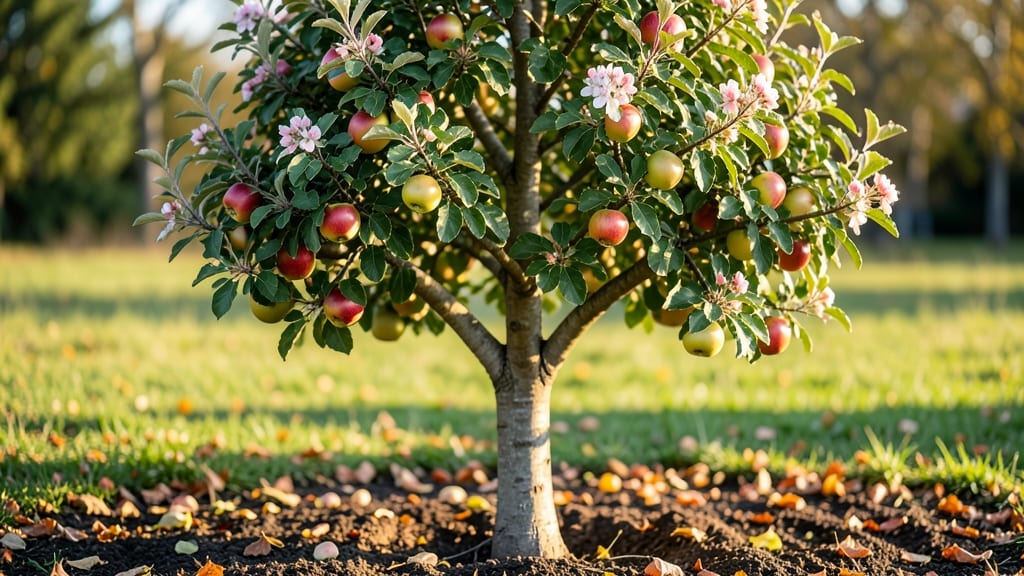
How to grow an apple plant turns even the smallest yard into a fruit orchard. 🌱 I planted mine in a 10x10-foot patch last spring, and now we harvest enough apples for pies, cider, and sharing—without needing a full acre. The secret isn’t luck; it’s choosing the right variety, preparing the soil, and giving your tree the care it needs from the first day.
You’ll need a sunny spot with at least 6 hours of sunlight daily, well-draining soil (amend with compost if yours is heavy clay), and a dwarf rootstock to keep the tree manageable.
Pollination matters too—plant two compatible varieties if you want fruit. My favorite early-season pick, ‘Liberty,’ thrives in my zone 5 climate and produces sweet, crisp apples by late August.
By the end of the first growing season, you’ll see sturdy branches and maybe even a few blossoms (though fruit takes 2-3 years). Prune in late winter to shape the tree and remove dead wood, and water deeply once a week during dry spells.
The payoff? A tree that fits your space but still gives you the joy of homegrown apples.
Works for containers too—just use a 20-gallon pot and a dwarfing rootstock. Here’s how to get started without the common pitfalls like poor germination or slow growth.
📚 In This Guide
- What you need
- Instructions
- Tips and common mistakes
- Wrapping up and next steps
What you need
- ● Dwarf apple tree sapling: Choose a cold-hardy variety like ‘Liberty,’ ‘Honeycrisp,’ or ‘Gala’ (ensure it’s grafted for consistency). 1 plant per container or 3–5 ft. spacing in-ground.
- ○ Growing container (optional but ideal for small spaces): A 15–20 gallon pot with drainage holes (or larger for mature trees). Use fabric grow bags for flexibility.
- ● High-quality potting mix: 50% organic matter (compost, coconut coir) + 50% well-draining soil (avoid garden soil—it compacts!). 1 bag (2–3 cu. ft.) per container.
- ● Slow-release fertilizer: 10-10-10 NPK ratio (organic options like fish emulsion or composted manure work too). 1–2 tbsp per plant at planting.
- ● Mulch: 2–3 inches of wood chips or straw to retain moisture and regulate soil temp.
- ● Pruning tools: Bypass pruners (for branches ¼ inch thick)
- ● Loppers (for thicker branches ½–1.5 inches)
- ● Sharp pruning saw (for 2+ inch branches)
- ● Tree supports: Stakes (if planting in-ground) 2–3 ft. tall
- ● Ties or soft tree straps (to secure sapling without damaging bark)
- ● Watering can or hose with nozzle: 1–2 gallons per watering for containers; deep watering 2–3x/week for in-ground.
- ● Pollination aid: Hand-pollinate with a soft brush if growing a single variety (or plant two compatible dwarf trees).
- ● Fruit thinning shears: For shaping harvests and improving fruit size.
- ● Tree guard or netting: To protect from pests (e.g., codling moths).
- ● Soil pH test kit: Ideal pH for apples is 6.0–7.0 (adjust with lime or sulfur if needed).
- ● Drip irrigation system: Automates watering for busy gardeners.
Step-by-Step instructions for growing dwarf apple trees
Here's how I've successfully grown sturdy, fruit-bearing dwarf apple trees in my backyard—no orchard needed.
🪴 Step 1: Choose the Right Location and Prepare the Soil
Dwarf apple trees thrive in full sun (at least 6-8 hours daily) and well-draining soil. I pick a spot with morning sun and afternoon shade to protect the fruit from scorching. Before planting, loosen the soil to a depth of 12-18 inches—this prevents root constriction as the tree grows.
Amend the soil with 3-4 inches of compost mixed into the top 6 inches of soil. Dwarf trees have shallow roots, so rich topsoil is critical. I always test the pH (aim for 6.0-7.0) and adjust with lime if needed—apple trees hate acidic soil.
🌱 Step 2: Plant at the Correct Depth and Stake for Support
Dig a hole twice as wide as the root ball but only as deep as the container. Gently remove the tree from its pot and loosen any circling roots with your fingers. Place the tree in the hole so the graft union (the bump where the scion was attached) sits 2-3 inches above soil level. This prevents rot and ensures strong regrowth if the trunk gets damaged.
Backfill with native soil, tamping lightly as you go to eliminate air pockets. Water deeply to settle the soil, then stake the tree only if needed (young, top-heavy varieties benefit). I use a 4-foot stake tied loosely with soft fabric—too tight restricts trunk growth.
☀️ Step 3: Water Deeply and Mulch to Retain Moisture
Water the tree immediately after planting, giving it 1-2 gallons to encourage root spread. Dwarf trees need 1-1.5 inches of water per week, but I check the soil first—water when the top 2 inches feel dry. Deep, infrequent watering prevents shallow roots that invite disease.
Spread 2-3 inches of organic mulch (wood chips or straw) around the base, keeping it 3 inches away from the trunk to prevent rot. Mulch locks in moisture and keeps roots cool in summer. I reapply mulch annually as it breaks down—never let it pile against the trunk.
✂️ Step 4: Prune for Shape and Airflow in Early Spring
Prune your dwarf apple tree in late winter or early spring before buds swell. Remove any dead, crossing, or inward-growing branches first—these compete for energy. I aim to create an open center with 5-7 main scaffold branches
Cut just outside the branch collar (the swollen area where the branch meets the trunk) using clean, sharp pruners. Thin out crowded branches rather than heading them back—this prevents dense growth that traps moisture and invites fungal diseases. After pruning, apply a thin layer of dormant oil to kill overwintering pests. Feed your tree in early spring with a balanced 10-10-10 fertilizer, applying ½ cup per year of tree age (max 1 cup). Dwarf trees need less fertilizer than full-size varieties—too much encourages leafy growth over fruit. I side-dress with compost in late fall instead of winterizing. Watch for common pests like aphids or codling moths. I use a hose spray for aphids and row covers during bloom to deter moths. Organic sprays like neem oil work well, but I apply them in the late afternoon to avoid harming bees. Healthy trees produce fewer problems—consistent care pays off.🍎 Step 5: Fertilize and Monitor for Pests/Diseases
Tips & tricks for perfect dwarf apple tree growth
These simple strategies will help you avoid common pitfalls and give your dwarf apple trees the best possible start.
Soil Preparation: In Step 1, don't just loosen the soil—think of it like fluffing a pillow for your tree's roots. Use a broad fork to break up compacted layers down to 18 inches, and mix in that 3-4 inches of compost thoroughly. I've found that adding a handful of bone meal to the planting hole gives roots an extra phosphorus boost for early growth. The goal is to create a loose, crumbly texture that roots can easily penetrate.
Graft Union Placement: When planting in Step 2, that 2-3 inches above soil level for the graft union is non-negotiable. I learned this the hard way when my first tree's graft union got buried—it led to weak regrowth and poor fruit quality. Use a small stake or marker to mark the correct depth before planting, and double-check after backfilling. This ensures your tree maintains its dwarf characteristics and produces quality fruit.
Watering Strategy: The 1-1.5 inches of water per week in Step 3 is a guideline, but timing matters more. Water deeply in the morning so the soil has time to dry out during the day, preventing fungal issues. I've noticed my trees develop fewer problems when I water at the base rather than overhead—this keeps foliage dry and reduces disease risk. A moisture meter is worth the investment if you're serious about growing healthy trees.
Pruning Technique: In Step 4, when you're creating that open center with 5-7 main branches, remember that less is often more. I've seen beginners over-prune, which stresses the tree. Focus on removing only what's absolutely necessary—dead, crossing, or inward-growing branches. The goal is to improve airflow and sunlight penetration without weakening the tree's structure. And always sterilize your pruners between cuts to prevent spreading disease.
Pro Tips for Grow Apple Plant
- These simple strategies will help you avoid common pitfalls and give your dwarf apple trees the best possible start.
- Soil Preparation: In Step 1, don't just loosen the soil—think of it like fluffing a pillow for your tree's roots. Use...
- Graft Union Placement: When planting in Step 2, that 2-3 inches above soil level for the graft union is non-negotiabl...
Frequently asked questions
Got questions about growing apple plants in small spaces?
Here are some of the most common ones—plus quick, actionable answers to help you grow like a pro!
Can I grow apple trees in containers or small pots?
Dwarf apple varieties (like ‘Columnar’ or ‘Semi-Dwarf’) thrive in containers as long as the pot is at least 15–20 gallons and has drainage holes. Use well-draining soil and repot every 2–3 years to accommodate root growth. Just ensure the pot gets 6–8 hours of sunlight daily!
How long does it take for a dwarf apple tree to bear fruit?
Patience is key! Most dwarf apple trees take 3–5 years to produce fruit, depending on the variety, care, and climate. To speed things up, plant two compatible pollinator varieties nearby—cross-pollination boosts fruiting.
What pests or diseases should I watch for in dwarf apple trees?
Common culprits include aphids, codling moths, and apple scab. Prevent issues with neem oil sprays (for pests) and copper fungicides (for diseases). Prune regularly to improve airflow, and remove fallen leaves to reduce fungal risks. Early intervention saves your harvest!
Do I need to thin apple blossoms or fruit?
Yes! Thinning blossoms (when they’re pea-sized) and fruit (to 6–8 inches apart) ensures larger, healthier apples. Overcrowded fruit strains the tree, leading to small or misshapen harvests. Use sharp pruners or your fingers—just be gentle!
What’s the best time to prune a dwarf apple tree?
Prune late winter or early spring (before buds swell) to shape the tree and remove dead wood. Avoid heavy pruning in fall—it can stress the tree before winter. For container-grown trees, a light trim after harvest (summer) helps encourage new growth. Always sterilize tools to prevent disease!
Pro Tip: Need a space-saving hack?
Try espalier training—grow your dwarf apple tree flat against a fence or wall to save space while maximizing sunlight exposure. It’s a stylish way to turn your patio into a productive orchard!
Wrapping up and next steps
Growing your own apple tree—especially a space-saving dwarf variety—is a rewarding journey that brings fresh, homegrown fruit right to your doorstep! 🍏 With the right location, care, and patience, you’ll enjoy a thriving tree in even the smallest of gardens.
Whether you’re a beginner or a seasoned gardener, the key is consistency in watering, pruning, and protecting your tree from pests.
Now that you’re armed with the know-how, take the next step—plant your dwarf apple tree this season and watch it flourish! 🌱 Start small, stay curious, and soon you’ll be harvesting sweet, juicy apples with pride. Happy growing!