
Propagation
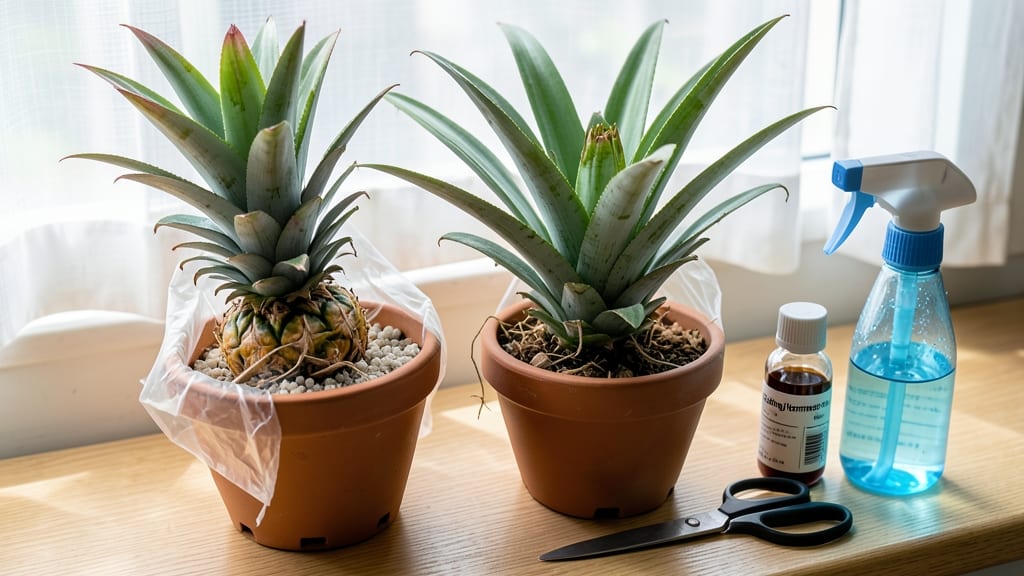
That pineapple crown sitting in your fruit bowl could grow into a real plant. 🌱 I’ve turned store-bought pineapple tops into thriving plants—here’s how you can too, without fancy tools or green thumbs.
The secret is patience and a few simple steps: drying the crown, rooting it in water, then transferring it to soil. Most people rush this part, but letting it callous over for 3-5 days prevents rot.
I’ve rooted crowns in as little as 2 weeks when kept in bright, indirect light.
By month 18, you’ll have a plant that produces its own fruit—though it’ll take 3-4 years for the first harvest. The journey is the fun part: watching roots sprout, leaves unfurl, and that tropical vibe take over your space.
Works indoors or out, as long as temps stay above 50°F. Here’s where it gets interesting—your pineapple plant might even bloom before fruiting, and you’ll know it’s ready when you spot those tiny flowers.
📚 In This Guide
- What you need
- Instructions
- Tips and common mistakes
- Wrapping up and next steps
What you need
- ● 1 ripe pineapple (preferably organic or pesticide-free if possible)
- ● 1 sharp knife or pair of scissors (sterilized with rubbing alcohol)
- ● 1 small bowl of water (for rinsing the leaf base)
- ● 1 cup of water (for soaking the leaf base)
- ● 1 small glass or jar (6–8 oz, for rooting)
- ● 1 potting mix (well-draining, like cactus or succulent mix)
- ● 1 small pot (4–6 inches in diameter) (with drainage holes)
- ● 1 spray bottle (for misting)
- ● 1 sunny windowsill or grow light (6+ hours of indirect light daily)
- ○ 1 humidity dome or plastic bag (optional but helpful for early growth)
- ● Rooting hormone (speeds up root growth)
- ● Peat pellets or coco coir (for transplanting)
- ● Fertilizer (balanced or high-phosphorus) (once established)
- ● Tweezers or tongs (for handling the slippery leaf base)
- ● Garden twine or toothpicks (to secure the leaf base in place)
Step-by-Step instructions for growing a pineapple from a store-bought fruit
Here's how to turn that grocery store pineapple into a thriving tropical plant.
🌱 Step 1: Select and Prepare the Pineapple Crown
Choose a healthy pineapple with a green crown still attached—this is your starting point. I like to pick one with a crown that's at least 2 inches tall and shows signs of fresh growth at the base. Rinse the entire fruit under cool water to remove any residue, then let it air dry completely.
Gently twist the crown off by holding the base and turning counterclockwise. You'll feel it pop free when ready. If it resists, don't force it—wait another day and try again. The crown should come away cleanly with a small bit of the fruit still attached. This extra base helps the crown establish roots faster.
💧 Step 2: Root the Crown in Water
Place the pineapple crown in a glass or jar containing 2-3 inches of room-temperature water. Make sure only the base (where it attached to the fruit) touches the water—never submerge the leaves. I use a clear container so I can monitor root development. Set it in a spot with bright, indirect light (a kitchen windowsill works well).
Change the water every 3-4 days to prevent bacterial growth. You'll see tiny white roots appear within 2-4 weeks—this is your signal that rooting is successful. Keep the water level consistent; don't let it dry out completely between changes. If the crown starts to rot or smell, trim away any mushy areas and refresh the water immediately.
☀️ Step 3: Transition to Soil and Pot Up
Once roots reach about 1-2 inches long, it's time to plant. Fill a 6-inch pot with well-draining potting mix (I mix regular potting soil with perlite at a 2:1 ratio). Make a small hole in the center and gently place the rooted crown in, covering the base with soil up to where the leaves begin. Press lightly to secure it.
Water thoroughly until water runs out the drainage hole, then let it drain completely. Place the pot in a location with bright light (4-6 hours of direct sun daily) and warm temperatures (above 65°F). You'll notice new growth within 4-6 weeks—this means your pineapple is adapting to soil life. Keep the soil lightly moist but never soggy during this transition.
🪴 Step 4: Care for Your Growing Pineapple Plant
After the first month, feed your pineapple with a balanced liquid fertilizer (10-10-10) diluted to half-strength every 4-6 weeks during spring and summer. I use about 1 teaspoon per gallon of water. This encourages strong, healthy growth. Pineapples love humidity, so mist the leaves occasionally or place the pot on a tray of pebbles with water to increase moisture in the air.
Your plant will eventually outgrow its pot—when you see roots circling the bottom or growing out of the drainage hole, it's time to repot. Choose a container 2-3 inches larger and use fresh potting mix. Handle the plant gently during repotting to avoid damaging the roots. With proper care, you'll see flower stalks appear after 18-24 months, leading to your first pineapple harvest!
Tips & tricks for growing a pineapple from a store-bought fruit
Turning that grocery store pineapple into a living plant is easier than you think—here's how to avoid the most common pitfalls.
Crown Selection: Look for a crown that's at least 2 inches tall with fresh green leaves at the base. The thicker the crown, the better chance it has of rooting successfully. I've found that crowns with a slight yellow tint at the base often root faster because they're already beginning their natural separation process.
Rooting Environment: The 2-3 inches of water in Step 2 is crucial—too little and the crown won't get enough moisture, too much and it'll rot. I use a clear glass so I can monitor root growth daily. Place your container in bright, indirect light like a kitchen windowsill, but avoid direct sunlight which can overheat the water and stress the crown.
Soil Transition: When your roots reach 1-2 inches and you're ready to pot up, don't rush the process. Let the roots establish for an extra week in water if they're still fragile. The 6-inch pot size is perfect for the first year—any larger and the soil will stay too wet around the base. I always add a handful of perlite to my potting mix to improve drainage and prevent root rot.
Light Requirements: The 4-6 hours of direct sun mentioned in Step 3 is a minimum, not a maximum. If your pineapple gets more sun, it will grow faster and produce fruit sooner. I've seen plants in southern climates produce flowers in as little as 12 months with full sun exposure. Just be careful not to suddenly expose your plant to intense sunlight after it's been in lower light conditions.
Pro Tips for Grow A Pineapple From A Store Bought Pineapple
- Turning that grocery store pineapple into a living plant is easier than you think—here's how to avoid the most common pitfalls.
- Crown Selection: Look for a crown that's at least 2 inches tall with fresh green leaves at the base.
- Rooting Environment: The 2-3 inches of water in Step 2 is crucial—too little and the crown won't get enough moisture, too much and it'll rot.
Frequently asked questions
Growing a pineapple from a store-bought fruit is exciting but can raise questions! Here are answers to the most common ones to help you succeed:
How long does it take for a pineapple crown to grow into a full plant?
The crown (the leafy top) typically takes 6–12 months to establish roots and grow into a small plant. From there, it can take another 12–18 months to produce a mature pineapple fruit. Patience is key—don’t rush it! If your plant isn’t thriving, check its light and water needs.
Can I grow a pineapple indoors, or do I need an outdoor tropical climate?
You can start indoors near a sunny window, but pineapples thrive in warm, humid conditions (70–85°F). If you live in a cooler climate, move the plant outdoors in spring/summer. A greenhouse or bright, warm spot indoors works too—just avoid drafts or sudden temperature drops!
Will my homegrown pineapple taste the same as store-bought ones?
Homegrown pineapples often have more complex, sweeter flavors since they ripen naturally on the plant. Store-bought ones are picked green and gassed for ripening, which can dull their taste. Plus, there’s nothing like the satisfaction of biting into a pineapple you grew!
What do I do if my pineapple crown rots or doesn’t root?
Rot is usually caused by too much moisture or bacteria. If you see brown, mushy spots, trim the affected area and let it dry before replanting. If it won’t root, try these fixes:
- Use clean, well-draining soil (like cactus mix).
- Keep the crown slightly elevated to prevent water pooling.
- Wait until the base dries out before replanting.
Can I grow a pineapple from a pineapple that’s already been refrigerated?
Yes, but choose a fresh, firm pineapple (not one that’s been frozen or overly soft). Refrigerated pineapples may have a slightly slower start, but the crown can still root. Just ensure it’s pesticide-free (organic is best) and hasn’t been treated with preservatives that could harm growth.
When is the best time of year to start this process?
The ideal time is late spring or early summer when temperatures are warm and days are long. This gives your pineapple plenty of time to establish roots before cooler weather arrives. If you start in fall/winter, use grow lights to supplement sunlight until spring.
Can I eat the pineapple I grow, or is it just for decoration?
Once your pineapple matures (usually 18–24 months), it’s 100% edible—just like store-bought. Homegrown ones are often juicier and more flavorful. Just wait until it’s fully ripe (golden yellow with a sweet smell) before harvesting. Happy munching!
Wrapping up and next steps
Growing a pineapple from a store-bought fruit is a rewarding adventure that blends patience, care, and a little tropical magic.
With the right conditions—sunlight, warmth, and consistent moisture—you’ll soon watch those vibrant green leaves sprout into a thriving plant. Don’t forget: the journey takes time, but the payoff is sweet!
Ready to take the next step?
Once your pineapple plant matures, consider sharing the joy—gift a cutting to a friend or repot it for a stunning houseplant. 🌱 And if you’re hooked on propagation, explore other tropical fruits like papayas or avocados! Your green thumb is growing stronger every day.