
Watering
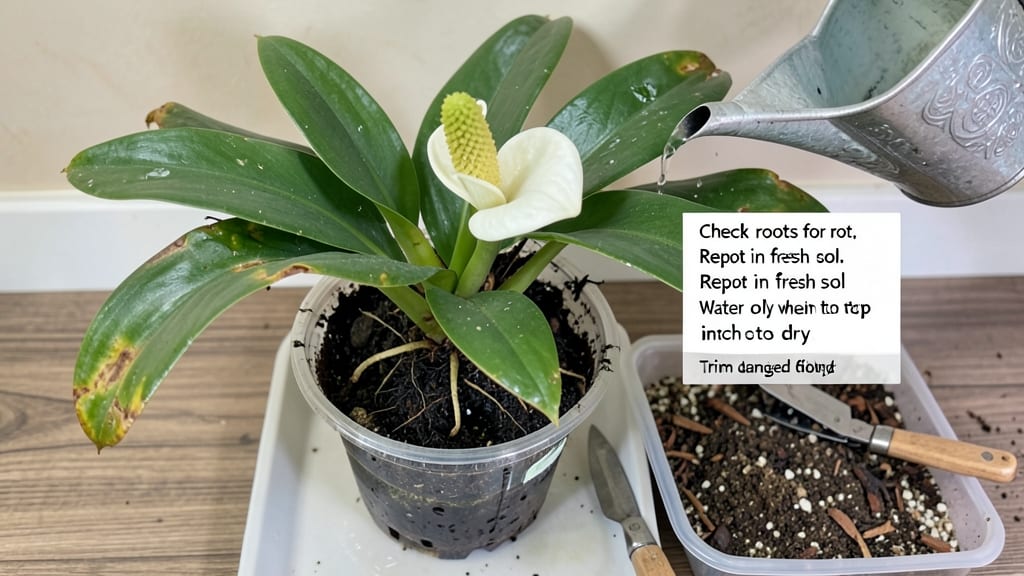
How to fix an overwatered peace lily—your drooping leaves and mushy stems don’t mean it’s dead, just drowning. 💚 I’ve nursed back peace lilies from this exact state, and the key is acting fast before root rot sets in. The good news? With the right approach, your plant can bounce back stronger than ever in just a few weeks.
First, stop watering immediately and check the roots. Healthy roots should be firm and white, while overwatered roots turn black and mushy. Gently remove the plant from its pot, trim away the damaged roots with clean scissors, and let it air-dry for 24 hours.
This step alone can save your plant from permanent damage.
Once the roots have dried, repot it in fresh, well-draining soil mixed with perlite or orchid bark to improve aeration. Water lightly only when the top inch of soil feels dry—this prevents future overwatering. Within a week, you’ll see new growth as your peace lily recovers its confidence.
Long-term, adjust your watering routine to match your home’s humidity and light levels. Peace lilies thrive in indirect light and prefer slightly moist (not soggy) soil. A moisture meter or your finger can help you gauge when it’s time to water again.
Trust the process—your plant will thank you with lush, vibrant foliage.
Root Causes of Overwatering
Peace lilies (Spathiphyllum) are hardy plants, but their roots are delicate when it comes to moisture balance. When they receive too much water—whether from overzealous watering, poor drainage, or environmental factors—they struggle to thrive.
Understanding why this happens is the first step to preventing it. Let’s break down the key culprits behind soggy soil and stressed roots.
This is the most common reason peace lilies end up overwatered. Many plant owners assume "more water is better," especially when the soil feels dry at the surface. However, peace lilies prefer moist but well-drained soil, not soggy conditions.
- Overwatering frequency: Watering every 2–3 days (or even daily in humid climates) can drown roots, cutting off oxygen supply. Peace lilies only need water when the top 1–2 inches of soil are dry.
- Ignoring plant signals: Drooping leaves or yellowing fronds are often misinterpreted as a sign to water more—when in reality, they’re a cry for less water.
- Automatic watering systems: Timers or self-watering pots may not account for humidity levels, leading to a consistent excess of moisture.
Science note: Roots need oxygen for cellular respiration. When soil is waterlogged, oxygen is displaced by water, suffocating roots and triggering anaerobic conditions—which produces toxic byproducts like ethanol and acetic acid, harming the plant.
A peace lily’s roots are sensitive to standing water. If the pot lacks proper drainage, excess moisture pools at the bottom, creating a waterlogged environment that promotes root rot.
- No drainage holes: Pots without holes trap water, turning the soil into a swamp. Even "self-draining" pots can fail if the soil mix retains too much moisture.
- Compacted or heavy soil: Clay-heavy or non-porous soils (like garden soil) don’t allow water to escape easily, keeping roots saturated for days.
- Overpotting: Using a pot too large for the plant’s root system means more soil holds excess water longer, delaying evaporation.
Pro tip: Always use a pot with drainage holes and a well-aerated potting mix (like a blend of peat, perlite, and orchid bark) to prevent waterlogging.
Peace lilies thrive in moderate humidity (40–60%), but high humidity levels can trick plant owners into overwatering. If the air is already moist, the soil stays damp longer, increasing the risk of root stress.
- High indoor humidity: Bathrooms, kitchens, or homes with poor ventilation can create a greenhouse effect, slowing soil drying.
- Seasonal changes: Winter heating or summer AC can alter humidity, making it harder to judge when to water.
- Lack of airflow: Crowded spaces or no airflow around the plant (e.g., tucked in a corner) trap moisture, keeping roots damp longer.
Science note: High humidity reduces the evaporative pull on soil moisture, meaning water lingers instead of being absorbed by the air. This is why peace lilies in humid climates need less frequent watering.
Not all soils are created equal—and neither are fertilizers. Using the wrong growing medium or over-fertilizing can disrupt a peace lily’s water balance.
- Heavy or water-retentive soil: Soils with high clay or peat content hold water like a sponge, suffocating roots. A chunky, airy mix (like 50% peat, 30% perlite, 20% bark) is ideal.
- Over-fertilizing: Excess salts from fertilizers can bind water to soil particles, making it harder for roots to absorb moisture efficiently. This leads to osmotic stress, where roots struggle to take up water even when soil is damp.
- No organic matter: Soil without compost or worm castings lacks structure, compacting over time and reducing drainage.
Quick fix: If your soil is too dense, amend it with perlite or orchid bark to improve aeration and drainage.
Revive Your Peace Lily Fast
Now that you know why your peace lily is suffering from too much love (water!), it’s time to roll up your sleeves and bring it back to life. The good news?
Overwatering is reversible with the right steps. Below, we’ll map out practical fixes based on the root causes—plus prevention tips to keep your plant thriving long-term.
---
Problem: Wet roots can’t breathe, leading to rot and fungal growth. Fix: - Pause all watering for at least 3–5 days. Let the soil dry out completely before touching it again. - Check moisture levels by sticking your finger 1–2 inches into the soil. If it’s damp, wait longer. - Avoid mistaking thirst for wilting—peace lilies droop when underwatered, not overwatered (unless roots are severely damaged).
💡 Pro Tip: If your pot has drainage holes, tilt it to let excess water escape. No holes? Repot ASAP (more on that below).
---
Problem: Rotten roots can’t absorb nutrients, even if you stop watering. Fix: 1. Gently remove the plant from its pot and inspect the roots. 2. Healthy roots are firm, white, or light tan. Rotten roots are mushy, black, or smell foul. 3. Trim the bad parts with sterilized scissors (dip in rubbing alcohol or hydrogen peroxide). 4. Rinse roots lightly with water to remove old soil and debris.
🌡️ Warning: If more than 50% of roots are rotten, your plant may need a more aggressive recovery plan (see Step 4).
---
Problem: Compacted or waterlogged soil traps moisture and suffocates roots. Fix: - Choose a pot 1–2 inches larger (only if roots are severely damaged; otherwise, keep the same size). - Use a well-draining mix: - 50% peat-free potting soil - 30% perlite or orchid bark (for aeration) - 20% coco coir or worm castings (for nutrients) - Add a layer of gravel or charcoal at the bottom for extra drainage. - Repot carefully, ensuring the root ball sits above the pot’s drainage holes.
✨ Pro Tip: If repotting feels drastic, try the "soak-and-dry" method first: - Place the pot in a shallow tray of water for 10 minutes, then drain. - Repeat every 7–10 days until roots recover.
---
Problem: Overwatering often stems from inconsistent habits or poor pot choices. Fix: | Issue | Solution | |--------------------------|------------------------------------------------------------------------------| | No drainage holes | Repot in a pot with holes or use a cache pot (outer decorative pot with inner drainage pot). | | Overly dense soil | Amend soil with perlite or sand to improve airflow. | | Watering on a schedule | Water only when the top 1–2 inches of soil are dry (stick your finger in!). | | Using tap water | Let water sit for 24 hours to evaporate chlorine or switch to filtered/rainwater. |
🔥 Hot Tip: Peace lilies are drought-tolerant! Underwatering is far less risky than overwatering—err on the side of less water.
---
Once your peace lily is back in shape, keep it happy with these habits: - Use a moisture meter ($10 on Amazon) to avoid guesswork. - Group plants together—humidity from neighbors mimics their natural tropical environment. - Wipe leaves weekly with a damp cloth to remove dust (helps with photosynthesis). - Fertilize lightly every 2–3 months in spring/summer (use a balanced, diluted liquid fertilizer). - Rotate the pot monthly so all sides get even sunlight (even indirect light).
--- Remember: Recovery takes time—patience is key. With the right care, your peace lily will bounce back stronger than ever. 🌿💚
Frequently asked questions
How do I know if my peace lily is overwatered vs. underwatered?
Overwatered peace lilies show yellowing leaves, mushy stems, and black, foul-smelling roots. Underwatered ones have dry, crispy edges and drooping leaves that perk up after watering. The key difference? Overwatered roots are soggy and rotten, while underwatered roots are dry and shriveled.
Can I save a peace lily with completely black, mushy roots?
It depends! If more than 50% of roots are rotten, trim only the healthy portions and repot in fresh soil. For severe cases, try rooting cuttings—place healthy stems in water with a rooting hormone until new roots form. Even then, recovery may take 4-6 weeks or longer. Patience is key!
How often should I water my peace lily after fixing overwatering?
Wait until the top 1-2 inches of soil are completely dry—this could be every 7-10 days in summer or every 2-3 weeks in winter. Use your finger to check moisture, and always ensure the pot has drainage holes. Pro tip: Group plants together to maintain natural humidity levels.
Will my peace lily bloom again after overwatering recovery?
Yes! Once roots recover and the plant regains strength (usually 2-3 months later), it should produce new blooms. Provide bright, indirect light and balanced fertilizer (diluted) every 2-3 months to encourage flowering. Just avoid overfertilizing—it stresses the plant further.
Can I use hydrogen peroxide to treat overwatered roots?
Yes! Mix 1 part 3% hydrogen peroxide with 4 parts water and soak the roots for 10 minutes to kill bacteria/fungi. Rinse thoroughly before repotting. This sterilizes roots while promoting new growth. Just don't use it more than once—it can harm beneficial microbes in the soil.