
Pruning
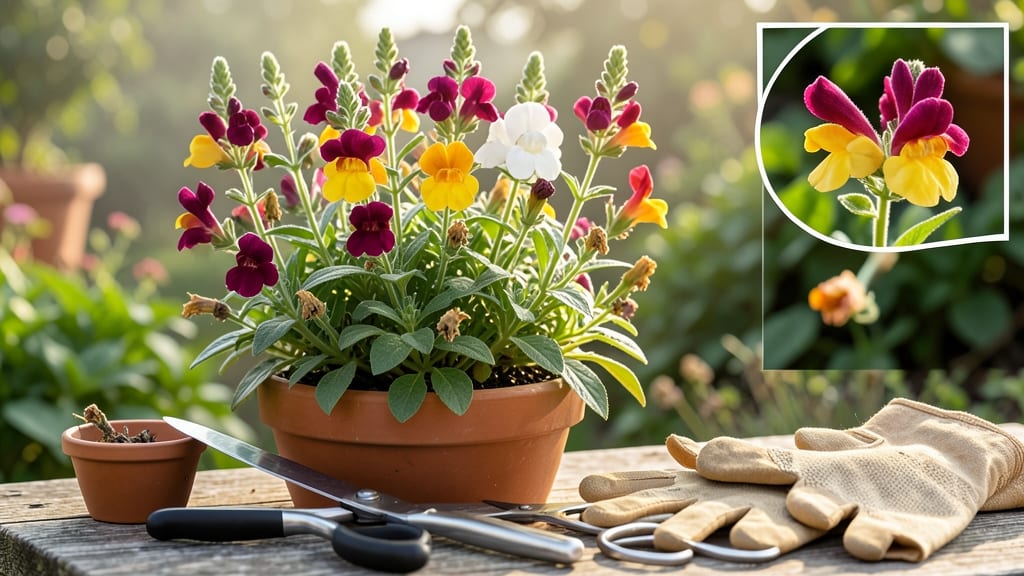
Snapdragons in pots can bloom all summer—if you deadhead them right. ✂️ I used to let my spent blooms linger, thinking it didn’t matter, until I noticed my neighbor’s snapdragons kept producing while mine faded fast.
The secret? A quick trim that redirects energy to new flowers instead of seed production.
You’ll need just three things: clean pruners, a small bucket for clippings, and about 10 minutes on a sunny morning. The best time to deadhead is right after a bloom wilts—before the seed pod swells.
Pinch or snip just above the next set of leaves where new buds form. Container-grown snapdragons appreciate this extra care because their roots are confined, so every bit of energy matters.
What you’ll get is a bushier plant with continuous blooms for weeks longer than untreated plants. The flowers stay vibrant, stems stay sturdy, and you’ll avoid the leggy, sparse look that happens when plants focus on seeds instead of blooms.
Even in small pots, this technique works—just be gentle with the stems to avoid damaging the main plant.
Fair warning: over-trimming can stress your snapdragons, so never remove more than 1/3 of the plant’s blooms at once. And if you’re growing tall varieties, support them with stakes early—they’ll reward you with dramatic vertical blooms that draw hummingbirds. Now grab those shears and let’s keep those flowers coming!
📚 In This Guide
- What you need
- Instructions
- Tips and common mistakes
- Wrapping up and next steps
What you need
- ○ Clean, sharp pruning shears or scissors – A small pair (4-6 inches) works best for precision. Optional: Disinfect with rubbing alcohol before use to prevent disease spread.
- ○ Gloves (optional but recommended) – Lightweight gardening gloves protect hands from thorns and dirt.
- ● Small container or bucket – For collecting spent blooms and clippings (a 1-gallon size is perfect).
- ○ Water spray bottle (optional) – A 16-ounce bottle helps rinse off debris or dampen soil if needed.
- ● Sunny day or bright overcast conditions – Avoid deadheading in direct midday sun or wet weather to reduce plant stress.
- ● Healthy snapdragon plants – Focus on plants that are not wilted, diseased, or pest-infested.
- ● Patience and a gentle touch – Snapdragons are tough but appreciate careful handling!
Step-by-Step instructions for deadheading snapdragons in pots
Pruning snapdragons the right way keeps them blooming nonstop—here’s how to do it without stressing the plants.
✂️ Step 1: Wait for the Right Time to Prune
Deadhead snapdragons only after a flower fully fades and its seed pod begins to swell. You’ll see the petals droop and the center turn brownish—this is your cue. Cutting too early removes buds that haven’t opened yet, while waiting too long lets the plant waste energy on seed production.
Use clean, sharp pruners or even your fingers to pinch off spent blooms. I always work in the morning when the stems are firm and less likely to tear. Avoid cutting into the next set of buds below the faded flower—this ensures you don’t accidentally trim off potential blooms.
✂️ Step 2: Cut at the Correct Angle and Spot
Make your cut just above the first set of healthy leaves below the faded bloom. This encourages new side shoots to grow from that node, creating a bushier plant. Angle your cut slightly downward to prevent water from pooling on the stem, which could rot it.
If you’re dealing with leggy stems, you can trim back slightly further—about ¼ inch above a leaf node—to encourage compact growth. Just avoid cutting into the woody base of the plant, as snapdragons don’t regrow well from there.
✂️ Step 3: Encourage Bushier Growth with Strategic Pruning
After removing the first few spent blooms, check the plant for any stems that have multiple flowers opening at once. Focus on pruning the oldest blooms first—this signals the plant to put energy into newer buds rather than seed production.
For snapdragons in pots, I like to step back and assess the overall shape after a few prunings. If one side looks sparse, I’ll trim a spent bloom from the opposite side to balance growth. This keeps the plant looking full and encourages even blooming across the entire pot.
💧 Step 4: Water and Fertilize After Pruning
Deadheading creates small wounds on the stems, so give your snapdragons a light drink of water right after pruning. This helps the plant recover quickly and prevents stress. Avoid heavy watering, though—soggy soil can lead to root rot, especially in pots where drainage is limited.
Follow up with a balanced, water-soluble fertilizer diluted to half strength. Snapdragons are heavy feeders, but too much fertilizer can lead to lush foliage at the expense of blooms. I use it every 2-3 weeks during the blooming season to keep flowers coming without overpowering the plant.
☀️ Step 5: Monitor for New Growth and Repeat
Within a week or so, you should see new buds forming where you made your cuts. This is your reward for pruning correctly! Keep an eye out for any stems that grow too long or leggy—these can be pinched back slightly to encourage branching.
Deadheading snapdragons in pots is an ongoing process. As long as your plants are healthy and you’re consistent with pruning, they’ll reward you with continuous blooms all season long. Just remember: the key is patience and timing—don’t rush it!
Tips & tricks for perfect snapdragon pruning
Here's what nobody tells you about keeping your snapdragons thriving after pruning.
Timing Secret: Those drooping petals and brown centers in Step 1 are your golden cue—wait until the seed pod starts swelling before cutting. I've learned the hard way that cutting too early removes potential blooms, while waiting too long means wasted energy on seeds instead of new flowers. The perfect moment is when the bloom looks tired but hasn't fully dried yet.
Cutting Technique: When making your cuts in Step 2, use a slight downward angle to prevent water pooling. This simple trick reduces rot risk by letting rainwater run off cleanly. For leggy stems, trim about ¼ inch above a leaf node—this encourages bushier growth without sacrificing future blooms. I always carry a small pair of pruners in my gardening bag for quick touch-ups between pruning sessions.
Strategic Pruning: In Step 3, focus on the oldest blooms first to redirect the plant's energy. For pot-grown snapdragons, I've found assessing the overall shape after a few prunings helps identify sparse areas. Simply trimming a spent bloom from the opposite side creates instant balance. This visual assessment takes just 30 seconds but makes a world of difference in plant appearance.
Pro Tips for Deadhead Snapdragons In Pots
- Here's what nobody tells you about keeping your snapdragons thriving after pruning.
- Timing Secret: Those drooping petals and brown centers in Step 1 are your golden cue—wait until the seed pod starts s...
- Cutting Technique: When making your cuts in Step 2, use a slight downward angle to prevent water pooling. This simple...
Frequently asked questions
Got questions about deadheading snapdragons in pots?
You’re not alone! Here are answers to the most common concerns—so you can keep your snapdragons thriving with confidence.
When is the best time to deadhead snapdragons?
Deadhead snapdragons after the blooms fade but before seed pods form—usually every 1-2 weeks during peak blooming (spring to fall). Early morning is ideal since stems are firm and easier to trim. Avoid pruning in extreme heat or just before rain to prevent stress.
Do I need special tools to deadhead snapdragons in pots?
Nope! Clean, sharp pruning shears or even your fingers work. For pots, small scissors are handy for precision. Just sanitize tools with rubbing alcohol between plants to avoid spreading disease. A glove helps if stems are prickly.
What if I skip deadheading—will my snapdragons still bloom?
Yes, but expect fewer, smaller blooms and leggy growth. Snapdragons self-seed easily, so skipping deadheading diverts energy to seed production instead of new flowers. For container-grown plants, regular pruning ensures bushier, longer-lasting blooms and prevents overcrowding.
Can I use deadheaded snapdragon stems for propagation?
Cut healthy stems just below a leaf node, strip lower leaves, and place in water or moist soil. Snapdragons root easily—just keep the cutting humid (use a plastic bag) and in indirect light. New plants may take 2-4 weeks to sprout!
Why are my snapdragons wilting after deadheading?
Over-pruning or cutting too close to the base can stress plants. Always leave 2-3 sets of leaves below the cut. If wilting persists, check for underwatering (pots dry out faster) or root-bound conditions. Give them a drink and monitor for 2-3 days.
Does deadheading work the same for dwarf vs. tall snapdragons?
Yes, but adjust your approach! For dwarf varieties (under 12 inches), use tiny scissors to avoid damaging foliage. Tall snapdragons (18+ inches) can handle bolder cuts—just remove up to 1/3 of the stem at once to encourage branching. Both benefit from consistent deadheading!
Wrapping up and next steps
Deadheading snapdragons in pots is a simple yet powerful way to keep your garden thriving! By removing spent blooms, you encourage lush, continuous flowers and healthier plants—all while spending just a few minutes every few days. Your efforts will pay off with vibrant, bushier plants that steal the show!
Now that you’re a deadheading pro, why not take it further? Try experimenting with fertilizing or rotating your pots for even more stunning blooms. Happy gardening! 🌸