
Planting
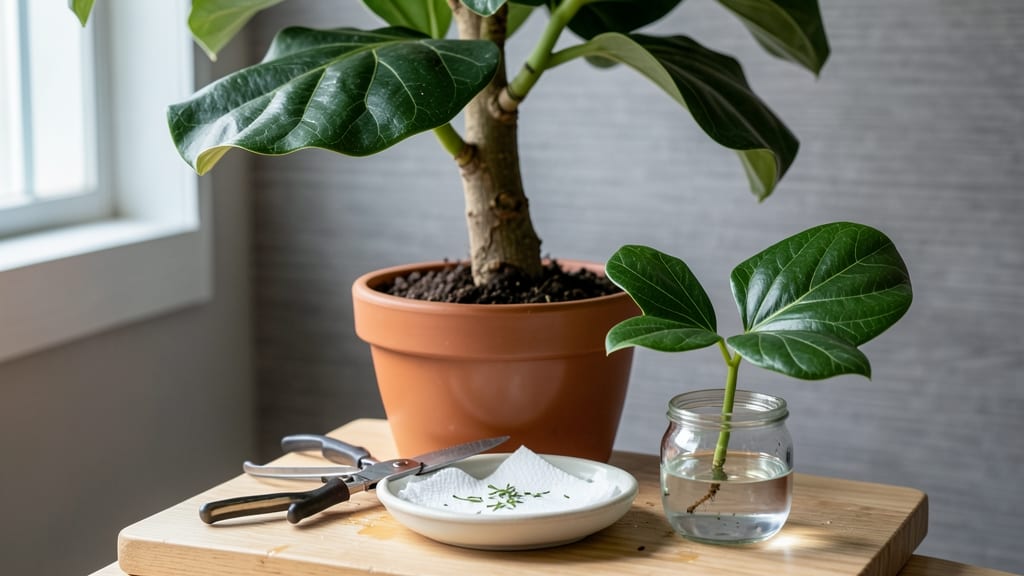
Cutting a fiddle leaf fig isn’t scary—it’s how you get that lush, bushy plant you’ve always wanted. ✂️ I’ve turned leggy, sad-looking figs into thriving, multi-stemmed beauties just by following a few simple rules about when and how to trim.
The key? Timing, sharp tools, and knowing exactly where to cut for maximum regrowth.
You’ll need just three things: clean pruning shears, rubbing alcohol to sterilize them, and a small pot for any cuttings you want to root. The best time to prune is spring or early summer, when the plant’s energy is focused on new growth—not winter, when it’s dormant.
And here’s the secret: always cut just above a leaf node (that little bump where leaves grow) at a 45-degree angle to encourage bushier regrowth.
After the cut, you’ll see new shoots emerge within 4-6 weeks, and those stems will grow into full branches with proper care. The cuttings themselves can root in water or soil, giving you free plants to share or expand your collection.
Just avoid the two biggest mistakes: pruning too much at once (stick to 10-20% of the plant) and using dull shears (they crush stems instead of cleanly cutting them).
This method works for fiddle leaf figs of any size—whether you’ve got a tiny 1-gallon plant or a 5-foot giant. The result? A fuller, healthier plant that fills out faster and produces larger, glossier leaves than you’d get without pruning. Ready to transform yours?
Root Causes of Overgrowth
Understanding why your fiddle leaf fig (Ficus lyrata) needs pruning starts with recognizing the plant’s natural behaviors and environmental stressors. Pruning isn’t just about aesthetics—it’s a response to biological signals your plant sends.
Here’s a breakdown of the core reasons your fiddle leaf fig might be outgrowing its space or struggling with leggy, sparse growth, signaling it’s time to cut back.
Fiddle leaf figs are light-hungry plants, but too little light triggers a survival response: etiolation.
This is when your plant stretches its stems and leaves upward in a desperate bid to reach light, resulting in: - Long, weak stems (like a "spaghetti" effect). - Smaller, paler leaves (chlorosis, or yellowing, due to insufficient chlorophyll production). - Leaning growth (the plant literally "falls over" toward the nearest light source).
Why it happens: Light is the fuel for photosynthesis, and when your fiddle leaf fig isn’t getting enough, it prioritizes stem elongation over leaf development. This isn’t just a cosmetic issue—etiolated plants are more susceptible to pests, diseases, and breakage because their cell walls weaken.
Actionable sign: If your plant’s new growth is longer than 12 inches between leaves, it’s a red flag.
Fiddle leaf figs thrive in stable, tropical conditions (65–75°F / 18–24°C and 40–60% humidity).
When these conditions dip—whether from drafts, AC vents, or dry indoor air—the plant stresses out, leading to: - Dormancy-like growth (slow or stunted new leaves). - Curling or crispy leaf edges (a sign of transpirational stress). - Dropped leaves (a last-resort defense mechanism to conserve energy).
Why it happens: Extreme temperature swings or low humidity disrupt stomatal function (the tiny pores on leaves that regulate gas exchange). When stomata close to retain moisture, the plant can’t absorb enough CO₂ for photosynthesis, forcing it to redirect energy to survival—often at the expense of bushy, vibrant growth.
Actionable sign: If leaves feel dry or papery to the touch or your plant is near a window with cold drafts, it’s crying out for adjustment.
A fiddle leaf fig’s roots grow aggressively—so aggressively that they can outgrow their container within 1–2 years.
When roots become root-bound (circling the pot or growing through drainage holes), they: - Compete for nutrients and water, leading to uneven growth. - Strangle the plant’s base, restricting upward expansion and forcing energy into side shoots (which is good!) but also causing root rot if drainage is poor. - Signal stress hormones (like ethylene) that trigger premature leaf drop or stunted growth.
Why it happens: Roots need oxygen and space to function. In a cramped pot, they become anaerobic (low-oxygen), which impairs nutrient uptake. The plant responds by prioritizing root growth over foliage, making it look leggy or sparse.
Actionable sign: If you see roots emerging from the drainage holes or the plant topples easily when watered, it’s time to repot and prune.
Pests like spider mites, mealybugs, or scale insects don’t just damage leaves—they sap your plant’s energy.
When infested, a fiddle leaf fig: - Drops leaves prematurely to conserve resources. - Develops weak, yellowed growth (a sign of nutrient theft by pests). - Grows unevenly as the plant diverts energy to damaged areas.
Why it happens: Pests inject toxins or block stomata with their webbing, forcing the plant into a defensive growth mode. Fiddle leaf figs respond by slowing down new leaf production and focusing on repairing damage, which can look like "neglect" if you’re not watching closely.
Actionable sign: Check the undersides of leaves for sticky residue (honeydew), webbing, or tiny bugs. If you spot these, prune and treat the infestation immediately.
Even healthy fiddle leaf figs slow down as they age.
Mature plants (5+ years old) may: - Develop bare stems at the base as older leaves yellow and drop. - Grow taller but less bushy, with fewer side branches. - Produce smaller leaves over time (a natural part of the plant’s lifecycle).
Why it happens: Like humans, plants have a growth cycle. As a fiddle leaf fig matures, its apical dominance (the hormone-driven priority of vertical growth) weakens, but lateral buds (side shoots) may not activate without a pruning trigger. Without intervention, the plant becomes top-heavy and less dense.
Actionable sign: If your plant has a bare lower trunk (like a "tree" with no foliage near the ground), it’s time to encourage bushier growth through pruning.
Fiddle leaf figs hate soggy roots.
Overwatering or containers without drainage holes lead to: - Root rot (fungal infections that choke the plant’s nutrient uptake). - Wilting despite wet soil (a classic sign of oxygen-starved roots). - Stunted, dark green leaves (the plant can’t photosynthesize efficiently when roots are drowning).
Why it happens: Waterlogged soil depletes oxygen, forcing roots to ferment (a slow suicide for plants). The plant then shuts down non-essential growth (like new leaves) to focus on survival. Chronic overwatering also leaches nutrients from the soil, leaving the plant malnourished.
Actionable sign: If the top inch of soil stays wet for more than 3–4 days or you smell a musty odor from the pot, drainage (and pruning) are urgent.
Quick Fixes for Fiddle Leaf Fig Pruning
Pruning your fiddle leaf fig (Ficus lyrata) isn’t just about trimming—it’s about reviving, reshaping, and rejuvenating. Whether your plant is leggy, overgrown, or showing signs of stress, these targeted solutions will help you cut back with confidence.
Below, we’ve mapped common issues to step-by-step fixes, plus proactive tips to keep your plant thriving long after the snips.
Cause: Overwatering, root rot, or nutrient stress. Fix:
- 🔪 Prune the Problem Areas
- Use sterilized scissors or pruning shears to cut off yellow or brown leaves at the base. Avoid leaving stubs—clean cuts heal faster.
- If the stem is mushy or black (signs of rot), trim 1–2 inches below the affected area to healthy tissue.
- 💧 Reset the Watering Routine
- Let the top 2–3 inches of soil dry out before watering again. Stick your finger in the soil—if it’s damp past your first knuckle, wait.
- Pro Tip: 🌡️ Use a moisture meter for accuracy, especially in humid climates.
- 🌱 Boost Recovery with Fertilizer
- After pruning, feed your plant with a balanced liquid fertilizer (10-10-10 or 20-20-20) diluted to half strength. This gives it a nutrient kick to regrow.
- Avoid fertilizing for 4–6 weeks if you suspect root rot—wait until new growth appears.
Prevention:
- ✨ Repot every 1–2 years in fresh, well-draining soil to prevent nutrient depletion.
- 🚫 Avoid saucers that trap water—opt for elevated pots with drainage holes.
Cause: Lack of light, over-pruning, or slow growth. Fix:
- 🍃 Trim the Top for Branching
- Cut just above a leaf node (the bump where leaves grow) on the tallest stems. This encourages lateral growth.
- Angle your cut slightly (45 degrees) to reduce water pooling on the stem.
- 🌿 Propagate the Cuttings
- Dip the cuttings in rooting hormone (optional but helpful) and place them in water or moist perlite.
- Keep them in bright, indirect light (no direct sun) and change the water every 3–5 days.
- 💡 Pro Tip: Root in water takes 2–4 weeks; perlite speeds it up but requires more humidity.
- 🔥 Move to Better Light
- Fiddle leaf figs thrive in bright, indirect light (east or north-facing windows are ideal).
- If natural light is lacking, supplement with a grow light 12 inches away for 6–8 hours daily.
Prevention:
- 🎯 Rotate your plant every few weeks so all sides get even light.
- 🌱 Prune lightly every 6–12 months to maintain shape—never remove more than 1/3 of the plant at once.
Cause: Low humidity, fluoride in water, or underwatering. Fix:
- 💦 Increase Humidity
- Place the pot on a pebble tray filled with water (not touching the bottom) or use a humidifier nearby.
- 🌡️ Ideal humidity: 40–60%. Mist leaves 2–3 times a week (avoid soggy soil).
- 🚰 Filter Your Water
- Use rainwater, distilled water, or reverse-osmosis water to avoid fluoride/chlorine buildup.
- If using tap water, let it sit out for 24 hours before watering to reduce chemicals.
- 🍃 Trim Damaged Tips
- Snip off only the brown tips with clean scissors—never the whole leaf unless it’s severely crispy.
- ✨ Pro Tip: Wipe leaves with a damp microfiber cloth weekly to remove dust, which blocks light absorption.
Prevention:
- 🌿 Group plants together to create a microclimate with higher humidity.
- 🚫 Avoid cold drafts (like AC vents) that dry out leaves quickly.
Cause: Roots circling the pot or no room to grow. Fix:
- 🔪 Prune the Roots (If Needed)
- Gently remove the plant from its pot and trim any roots growing in circles with sterilized shears.
- Snip 10–20% of the root mass to encourage outward growth.
- 🏺 Repot into Fresh Soil
- Choose a pot 1–2 inches wider than the current one (no need for a huge upgrade).
- Use a well-draining mix: 50% potting soil, 30% perlite, and 20% orchid bark.
- 💡 Pro Tip: Add a handful of worm castings for a nutrient boost.
- 🌿 Prune the Foliage Too
- While repotting, trim any leggy or crossing stems to improve airflow and shape.
Prevention:
- 📅 Repot every 2 years or when roots emerge from drainage holes.
- 🌱 Use self-watering pots if you tend to overwater—they help regulate moisture.
Final Reminder: 🎯 Less is more with fiddle leaf figs—prune only what’s necessary, and always use clean tools to prevent infections. With the right cuts and care, your plant will bounce back bushier and healthier than ever!
Frequently asked questions
Can I cut my fiddle leaf fig during winter?
Pruning in winter is not recommended because your plant is naturally dormant. Cutting during this time can stress the plant and slow down recovery. Wait until spring or early summer when growth is active and the plant can heal faster.
How do I know where to cut on my fiddle leaf fig?
Look for the leaf nodes—those small bumps where leaves grow along the stem. Cut just above a node at a 45-degree angle to encourage new growth from that spot. Avoid cutting below a node, as it won’t produce new branches.
What should I do with the cuttings after pruning?
You have two options: propagate them or discard them. For propagation, place cuttings in water or moist perlite, keeping them in bright, indirect light. Roots typically form in 2-4 weeks. If you don’t want new plants, simply compost the cuttings.
Will pruning my fiddle leaf fig make it grow faster?
Pruning itself won’t make the plant grow faster, but it encourages bushier, healthier growth by removing leggy stems and promoting new branches. The key is to prune correctly (above leaf nodes) and provide proper care afterward, like bright light and balanced fertilizer.
How much of my fiddle leaf fig can I safely cut?
Never remove more than 10-20% of the plant at once. Heavy pruning can shock the plant. For example, if your plant has 10 stems, trim only 1-2 stems. This rule helps maintain the plant’s health while still encouraging fuller growth.