
Flowers
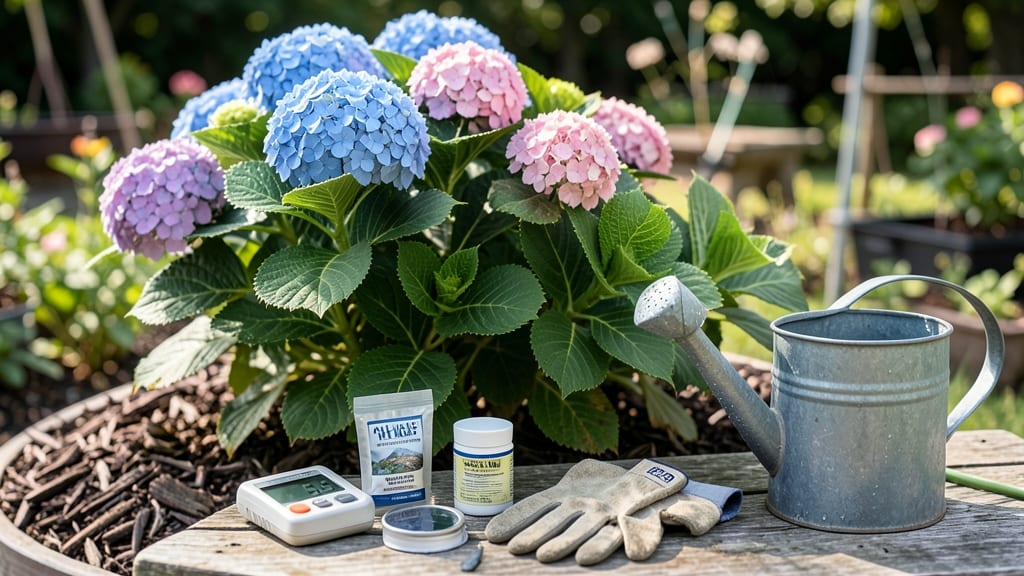
How to change the color of hydrangea flowers—your blooms could turn blue as a summer sky or pink as a peony—it’s all in the soil. 🌸 I’ve turned dull white blooms into vibrant showstoppers by tweaking just one thing: pH. The secret lies in what you add (and when), and it takes less than 15 minutes to start. The magic happens through aluminum sulfate for blues or hydrated lime for pinks—both available at garden centers. Test your soil first (kits cost $10) to know your starting pH. Most hydrangeas need 5.2–5.5 for blue or 6.0+ for pink, but your plants might surprise you. By next summer, you’ll see the difference: deeper colors, fuller blooms, and neighbors asking for your secret. The key is patience—changes take 2–3 months, but the transformation is worth it. Works for mopheads, lacecaps, and bigleaf varieties. Here’s exactly how to do it without burning your plants.
📚 In This Guide
- What you need
- Instructions
- Tips and common mistakes
- Wrapping up and next steps
What you need
- ● pH testing kit – A digital or liquid test kit (e.g., LaMotte Soil pH Test Kit or MySoil pH Meter) to measure current soil acidity/alkalinity.
- ● Garden lime (calcium carbonate) – For raising pH (aim for pelletized lime for even distribution; ~1–2 lbs per 100 sq ft).
- ● Aluminum sulfate or sulfur – To lower pH (aluminum sulfate for faster results, elemental sulfur for gradual changes; ~5–10 lbs per 100 sq ft).
- ● Garden gloves – To protect your hands from soil amendments.
- ● Watering can or hose – For hydrating soil after amendments.
- ● Garden fork or tiller – To mix amendments into the top 6–12 inches of soil.
- ● Measuring cup or scale – For precise application of lime/sulfur.
- ● Notebook & pen – To track pH changes over time!
- ● Organic matter – Compost or peat moss (helps buffer pH swings; mix in 1–2 inches per plant).
- ● pH-specific fertilizer – Acid-loving plant food (e.g., Miracle-Gro Azalea, Camellia & Rhododendron) if your hydrangeas need extra nutrients.
- ● Mulch (pine bark or straw) – Retains moisture and slowly acidifies soil over time.
- ● pH strips for quick checks – Convenient for on-the-go monitoring.
Step-by-Step guide to adjusting hydrangea flower colors through soil pH
Here's my foolproof method for transforming hydrangea blooms—just tweak the soil chemistry and watch the color shift.
💧 Step 1: Test Your Current Soil pH
Before making changes, grab a soil pH test kit (digital or liquid) and take a sample from 6 inches deep around your hydrangea base. Most garden centers sell these for under $10. I like to test in spring when the soil is naturally moist and active. The pH scale runs from 0 (acidic) to 14 (alkaline), with hydrangeas thriving between 5.0 and 6.0 for blue blooms or 6.0 to 7.0 for pink.
Dig a small hole near the plant's drip line, collect a 1-pint sample, and follow the kit instructions. If your reading falls between 5.5 and 6.5, your hydrangea is likely producing purple blooms—the neutral zone where colors blend. Note the exact number because this determines your next steps. For example, a pH of 5.2 means you're already on track for blue, while 6.8 signals you need to acidify.
☀️ Step 2: Amend Soil for Desired Color
For blue hydrangeas, you'll need to lower the pH (make soil more acidic). Mix 1 cup of aluminum sulfate (available at garden centers) into 1 gallon of water and pour it around the plant's root zone. I like to do this in early spring before new growth appears. The aluminum in the sulfate binds with calcium in the soil, creating an acidic reaction that shifts flower color within 4-6 weeks. Reapply every 3 months during the growing season if needed.
For pink hydrangeas, you must raise the pH (make soil more alkaline). Sprinkle ½ cup of hydrated lime (calcium carbonate) around the base and work it into the top 2 inches of soil. Water thoroughly to activate the amendment. Unlike aluminum sulfate, lime takes 6-8 weeks to show results, so plan this adjustment in late winter or early spring. Test the soil again after 2 months to confirm the pH shift—aim for 6.0-6.5 for consistent pink blooms.
✂️ Step 3: Maintain pH Through Seasonal Care
After your initial amendment, monitor soil moisture because watering affects pH. Rainwater is naturally acidic, so if you're in a wet climate, your hydrangea may need less frequent lime applications. I check soil moisture by sticking my finger 1 inch deep—if it feels dry, water deeply but avoid soggy soil, which can leach nutrients and destabilize pH. For blue hydrangeas, a mulch layer of pine needles (2-3 inches) helps maintain acidity naturally over time.
Fertilize lightly in spring and summer with a balanced 10-10-10 formula to support overall health, but avoid high-nitrogen feeds, which can mask pH effects. I apply ½ cup of fertilizer per plant, worked into the top 2 inches of soil, and water immediately to prevent root burn. The key is consistency—hydrangeas respond slowly to pH changes, so annual adjustments in early spring yield the best results.
🌿 Step 4: Observe and Adjust Over Time
Watch for color changes 6-8 weeks after amendments. Blue hydrangeas should deepen in hue, while pink varieties will lighten. If the shift isn't dramatic enough, retest the soil and adjust by ½ a pH unit—for example, if you aimed for 5.5 but only hit 5.8, add a bit more aluminum sulfate. I keep a garden journal to track pH levels and color results, which helps me fine-tune future adjustments.
Remember that mature hydrangeas (3+ years old) respond more predictably than younger plants. If your hydrangea isn't changing color after 3 months, check for other stress factors like poor drainage, root damage, or pests. A healthy plant with proper sunlight (morning sun, afternoon shade) and 1-1.5 inches of water weekly will show the most vibrant color shifts. Patience is key—hydrangeas don't react overnight, but with consistent care, you'll see stunning transformations by next season.
Tips & tricks for vibrant hydrangea colors through soil chemistry
These science-backed strategies will help you achieve dramatic, predictable color shifts in your hydrangea blooms while avoiding common pitfalls that sabotage results.
Precision Testing: When testing soil pH in Step 1, take multiple samples from different areas around the plant's root zone—the pH can vary by up to 1 full unit within just a few inches. I've seen gardeners get confused when their first test shows 6.2 but a second sample reveals 5.8. Take the average of 3-4 samples for the most accurate baseline. For best results, test in spring when soil moisture is stable and microbial activity is highest.
Application Technique: In Step 2, when applying aluminum sulfate for blue blooms, water the solution directly into the soil rather than pouring it on top. This ensures the aluminum reaches the root zone where it can interact with calcium in the soil. For pink hydrangeas, work hydrated lime into the top 2 inches of soil and water immediately to activate the pH adjustment. Pro tip: Use a trowel to create small trenches around the root zone—this increases surface area for better absorption.
Timing is Everything: The 6-8 week window mentioned for color changes in Step 4 is crucial, but environmental factors can accelerate or delay results. In hot climates, you might see shifts in 4-5 weeks due to increased microbial activity, while cooler regions may take up to 10 weeks. I recommend marking your calendar when you apply amendments and checking blooms weekly during this period. Remember that established plants (3+ years old) show more dramatic changes than younger specimens.
Natural Maintenance: For blue hydrangeas, that 2-3 inch layer of pine needles in Step 3 isn't just decorative—it creates a slow-release acidification effect. Refresh the mulch annually in early spring to maintain optimal pH levels. For alkaline adjustments, consider using crushed eggshells as a natural lime alternative (though they work more slowly). Always monitor soil moisture after applying amendments—overwatering can dilute the pH effects you've worked so hard to achieve.
Pro Tips for Change The Color Of Hydrangea Flowers
- These science-backed strategies will help you achieve dramatic, predictable color shifts in your hydrangea blooms whi...
- Precision Testing: When testing soil pH in Step 1, take multiple samples from different areas around the plant's root...
- Application Technique: In Step 2, when applying aluminum sulfate for blue blooms, water the solution directly into th...
Frequently asked questions
about changing hydrangea flower colors—get quick answers to your biggest questions!Can I change the color of hydrangeas that are already blooming?
Unfortunately, no! Hydrangea flower color is determined by the previous year’s soil pH levels. To see changes, you’ll need to wait for new blooms in the next growing season (spring/summer). Start adjusting soil pH now for stunning colors next year!
How long does it take to see color changes in hydrangeas?
Patience is key! With consistent soil pH adjustments, you’ll notice shifts in new flower buds (formed in late summer/early fall) by the following spring. For dramatic results, test soil pH every 4–6 weeks and amend as needed.
What if my hydrangeas won’t change color even after adjusting pH?
Check these troubleshooting steps:
- Test soil pH again—kits can be inaccurate. Send a sample to a local extension office for confirmation.
- Ensure you’re watering consistently—pH changes need moisture to activate.
- Consider rainfall—heavy rains may dilute amendments. Reapply if needed.
- Some varieties (like Endless Summer) are less responsive to pH changes.
Do I need to adjust pH every year, or is it a one-time fix?
Soil pH can shift naturally due to weather, organic matter breakdown, or rainfall. For consistent results, retest and reapply amendments annually—especially in spring or early summer before new buds form. Think of it like a seasonal tune-up!
Are there other ways to change hydrangea colors besides soil pH?
While pH is the primary method, a few alternatives exist:
- Aluminum sulfate (for blues) or lime (for pinks) can be added directly to soil.
- Floral dye sprays (temporary, lasts ~2 weeks) for instant color changes—great for events!
- Variety selection: Choose naturally blue (mophead) or pink (lacecap) types if pH adjustments aren’t an option.
Pro tip: For purple hues, aim for a neutral pH (6.0–6.5)—a happy medium between blue and pink!
Wrapping up and next steps
Changing the color of your hydrangea flowers is all about understanding and adjusting soil pH—a simple yet magical process! 🌸 Whether you dream of vibrant blues, soft pinks, or rich purples, the key lies in testing, tweaking, and patience.
With the right tools and techniques, you’ll unlock a stunning transformation that’ll make your garden the envy of the neighborhood.
Ready to see your blooms shine? Start by testing your soil’s pH today, then experiment with amendments like aluminum sulfate or lime. And don’t forget—consistency is key! Once you’ve mastered the art, why not share your success or dive into other ways to elevate your garden? Happy gardening! 🌱